Why Jamnagar Is India's Brass Manufacturing Hub
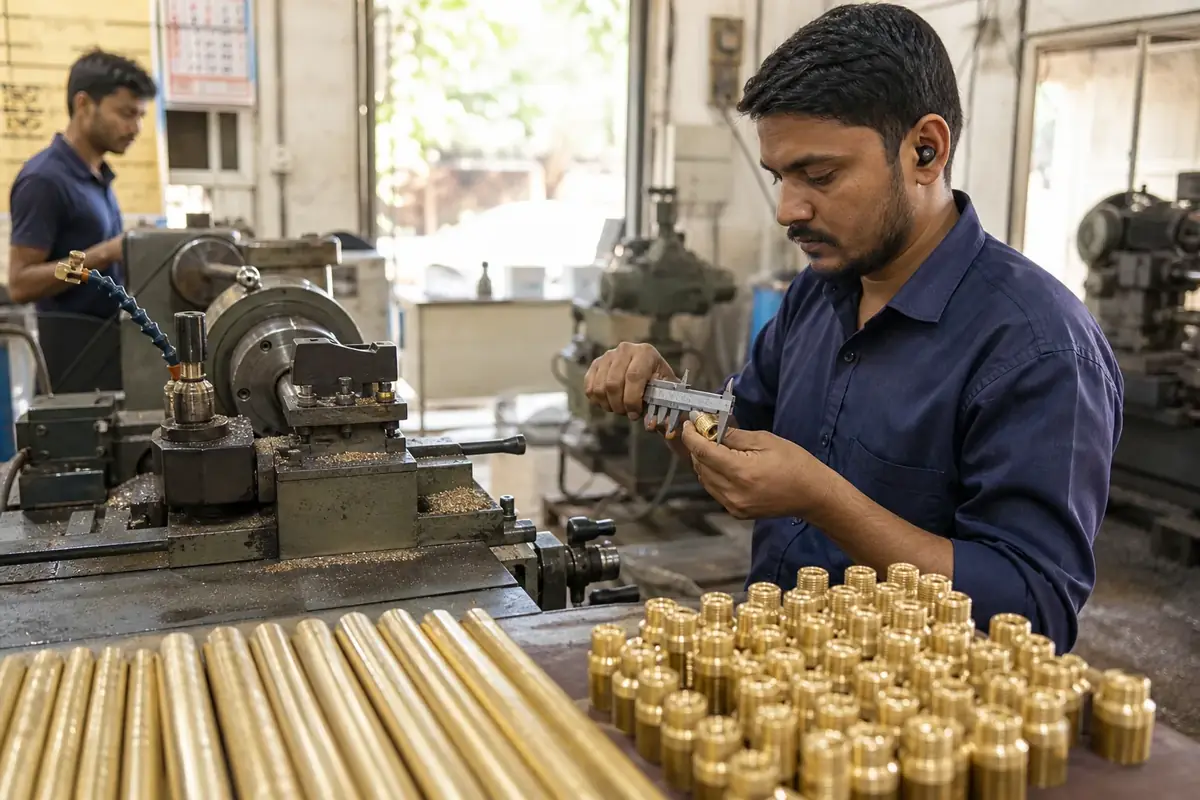
Buyers searching for reliable copper-zinc parts often land on the same question: why does so much global brass hardware trace back to one coastal city in Gujarat? The short answer is density. The Jamnagar brass industry packs melting, brass extrusion, machining, finishing, and export packing into a few kilometres—so lead time and process know-how sit next to each other, not across states.
That cluster advantage is practical, not promotional. When a shop needs fresh rod, a corrected melt chemistry, or a replacement thread chaser overnight, the supporting trade is usually across town. For serious importers, understanding how the local industry actually works matters more than collecting brochure claims.
This guide is written for procurement and engineering readers who need orientation before RFQs go out. It explains the production routes you will hear on shop floors—extrusion, casting, moulding language, and welding—and how those routes change cost, risk, and inspection plans.
Quick Lookup
- Jamnagar is a full-cycle brass cluster: scrap/melt → billet → extrusion → machine → finish → pack.
- Process choice (rod turning, casting, forging, welding) decides cost more than “brass” as a label.
- Match shop type to geometry and volume before you compare piece prices.
Table of contents
- What makes this brass cluster different
- How the cluster works end to end
- Brass extrusion and machining rod supply
- Brass casting and brass moulding routes
- Brass welding and joining in assemblies
- Who buys from Jamnagar and why
- Process map: which route fits your part
- Buyer checks before you shortlist shops
- Common mistakes that waste money
- FAQ
What makes the Jamnagar brass industry different
Many cities machine metal. Fewer cities keep foundry, extrusion mill, automatic lathe bank, plating line, and export packer in one commuting circle. That is the structural advantage behind this Gujarat cluster.
Specialisation also runs deep. One lane of shops lives on high-volume cam-turned inserts and fasteners. Another focuses on sanitary forgings. A third runs Swiss CNC for concentric pins and connectors. Toolrooms nearby cut gauges and form tools when a new drawing arrives.
For buyers, the result is optionality. You can source a standard screw machine part, a forged valve body blank, or a short-run CNC sample without rebuilding an entire supply chain from scratch.
History matters only insofar as it explains skill depth. Generations of turners, die-makers, and foundry hands trained inside the same industrial estates. That does not guarantee every quote is good—but it does mean the labour market understands brass chip colour, thread feel, and plating drag-in without long classroom briefings.
Geography helps too. Coastal Gujarat access supports scrap inbound and component outbound. Inland freight between melt shop and machine shop stays short. When a heat needs zinc adjustment at 10 p.m., the correction is local—not a three-day truck wait.
“In Jamnagar, buyers usually lose money not on price per piece — but on wrong alloy and poor thread tolerance.”
How the cluster works end to end
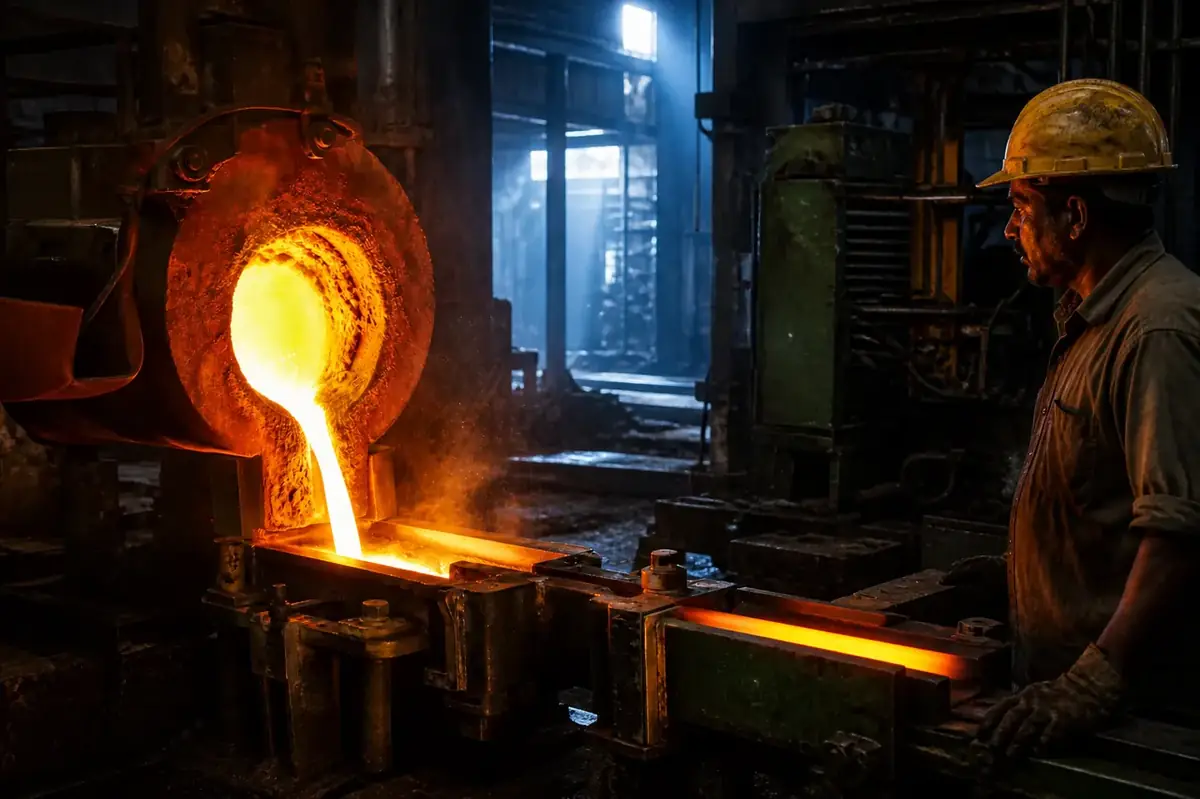
Think of the local flow as a closed loop rather than a single factory. Scrap and alloy inputs enter melting shops. Continuous or billet casting feeds extrusion presses. Extruded rod moves to turning shops. Chips return to melt. Finished parts go for plating or polishing, then carton packing for domestic or export dispatch.
Closed-loop does not mean uncontrolled recycling. Serious export programs still demand melt certificates, heat traceability, and clear rules for remelted turnings. The advantage is speed of material movement—not permission to skip chemistry.
Typical stages inside the municipality
- Melt and chemistry control — copper-zinc alloys adjusted to target grades for free-cutting or forging duty.
- Billet / continuous cast stock — dense feedstock for extrusion or remelt.
- Hot extrusion — round, hex, square, and special profiles for machining.
- Primary forming — turning, hot forging, sand/die casting, or moulded near-net shapes.
- Secondary ops — threading, knurling, drilling, milling, deburr, assembly.
- Surface finish — polish, nickel, tin, chrome-style coatings, or lacquer as specified.
- Inspection and packing — gauges, sampling plans, VCI/polybag, export cartons.
Ports in Gujarat handle inbound scrap containers and outbound finished goods. That logistics proximity is one reason the cluster scaled for export decades ago. For a step-by-step import checklist, see the planned guide on importing brass components from India.
Industrial estates around Dared and related zones usually split by function: heavier melting and extrusion in one pocket, high-count cam machines in another, forging presses elsewhere, plating and packing nearer city units. You do not need every address memorised. You do need to know which cell owns your critical operation.

Brass extrusion and machining rod supply
If your part is turned, brass extrusion is usually the quiet hero behind the quote. Extruded rod gives shops consistent diameter, grain structure suited to free-cutting grades, and chip behaviour that keeps automatic machines productive.
Local mills commonly supply round and hexagonal bar used for inserts, glands, terminals, fasteners, and custom CNC blanks. When a drawing can sit on a stock outer diameter, tooling cost drops and sample lead times improve. When it cannot, shops either order a special extruded profile or accept more machining stock removal.
Extrusion quality shows up later as tool life and dimensional drift. Soft spots, inclusions, or mixed heats can look fine on a first sample and then haunt a mass-production month. That is why melt documentation and rod segregation are not paperwork theatre—they are process insurance.
What buyers should ask about extruded rod
- Alloy designation on the melt certificate (not just “yellow brass”).
- Rod diameter tolerance and straightness expectations for long bars.
- Whether free-cutting leaded grades or lead-free alternatives are required for your market.
- How leftover ends and mixed heats are segregated in production.
- Whether the machining shop buys rod on the open local market or from a fixed mill relationship.
Alloy choice affects machinability, corrosion behaviour, and compliance. For grade comparisons and price drivers, continue to the hub on brass alloys, grades, and price factors.
A practical tip: if your annual volume is modest, design around commonly stocked diameters where possible. Custom extrusion minimums can erase the benefit of a clever turned design that only runs on an odd OD.
Brass casting and brass moulding routes
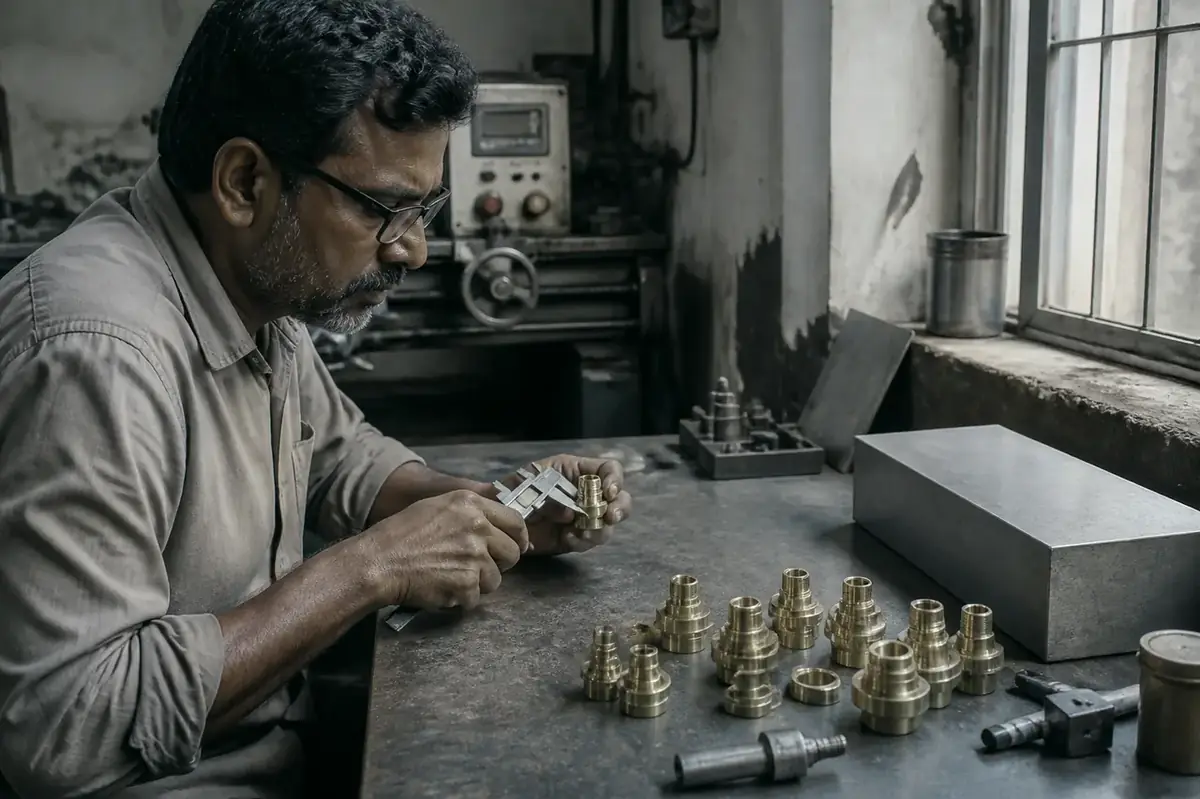
Brass casting earns its place when geometry fights solid-bar machining. Valve bodies, ornate hardware blanks, thick bosses, and irregular cavities often start as castings, then receive machining on sealing faces and threads.
Porosity control, gating design, and post-cast inspection matter more here than on a simple turned collar. A cheap casting that leaks at pressure test is not cheap. Ask how the foundry checks density-critical zones and what machining stock they leave on functional surfaces.
Casting also changes sampling logic. A turned part from certified rod fails differently than a cast body with a subsurface void near a pressure gallery. Your incoming inspection should reflect that—not recycle a fastener AQL plan onto a cast housing.
Where “brass moulding” fits the conversation
In RFQs, brass moulding can mean two different things. Some buyers mean forming or casting a brass shape. Others mean brass threaded inserts used inside plastic injection moulding. Local manufacturers supply both worlds, but they are not the same process cell.
If you need inserts for plastics, specify thread series, knurl pattern, pilot hole guidance, and installation method (heat-stake, ultrasonic, moulded-in). If you need a moulded/cast brass component, specify alloy, wall thickness, draft, and machining datums instead.
Ambiguous moulding language is one of the fastest ways to receive the wrong quote family. Spend one sentence in the RFQ clarifying “cast/formed brass body” versus “threaded insert for plastic.” That sentence saves weeks.
Brass welding and joining in assemblies
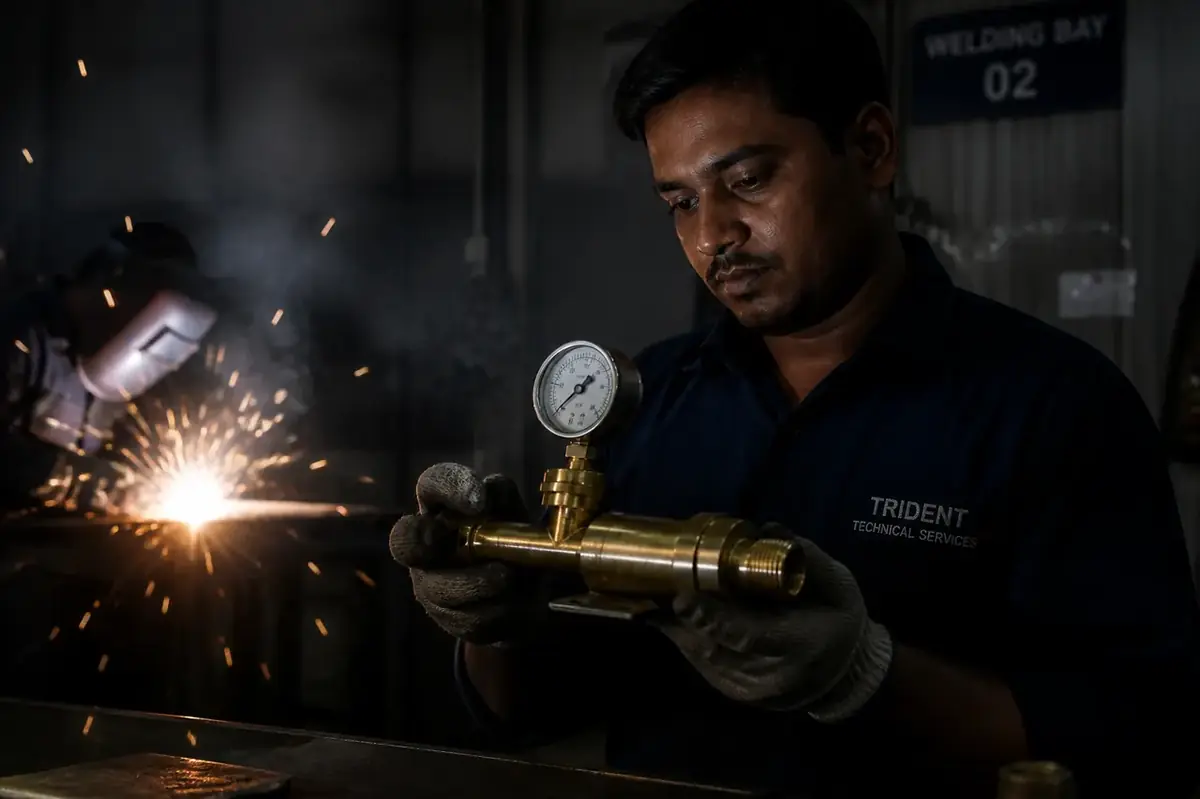
Not every assembly should be machined from one slug. Tubular frames, repairable fittings, and multi-piece decorative or industrial builds often need brass welding or brazing. Local workshops use joining where design, cost, or serviceability demands it.
A brass welding machine setup is only the starting point. Joint design, filler selection, heat control, and post-weld cleaning decide whether the assembly passes leak or load tests. For pressure-retaining parts, define test method and acceptance up front—visual weld photos alone are not enough.
Joining also interacts with downstream finish. Flux residues and heat tint under nickel or lacquer create adhesion failures that appear only after shipping. Sequence the process on the router card: weld/braze → clean → inspect → finish → final test.
Practical joining checklist
- Is the joint structural, cosmetic, or pressure-tight?
- Will the part be plated afterward (heat tint and flux residues complicate finish)?
- Can the design switch to a machined or forged one-piece alternative?
- Who owns leak testing—supplier or buyer receiving inspection?
- Are fixtures available so weld distortion stays inside drawing limits?
Process engineering detail for turned and cast routes continues in the hub on brass casting, machining, and CNC turned parts.
Who buys from Jamnagar and why
Demand spans industrial and consumer categories. Plumbing and sanitary OEMs need fittings and valve components. Electrical hardware buyers need glands, terminals, and conductive links. Furniture and door-hardware programs pull handles, hinges, and decorative fittings. Automotive and general engineering teams source bushings, adapters, and custom turned pins.
The common thread is copper-zinc alloy parts where corrosion resistance, machinability, appearance, or thread integrity matter. Industry-by-industry use cases are mapped separately in brass applications by industry.
Distributor and trading-house buyers also operate here, consolidating mixed SKUs into export containers. That channel can help smaller importers—but it adds a layer between you and the process owner. If tolerances are tight, insist on knowing which workshop actually cuts the metal.
“A low piece price from the wrong process cell is still an expensive purchase—especially after plating and ocean freight.”
Process map: which route fits your part
Use this comparison as a first filter before you request quotes. Exact cost depends on alloy, tolerance, finish, and volume.
| Route | Best for | Watch-outs | Typical next step |
|---|---|---|---|
| Extruded rod + turning | Inserts, pins, nuts, glands, connectors, high-volume round parts | Wrong OD stock; thread standard mismatches | Cam/Swiss CNC sample + gauge plan |
| Hot forging | Valve bodies, elbows, heavy fittings needing grain flow | Die cost; flash cleaning; machining allowances | Die review + first-off forge trial |
| Brass casting | Complex near-net shapes, decorative/industrial blanks | Porosity in pressure zones | Cast sample + machine critical faces |
| Brass moulding / inserts | Plastic housing threads; formed brass shapes | Ambiguous RFQ language | Clarify insert vs cast/formed body |
| Brass welding / braze | Tubular assemblies, multi-piece builds | Heat distortion; finish after joining | Joint drawing + leak/load test |
Buyer checks before you shortlist shops
Treat the cluster as a menu of capabilities, not one interchangeable supplier. A good shortlist starts with process fit, then quality evidence, then commercial terms.
- Lock the process route on the drawing notes (turned from extruded rod, forged, cast, welded assembly).
- Name the alloy and any lead-free or dezincification requirements for your destination market.
- Define threads and gauges (BSP, NPT, metric, Go/No-Go ownership).
- Ask for sample policy, first-article pack, and what changes after sample approval.
- Confirm finish specification in microns or visual standard—not “bright” alone.
- Align packing, carton marks, and Incoterms before price finalisation.
For a structured manufacturer shortlist method, use the companion brass parts manufacturer buyer guide.
Common mistakes that waste money
- Writing only “brass” on an RFQ with no grade or standard reference.
- Comparing a cast quote to a turned quote as if they were identical parts.
- Ignoring plating thickness when threads are close to class limits.
- Ordering production quantities before a dimensional sample is accepted.
- Assuming every local shop can hold Swiss-level concentricity at cam-automat prices.
Precise specifications pay for themselves here. Vague RFQs get optimistic interpretations—then expensive corrections after ocean freight.
Another recurring failure mode is “sample by air, production by assumption.” If the production heat, plating bath, or packing method will differ from the sample lot, write that risk into the approval note. Silent process changes are how good first articles become bad containers.
FAQ: sourcing brass from Jamnagar
How do exports typically leave Gujarat?
By road to deep-water container ports, then ocean freight under agreed Incoterms. Confirm moisture protection and marking early if parts are plated or polished.
Should every buyer chase the lowest piece price first?
No. Start with process fit and inspection capability. Landed cost includes rejects, rework, delays, and freight—not only the invoice line for good pieces.
Why do global buyers care about this Gujarat brass cluster?
Because melting, extrusion, machining, finishing, and packing sit in one dense cluster. That shortens feedback loops when chemistry, tooling, or packing needs a correction mid-program.
What role does brass extrusion play in local manufacturing?
Extrusion supplies the bar stock that automatic and CNC shops turn into finished hardware. Stable rod quality is often the difference between predictable chips and chronic tool breakage.
When is brass casting better than machining from rod?
When the shape is awkward, walls are thick, or bar machining would scrap too much metal. Cast first, then machine the faces and threads that must seal or assemble correctly.
Is brass moulding the same as inserts for plastic parts?
Not always. Clarify whether you need a brass body made by moulding/casting processes, or a brass insert designed for plastic housings. The machines, drawings, and QC plans differ.
Can local shops handle brass welding for assemblies?
Yes, for suitable designs. Specify joint type, test method, and finish sequence. A brass welding machine capability without a written acceptance test is incomplete sourcing.
What belongs in a first RFQ to Jamnagar manufacturers?
2D/3D drawing, alloy, process preference, tolerances, threads, finish, volume ladder, sample needs, and packing notes. Photos of competitor parts help for style—but standards beat photos for acceptance.
Conclusion
The local brass economy is less a single factory story and more a municipal supply chain: extrusion mills feeding machine shops, foundries feeding machining cells, and finishers packing for export. Buyers who name the process, alloy, and acceptance tests early usually spend less—even when the unit price is not the lowest bid on the table.
Use this hub to orient. Then move into the specialised guides for alloys, machining routes, applications, and import execution as your RFQ takes shape.
If you remember one rule from the Jamnagar brass industry, make it this: specify the route before you compare the rate. Extrusion-fed turning, casting, moulding inserts, and welded assemblies each fail in different ways—and each deserves its own drawing notes.
Ready to Source Direct from the World's Brass Hub?
Access Jamnagar's complete non-ferrous manufacturing ecosystem through a single direct supply desk. Submit your engineering drawings or browse standard catalogue categories with direct factory pricing on Jamnagar.net.