Brass Alloy Grades and Price Factors Explained
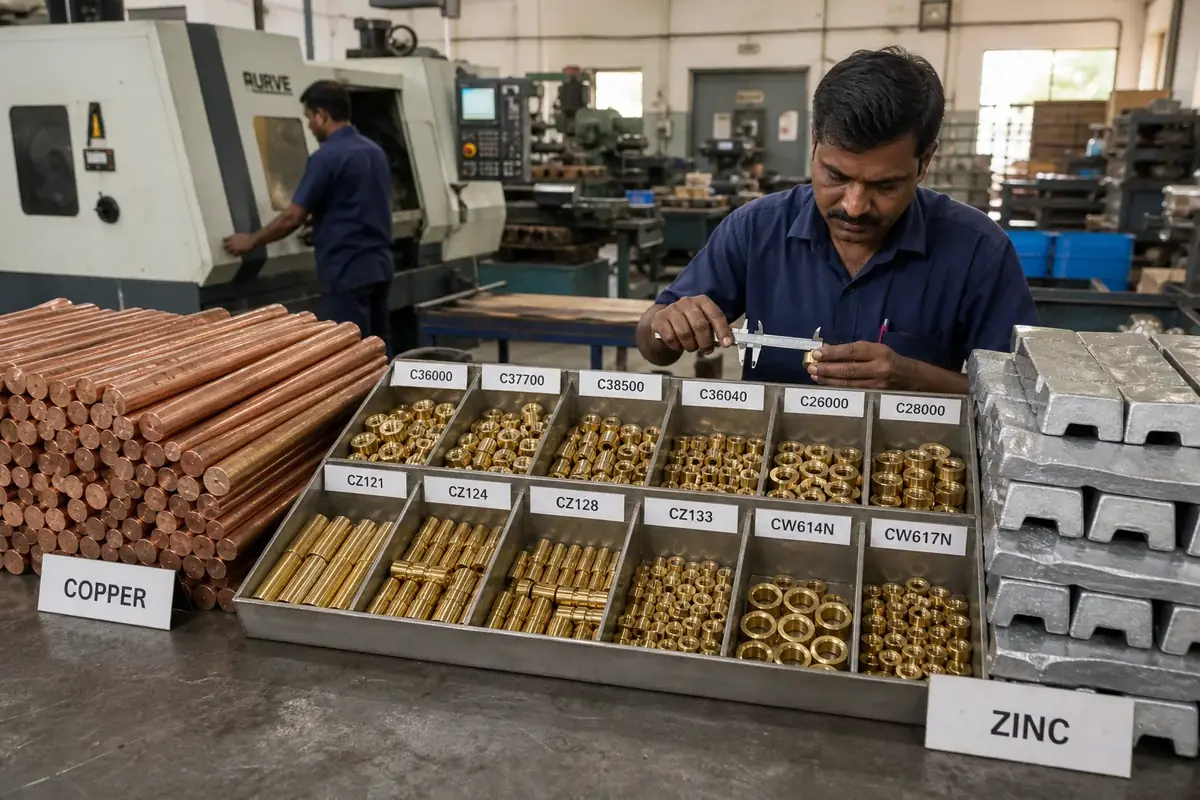
Buyers who only write “yellow brass” on an RFQ get yellow metal—and often the wrong chemistry. Understanding brass alloy grades and price factors is how procurement separates free-cutting rod for CNC shops from forming stock, potable-water grades, and scrap-linked brass 1kg price chatter that has little to do with finished export parts.
In Jamnagar and across Gujarat, workshops talk grades by habit: C360 brass, C260 brass, CZ121 brass, DZR brass, leaded versus lead-free. Local retail language also uses pital metal and pithalai when discussing utensil or scrap rates. Those worlds overlap in colour; they diverge in specification.
This hub maps the main brass types, what the elements in brass actually do, and why the price of brass moves differently for rod, sheet, castings, and utensils.
Quick Lookup
- Name a standard grade—not “brass metal” or colour alone.
- Free-cutting grades (C360 family) cut cost on turned parts; forming grades (C260 / 70-30) suit deep draw and sheet work.
- Kg price headlines track copper/zinc; part price also includes conversion, scrap recovery, finish, and compliance.
Table of contents
- What brass metal is (and is not)
- Elements in brass and what they change
- Common brass alloy grades buyers specify
- Brass lead, free-cutting, and lead-free routes
- DZR and potable-water chemistry
- Natural, weathered, white, and hammered brass
- Brass versus bronze alloys
- Brass alloy grades and price factors that move quotes
- Reading brass 1kg and sheet price signals
- Grade comparison table
- How to write alloy notes on an RFQ
- FAQ
What brass metal is (and is not)
Brass metal is a family of copper-zinc alloys, not a single fixed recipe. Shop-floor shorthand—“yellow,” “reddish,” “soft,” “free-cutting”—is useful for conversation and dangerous on purchase orders. Two melts can look identical after polish and behave differently under a tap, in a pressure test, or on a Swiss lathe.
In Indian trade speech, pital metal often means brass in a general retail or scrap sense. That is fine for kitchenware chatter. It is not enough for cable glands, valve seats, or export inserts that must pass chemistry audits. When a quote says only “metal brass,” ask which standard designation will appear on the melt certificate.
The Jamnagar brass industry hub explains how melt shops, extrusion mills, and machine cells sit in one cluster. Alloy choice is the first filter that decides which of those cells can even quote your part honestly.
“If the drawing says brass and the market says lead-free, the cheapest yellow bar in the yard is usually the most expensive mistake.”
Elements in brass and what they change
Copper sets conductivity, colour depth, and much of the corrosion baseline. Zinc hardens the alloy, lowers cost relative to pure copper, and shifts colour toward yellow as content rises. Together they define the broad brass alloys map—from redder high-copper mixes to yellower high-zinc mixes.
Brass lead additions, where permitted, improve chip breaking and surface finish on automatic lathes. That is why free-cutting grades dominate high-volume turning. Tin, arsenic, or specialised additions appear in dezincification-resistant and some marine-oriented chemistries. Silicon and aluminium show up in certain high-strength or forging families.
- Copper — base metal; more copper often means redder tone and higher raw cost.
- Zinc — strength and colour control; excess without the right design can raise dezincification risk in some waters.
- Lead — machinability aid in traditional free-cutting grades; restricted in many potable and consumer markets.
- Tin / arsenic / others — specialty corrosion or strength roles; always confirm with a named standard.
Impurities from mixed scrap matter as much as intentional elements. A melt built from poorly segregated turnings can pass a visual check and still ruin plating adhesion or thread gauges. Heat traceability is not bureaucracy when you are exporting plated hardware.
Common brass alloy grades buyers specify
Different regions use different numbering systems for the same shop behaviour. Jamnagar exporters routinely translate between UNS/ASTM-style labels, European designations, and Japanese-influenced free-cutting names. Learn the behaviour first; then lock the designation your destination market expects.
C360 / C36000 / C3604 and CZ121 free-cutting families
360 brass, C360 brass, C36000 brass, and brass C3604 sit in the free-cutting conversation buyers hear most often on turned-part RFQs. CZ121 brass is a common European-side label for a leaded free-machining rod grade used for similar duty. These grades exist so automatic and CNC shops can hold cycles and surface finish without fighting stringy chips.
If your part is an insert, gland body, hex nipple blank, or high-volume pin, this family is usually the starting point—unless compliance bans the lead content. Stock is commonly supplied as extruded round or hex bar; see the hub on brass rods, bars, and billets for form factors.
C260 / 260 brass and 70/30 cartridge brass
C260 brass (often called 260 brass or 70 30 brass) is the classic ductile cartridge/forming alloy. It deep-draws and cold-works better than heavily leaded free-cutting stock. Sheet fabricators, stamped hardware, and drawn tubes lean this way more than cam-turned fastener cells do.
Do not force a deep-draw geometry onto C360 “because it machines well,” and do not insist on C260 for a Swiss-turned connector that needs chip control. Grade follows process—not the other way around.
Brass lead, free-cutting, and lead-free routes
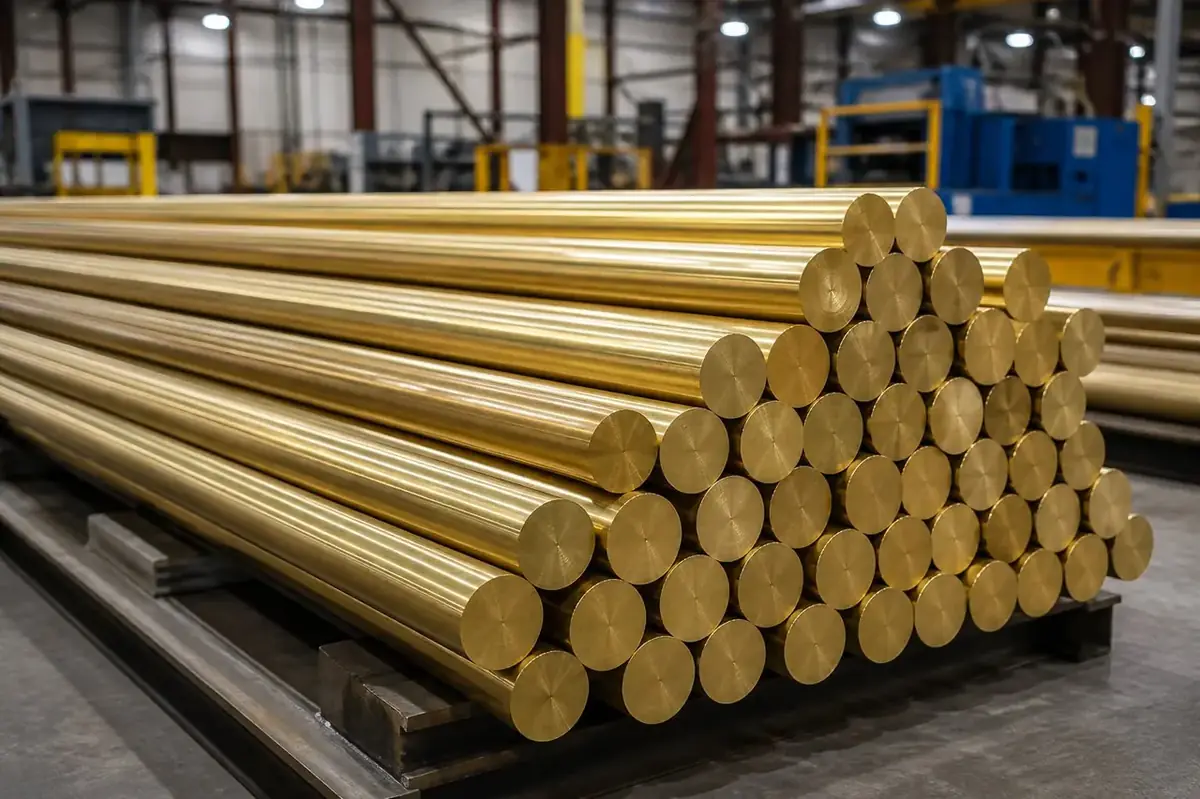
Leaded free-cutting brass remains productive for many industrial components outside restricted end uses. Lead-free alternatives exist, but they are not drop-in copies of C360 behaviour. Tool life, chip form, surface roughness, and sometimes strength shift. Expect sample validation when you migrate a long-running part.
Potable water, children’s products, and certain consumer markets push lead limits hard. Write the regulation or market rule on the RFQ. “Lead-free if possible” creates quotes that look comparable and are not. “Lead-free grade meeting [named requirement], melt certificate required” creates apples-to-apples bids.
Machining shops will often prefer the leaded grade when law allows it—not from habit alone, but because cycle time and finish are predictable. Pay for that predictability when the application permits it; pay for compliance chemistry when it does not.
When you migrate a long-running insert or gland from a leaded free-cutting grade to a lead-free alternative, freeze a side-by-side sample pack: same tools, same speeds as a starting point, then adjust. Document surface roughness, burr behaviour, and plating throw. The first container after a silent chemistry swap is where programmes usually discover the difference.
Also separate “lead-free melt” from “lead-free plated assembly.” A compliant rod can still pick up contamination in mixed chip bins or shared wash lines. Ask how the shop segregates turnings and whether wash chemistry is shared with leaded jobs. Compliance is a process chain, not a single certificate photocopy.
DZR and potable-water chemistry
DZR brass (dezincification-resistant) addresses a specific failure mode: zinc leaching from the alloy in aggressive waters, leaving a weak copper sponge. Ordinary yellow fittings can look perfect on day one and weep or crack years later in the wrong water chemistry.
Specify DZR when the destination plumbing code or water utility practice demands it—not because the word sounds premium. Ask for the exact alloy designation, any required stamping, and whether pressure-bearing parts will be tested after machining. A DZR label on a quote without heat documentation is marketing, not metallurgy.
Machining stock on DZR blanks should be planned so sealing faces are cut from sound metal, not from the last millimetre of a rough cast skin. If your fitting will be nickel-plated afterward, confirm that the plating shop understands which faces must remain dimensionally true after coat. Dezincification resistance does not excuse poor thread class after plating build-up.
For mixed catalogues—some decorative hardware, some potable fittings—do not let warehouse staff treat all yellow metal as one SKU family. Colour-coding bins and paperwork by alloy family is boring. Mixed heats in a “yellow brass” tote are how DZR programmes fail quietly.
Natural, weathered, white, and hammered brass
Natural brass usually means the alloy’s own colour after polish or light protective lacquer—not a separate melt. Weathered brass and antique looks are finish systems: chemical darkening, highlighting, clear coats. Hammered brass is a surface texture; you will see it on decorative hardware and sometimes on a hammered brass pendant light canopy long before you need a new grade code.
White brass is ambiguous. Some high-zinc alloys look pale; some decorative “white” metals are nickel-bearing copper alloys sold beside brass in showrooms. For structural or conductive parts, demand chemistry. For décor, still ask whether the base is brass, plated steel, or another alloy—finish alone does not prove substrate.
“Finish sells the photo. Alloy survives the audit.”
Brass versus bronze alloys
Buyers sometimes swap the words. Bronze alloys are classically copper-tin based, while brass is copper-zinc based—though commercial catalogues blur the line. Bronze often wins for bushings and certain wear or marine duties; brass wins for free machining, bright hardware finishes, and many threaded fittings.
If the application is friction, seawater, or historic restoration language that says bronze, do not silently substitute yellow brass to save a few rupees per kg. Walk through the comparison in brass vs bronze vs copper before you freeze the material note.
Brass alloy grades and price factors that move quotes
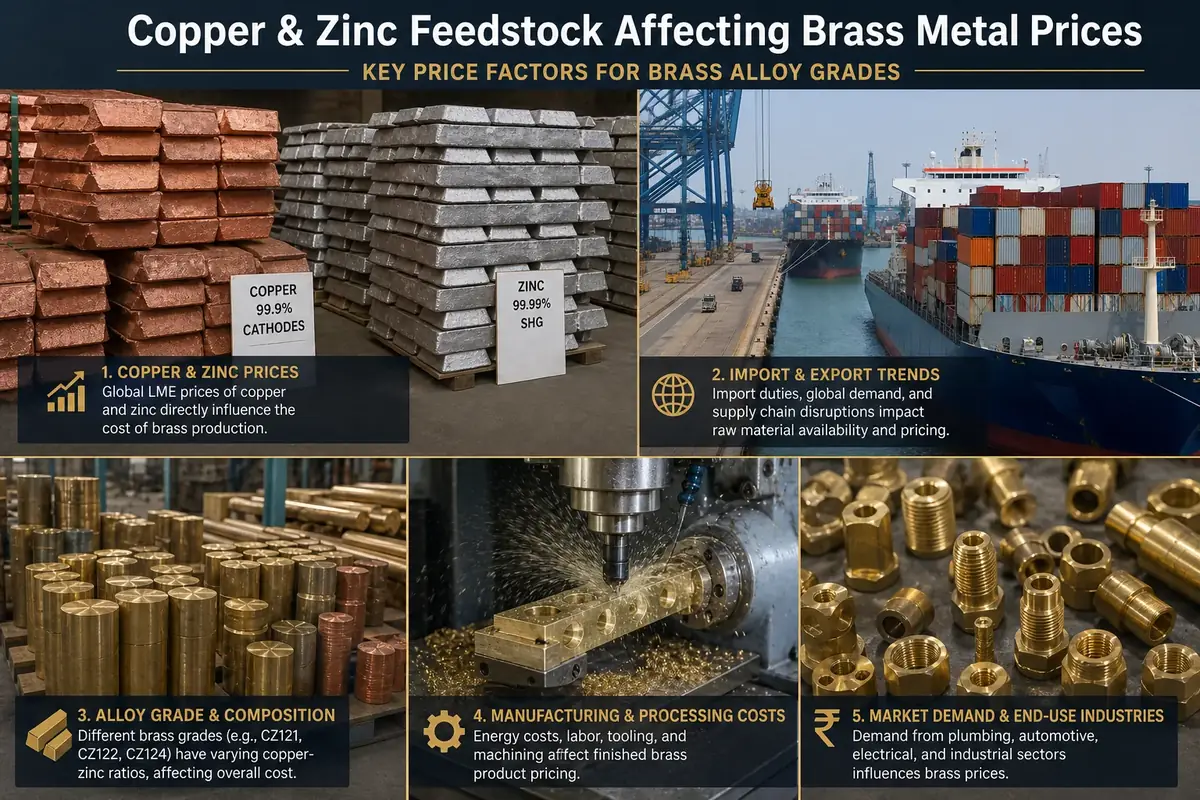
Piece price is not “brass metal price × weight.” Conversion dominates small turned parts. Alloy still matters because it changes scrap recovery value, tool wear, plating reject rates, and whether a heat can be sold into a regulated market.
- Copper and zinc LME / local premiums — base metal swings hit billet and rod first.
- Grade chemistry — free-cutting, DZR, and lead-free melts rarely price like commodity yellow scrap.
- Form — extruded rod, rolled sheet, and sand casting blanks carry different conversion.
- Process route — casting versus solid-bar CNC changes yield; see casting, machining, and CNC turned parts.
- Finish and compliance paperwork — nickel, chrome-style coats, lacquer, and certificates add real cost.
- Volume and scrap loop — chips returning to a known melt path improve economics; mixed scrap hurts both chemistry and price.
Recycling dynamics in the cluster are covered in brass recycling, scrap, and sustainability. Closed loops help—but only when segregation rules stay honest.
Reading brass 1kg and sheet price signals
Search traffic around brass 1kg price, pital price 1kg, pital 1kg price, pithalai 1kg price, and 1 kg pithalai price usually tracks retail scrap or utensil metal chatter. Those numbers are useful as a mood indicator for copper-zinc markets. They are poor inputs for quoting a plated CNC insert.
Likewise, brass sheet price per kg, brass utensils price per kg, and brass pot price per kg describe different conversion paths. Sheet includes rolling and temper work. Utensils include forming, polishing, and often different alloy expectations. Export rod for free-cutting includes extrusion tolerance and chemistry control you will not see in a bazaar kg rate.
When a supplier quotes only “today’s brass rate,” ask: which form, which grade, what scrap credit on your chips, and how long the rate is valid. Soft answers mean the piece price will move after you approve samples.
A practical way to read local chatter: treat utensil and scrap kg headlines as a copper-zinc weather report. Then build your own landed model—rod or casting conversion, machining minutes, plating, packing, freight, and expected scrap recovery. If a quote ignores scrap credit on a high-chip CNC part, you are not comparing the same economics as a shop that remelts your turnings into a known loop.
Sheet programmes add temper and width constraints that rod programmes never see. A buyer chasing sheet price per kg without temper and thickness tolerances will approve a soft coil that oils-cans after blanking. Write mechanical expectations beside the chemistry, especially for stamped hardware or shallow draws that look simple on paper.
Grade comparison table
Use this as a first filter. Exact compositions follow the standard you name on the order—not this overview table.
| Grade family | Typical use | Buyer watch-out | Price note |
|---|---|---|---|
| C360 / C36000 / C3604 / CZ121 | High-volume CNC and cam turning | Lead restrictions in some markets | Often best landed cost where allowed |
| C260 / 70-30 | Sheet, deep draw, cold forming | Poor chip control if forced into screw machines | Forming yield matters more than chip credit |
| DZR grades | Potable fittings and valves | Must match named standard and marking | Premium over commodity yellow brass |
| Lead-free machining grades | Compliant turned parts | Validate tools, finish, and cycle time | Higher conversion; may offset scrap value |
| Retail / utensil “pital” | Domestic ware, scrap benchmarks | Not a substitute for export melt certs | Tracks bazaar kg chatter |
How to write alloy notes on an RFQ
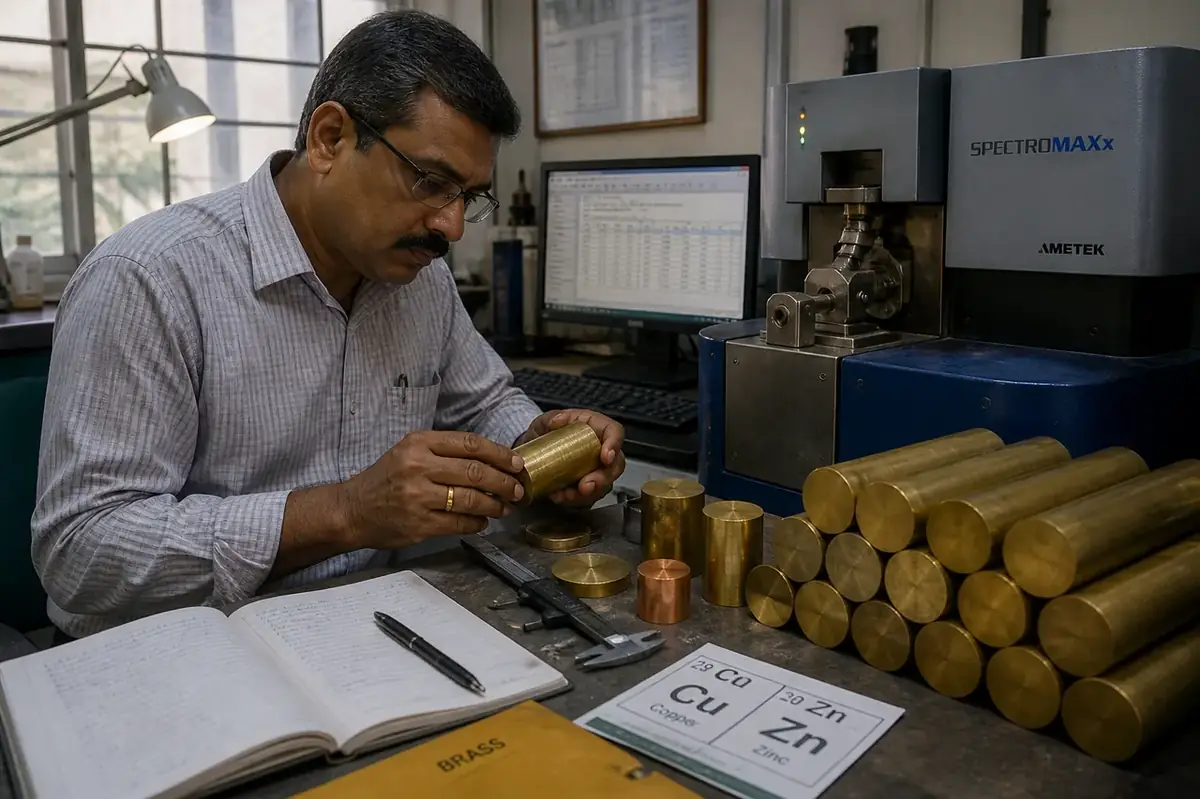
Clear alloy language shrinks quote variance. Ambiguous language invites optimistic chemistry.
- Primary designation (example: C36000 / CZ121 / C260) plus acceptable equivalents.
- Lead-free or DZR requirement with market reference if known.
- Form: extruded rod diameter, sheet temper, or casting alloy note.
- Certificate expectations: melt analysis, heat number, retention samples.
- Finish that can hide substrate (heavy plating over wrong base still fails audits).
When in brass components will be brazed or soldered later, mention that too—some finishes and residual films fight joining. Process notes belong beside the grade, not in a separate email that never reaches the shop floor.
Keep a short approved-equivalents list. Global teams often accept CZ121 against a C360-family callout, or a named DZR grade against a local potable standard—only when chemistry ranges truly overlap. Write “exact grade only” when they do not.
For long programmes, require a material change notice whenever the melt source or scrap recipe shifts beyond agreed limits. Train buyers to read melt certificates: copper, zinc, lead, and key residuals against the PO grade—not filed unread.
FAQ: brass alloys and pricing
Does natural or weathered brass mean a different alloy?
Usually it means finish or ageing appearance. Hammered textures and antique darkening sit on top of a base grade you should still name.
What should an RFQ say instead of just brass metal?
A standard grade, lead/DZR rules, form, certificates, and finish. That package beats any single bazaar kg number when you are buying export hardware.
What are the main elements in brass?
Copper and zinc form the base. Many free-cutting grades add lead for chip control. Specialty grades may include tin, arsenic, aluminium, or silicon depending on the standard.
What is the difference between C260 and C360 brass?
C260 / 70-30 is the ductile forming alloy. C360-family grades are free-cutting machining alloys. Match grade to process: draw and stamp on C260; high-volume turning on C360 where lead rules allow.
Why does brass 1kg price change so often?
Because copper and zinc markets move, scrap premiums shift, and local pital or pithalai quotes often reflect scrap/utensil channels. Finished component pricing also includes conversion and compliance, not only kg metal.
When should buyers specify DZR brass?
When potable-water fittings face dezincification risk or codes require it. Name the standard, demand melt evidence, and do not treat “DZR” as a synonym for “better polish.”
Is white brass the same as nickel silver?
Not reliably. White brass is a colour/trade phrase. Some pale alloys are high-zinc brass; other white metals are nickel-bearing. Ask for chemistry before you design threads or plating stacks around assumptions.
How is brass different from bronze alloys?
Brass is copper-zinc based; classic bronze is copper-tin based. Use bronze language only when the application and standard call for it—appearance alone is not the test.
Conclusion
Alloy is the quiet line on the drawing that decides scrap value, machine hours, plating risk, and whether a container clears a compliance check. Learn the difference between free-cutting, forming, DZR, and retail pital language—then write the grade you mean.
Treat kg price headlines as context, not as your BOM cost. The buyers who win in Jamnagar specify chemistry first and negotiate conversion second.
Need Help Matching Alloy to Your Drawing?
Share your grade preference, lead or DZR constraints, and target market. Get alloy-aware factory feedback and catalogue options through Jamnagar.net.