Brass Rods and Bars from Jamnagar: Billets, Stock & Patti
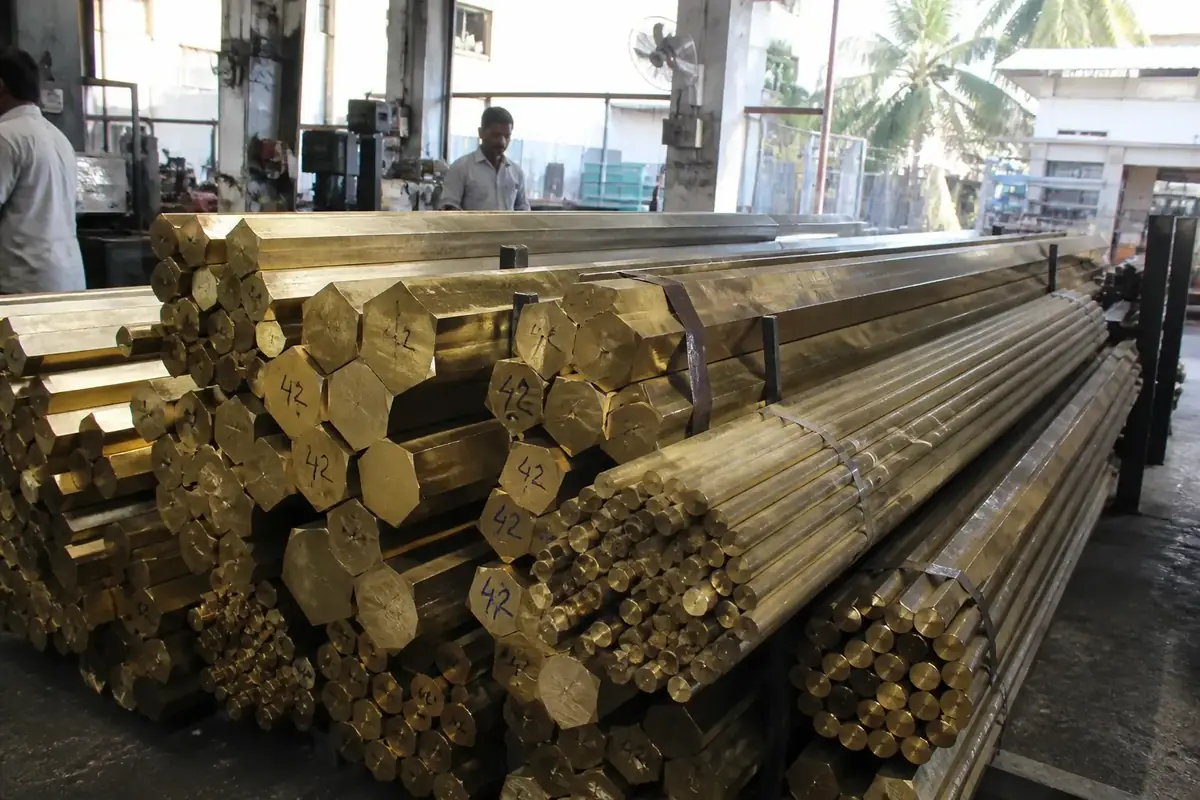
Most turned brass parts begin life as bar, not as a finished catalogue SKU. Buyers who understand brass rods and bars from Jamnagar save money before the first RFQ leaves the inbox—because diameter, alloy, and form decide tooling, scrap rate, and lead time more than piece-price bargaining later.
This hub covers extruded brass bar stock, cast brass billet, round and square sections, flat stock, and the local trade term brass patti. The goal is practical: how shops talk about material, which sizes move fastest, and what to write on a purchase order so the wrong heat does not land in your carton.
Jamnagar’s extrusion belt feeds automatic lathes across Gujarat and export programs worldwide. Treat rod and bar as a product category with its own tolerances—not as “yellow metal by the kilo.”
Highlights
- Billet feeds extrusion; extruded rod feeds machining—do not confuse the two on RFQs.
- Round stock dominates turning; flat bar and patti serve trim, tile, and fabrication.
- Common diameters win on price and availability; odd ODs often need extrusion MOQs.
Table of contents
- Why rod and bar choice matters
- From brass billet to extruded bar
- Round, hex, square, and flat forms
- Common rod sizes buyers request
- Brass patti for tiles and trim
- Stair rods, rails, and decorative stock
- Form comparison table
- Alloy and machinability notes
- Handling, cut length, and export packing
- RFQ checklist for brass stock
- Mistakes that waste material money
- FAQ
Why brass rods and bars from Jamnagar matter to buyers
The city is not only a finished-parts cluster. It is also a brass stock market: mills extrude, traders cut to length, and machine shops buy overnight when a diameter runs out. That density is why global programs often source both raw bar and finished components from the same municipality.
For procurement, the upside is flexibility. You can buy full-length bars for your own turning cell, or let a local shop convert the same diameter into inserts and fasteners. For engineering, the risk is ambiguity—saying “brass products” without shape and grade invites optimistic quotes that fail on first article.
Cluster context helps. Melting, extrusion, machining, and remelt of chips sit close together, as outlined in the Jamnagar brass industry hub. Stock buyers inherit that loop’s speed—and its obligation to control chemistry.
“If the drawing fits a stock diameter, protect that diameter like a tooling asset—custom extrusion rarely pays for itself on short runs.”
From brass billet to extruded bar
A brass billet is cast feedstock: dense cylindrical or rectangular stock prepared for hot extrusion or remelt. Buyers who melt or press metal care about billet chemistry, soundness, and surface condition. Buyers who turn parts usually never see the billet—they buy the extruded result.
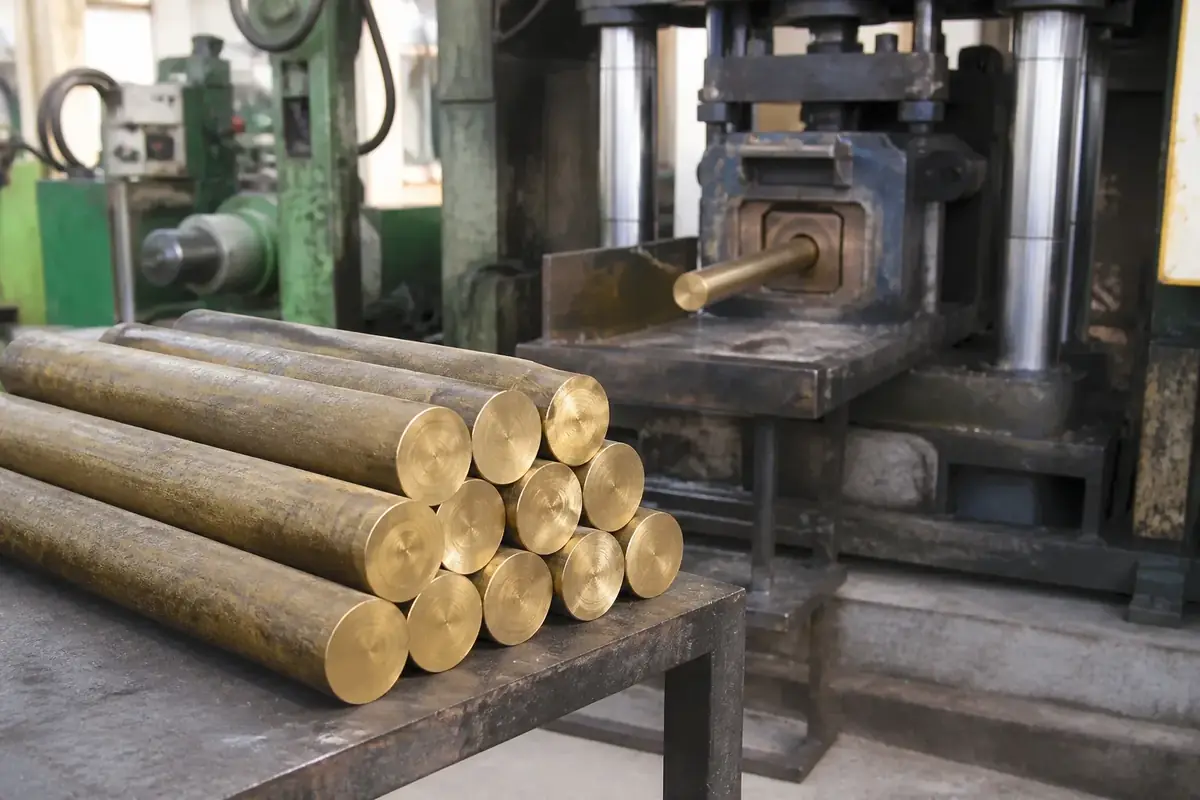
Extrusion converts billet into continuous sections. Round rod for automatic lathes, hexagonal bar for nut blanks, and special profiles for odd blanks all leave the press as machining-ready brass bars. Straightness, diameter tolerance, and inclusion control show up later as tool life and scrap.
Ask suppliers which stage they own. A billet caster, an extrusion mill, and a cut-to-length trader quote differently and carry different process risks. For remelt and scrap loops that feed billets, see brass recycling and scrap sustainability.
What “good bar” looks like on the floor
- Consistent colour and chip behaviour within a heat lot.
- Ends marked or segregated so mixed alloys do not share a rack.
- Diameter checks that match your cam or CNC collet plan.
- No deep extrusion lines or soft spots that break tools mid-shift.
Round, hex, square, and flat forms
Brass round bar (also called brass round stock) is the workhorse for pins, inserts, glands, and fasteners. Hex bar suits nuts and wrench flats with less milling. Brass square bar appears in keys, decorative posts, and parts that need square ends without extensive machining.
Brass flat bar and brass flat stock serve brackets, bus-style links, wear plates, and fabrication blanks. Flat sections also feed tile-border and architectural programs when buyers want thicker stock than coiled strip.
Shape choice is a scrap decision. Turning a large flat from round wastes metal and machine hours. Starting from flat or square can look more expensive per kilo and still win on finished cost. For how rod then becomes turned parts, continue to brass casting, machining, and CNC turned parts.
Common rod sizes buyers request
Metric fine diameters move steadily for jewellery findings, model work, and small hardware: 1mm brass rod, 2mm brass rod, 3mm brass rod, 4mm brass rod, and 8mm brass rod are frequent asks. Imperial fractions remain common in older drawings—1/8 brass rod, 3/16 brass rod, 1/4 brass rod, and 3/8 brass rod still appear on hardware RFQs.
Larger machining diameters stock for automatic and CNC shops across the cluster. Availability is usually better on popular sizes than on one-off ODs. If your annual volume is modest, redesign around a stock diameter before you request a special extrusion.
Length matters as much as diameter. Full mill lengths suit bar traders and heavy machining cells. Cut-to-length blanks reduce freight and handling for export, but they need clear end-squareness and packing notes so bars do not bend in transit.
Sizing tips that keep quotes honest
- State diameter as finished requirement plus machining allowance, or as stock OD—never mix the two silently.
- Call out h9 / h11 style tolerance bands when collets are unforgiving.
- Confirm whether inches on a drawing are nominal stock or finished part size.
- Ask for straightness expectations on long bars used for automatic feeders.
Brass patti for tiles and trim
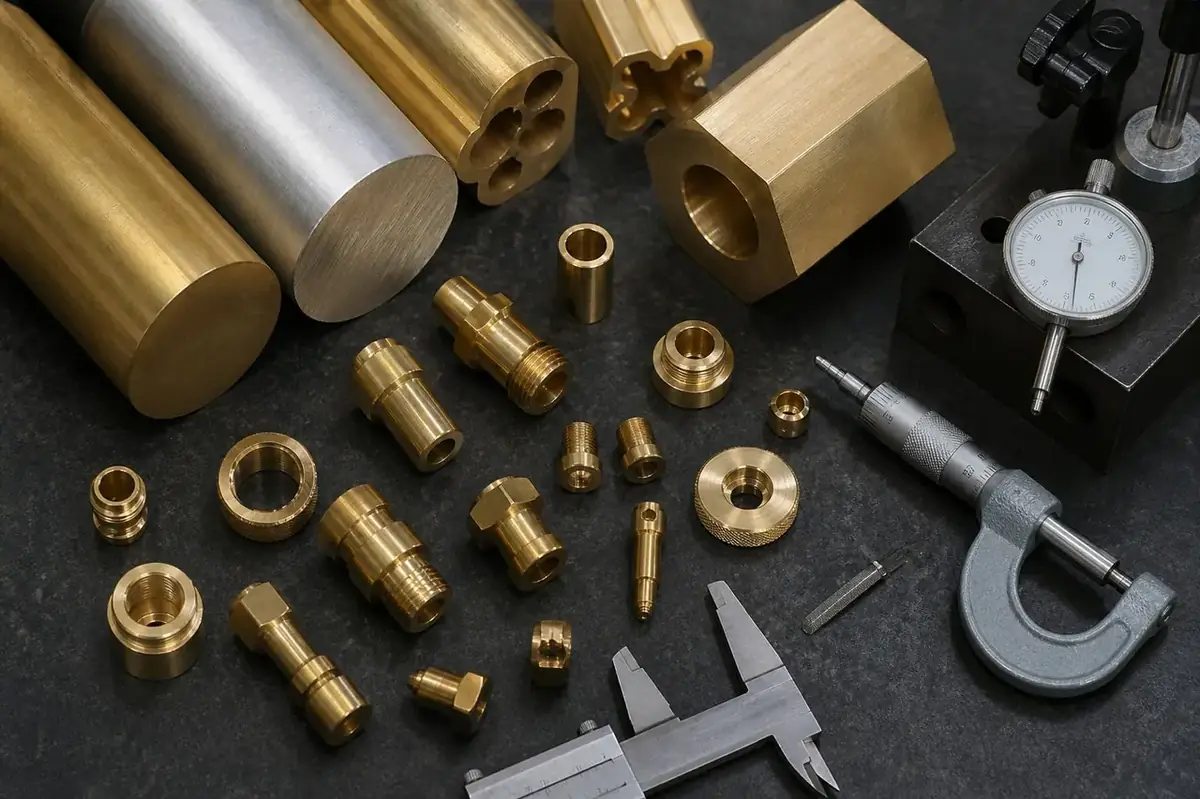
In Indian trade language, brass patti usually means a flat strip or thin flat bar. Architects and tile contractors ask for brass patti for tiles as border inlay, joint highlight, or edge trim. Fabricators also cut patti into nameplates, furniture accents, and light structural straps.
Patti is not the same product family as thick plate. Thickness, width, temper, and edge condition decide whether the strip bends cleanly around a tile radius or kinks. Polished versus mill finish changes both price and site handling—fingerprints show on bright patti immediately.
If your need is coiled strip or sheet rather than cut flat bar, move to the companion guide on brass sheet, plate, and strips. Mixing sheet temper language with extruded flat bar language is a common RFQ error.
Stair rods, rails, and decorative stock
Not every rod order is for a lathe. Brass stair rods and antique brass stair rods hold carpet runners; buyers care about finish, end fittings, and corrosion under indoor cleaning chemicals. A brass bar rail for hospitality or retail may need longer continuous lengths and a deliberate surface—polished, brushed, or lacquered.
Related decorative and utility items include brass stocking holders and specialty rail hardware. These programs often start from round or decorative profile stock, then add cast or stamped ends. Specify load expectation and finish durability; a soft polish that scratches in week one is not a bargain.
Kitchen and bar contexts sometimes mention brass bar sink accessories or rails near wet zones. Treat moisture and cleaning chemistry as design inputs. Free-cutting machining alloys that work indoors may not be the best choice for constantly wet decorative hardware without a protective finish plan.
“Decorative rod fails in the finish room; machining rod fails in the chip conveyor—specify which failure mode you are buying against.”
Form comparison: which brass stock fits the job
Use this table as a first filter before you compare kilo rates. Exact cost depends on alloy, length, and finish.
| Form | Typical use | Buyer watch-outs | RFQ must-haves |
|---|---|---|---|
| Brass billet | Extrusion feedstock; remelt programs | Porosity, chemistry drift | Alloy, size, soundness checks |
| Round bar / round stock | Turning, inserts, fasteners, pins | OD tolerance, straightness | Diameter, length, free-cutting grade |
| Hex / square bar | Nuts, keys, wrench flats, posts | Across-flats accuracy | AF size, corner condition |
| Flat bar / flat stock | Brackets, links, fabrication blanks | Camber, edge burrs | Width × thickness, temper |
| Brass patti | Tile borders, trim, light straps | Vague width/thickness calls | Section, finish, bend requirement |
| Stair / rail rod | Carpet rods, hospitality rails | Finish durability vs machining grade | Length, finish, end fittings |
Alloy and machinability notes for bar buyers
Free-cutting grades dominate automatic lathe work because chip breakage keeps cycles short. Forging-oriented or higher-copper alloys may machine differently and cost differently per kilo. Destination markets that restrict leaded brass change the entire stock conversation—do not assume workshop default grades pass every compliance screen.
Price per kilo is only one input. Soft spots, mixed heats, and undocumented remelt raise your true cost through tool breakage and rejected lots. Grade and price drivers are covered in depth in brass alloys, grades, and price factors.
Surface condition interacts with alloy. Bright-drawn or polished stock for visible rails is a different SKU from as-extruded machining rod. Write the surface state on the PO; “yellow brass bar” is not enough.

Handling, cut length, and export packing for bar stock
Bar that leaves the mill straight can arrive bent if bundling is lazy. Long rounds and hex need end caps, centre supports, and straps that do not dig notches into the OD. For export, moisture protection matters when bars will sit in humid ports before machining—surface stain is cosmetic until it hides a deeper pitting line under the first cut.
Cut-to-length programs should define end squareness, minimum usable remnant, and whether saw marks must be removed. Automatic feeder shops hate random end burs. Hand-fed CNC cells may tolerate more. Write the feeder type into the notes when volume justifies it.
Label every bundle with alloy, size, heat or lot reference, and quantity. Mixed yellow metal on one rack is how free-cutting bar contaminates a lead-free job two weeks later. Local speed is an advantage only when segregation keeps pace.
Stock versus converted parts
Some buyers want mill bar only. Others want the same diameter converted into blanks, pins, or fasteners before shipment. Those are different commercial and QC scopes. If you want conversion, attach the finished drawing and accept that machining scrap, plating, and packing become part of the landed cost—not a surprise add-on after the bar kilo rate looked attractive.
When both stock and parts ship in one container, keep paperwork split. Customs, receiving inspection, and your own MRP system will thank you. So will the machine shop that did not expect to be blamed for a trader’s mixed heat on raw bar.
RFQ checklist for brass rods and bars
A clean stock RFQ prevents the most expensive misunderstandings. Use this list as a minimum.
- Form — round, hex, square, flat, patti, or billet.
- Section size — diameter or width × thickness, with tolerance.
- Length — mill length, cut blanks, or custom cut schedule.
- Alloy designation — not only “brass,” plus lead-free notes if required.
- End use — machining, forging, decorative rail, or tile trim.
- Surface / temper — as-extruded, polished, lacquered, soft/hard as applicable.
- Quantity ladder — sample, trial, and annual volume.
- Packing — bundling, end caps, moisture protection, marks.
If the bar will become a turned export part, attach the finished drawing anyway. Good mills and machine shops catch diameter mistakes early when they see the target OD and groove plan.
Mistakes that waste material money
- Ordering billet language when you need extruded machining rod.
- Designing a part on an odd OD that forces custom extrusion at low volume.
- Using decorative stair-rod finish specs on free-cutting bar for plating-critical threads.
- Ignoring straightness until bars jam in automatic feeders.
- Accepting “mixed yellow brass” without heat segregation for regulated markets.
- Comparing patti kilo rates to thick flat bar as if temper and width were identical.
Stock is boring until it is wrong. Then every secondary operation—plating, packing, ocean freight—multiplies the error. Specify the form once, firmly, and keep that note on every revision.

FAQ: brass rods, bars, billets & patti
When should I choose flat bar instead of round stock?
When the part is rectangular, needs wide faces, or would waste too much metal if turned from round. Round remains the default for most turned hardware.
What is the difference between a brass billet and extruded brass bar stock?
Billet is cast feedstock for extrusion or remelt. Extruded bar stock is the finished section machine shops cut and turn. Most component buyers need extruded stock, not raw billet.
What does brass patti mean in Jamnagar sourcing?
It usually means flat strip or thin flat bar for tile borders, trim, and light fabrication. Always add width, thickness, temper, and finish—patti alone is not a specification.
Which common rod diameters are easy to source?
Fine metric sizes from about 1mm through 8mm, plus common fractions such as 1/8, 3/16, 1/4, and 3/8 inch, move regularly. Larger machining diameters are available; odd custom ODs may need extrusion minimums.
Is brass round bar the same as brass round stock?
In shop talk, yes. Still confirm diameter tolerance, straightness, alloy, and whether the stock is free-cutting before you buy.
Can stair rods and lathe bar share the same purchase spec?
Rarely without compromise. Stair rods prioritise appearance; lathe bar prioritises machinability. Match alloy and surface condition to the end use.
What belongs in a brass stock RFQ?
Shape, size, length, alloy, tolerance, surface/temper, quantity, packing, and market compliance notes. Attach the finished part drawing when the bar will be machined locally.
Why do chips and remelt matter here?
Turnings often return to local melt, which supports availability. Export programs still need certificates and segregation so remelted heats meet your chemistry target.
Conclusion
Rod, bar, billet, and patti are related copper-zinc forms with different jobs. Jamnagar can supply all of them—but only a clear form call, alloy note, and size tolerance turn that capacity into reliable deliveries.
Design around stock diameters when you can. Separate decorative rail specs from machining rod specs. Treat patti as an engineered section, not a nickname. Bundle labels and heat segregation are part of quality, not afterthoughts for the dispatch bay.
Next, pair this hub with sheet/strip guidance if your program moves into coiled metal, or with machining guides when bar becomes chips and finished parts. The quieter your material language, the fewer loud surprises after the container opens.
Need Brass Rod, Bar or Billet Supply?
Send diameter, alloy, and cut lengths for a direct mill-linked rod and billet enquiry. Browse machining stock and related forms with factory-side support on Jamnagar.net.