Brass Sheet, Plate and Strips: Thickness, Temper & Uses
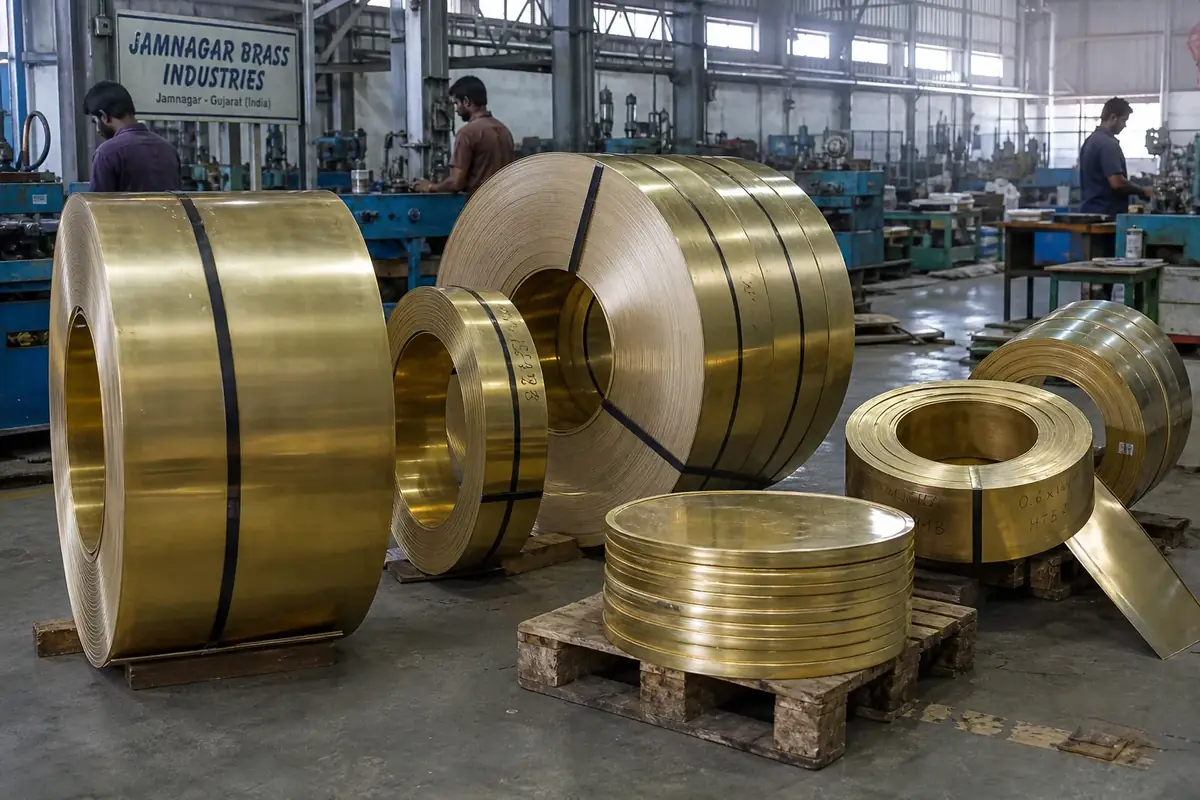
Flat copper-zinc stock fails differently from rod. A soft coil that stamps cleanly can dent in a door plate; a hard brass sheet that looks premium may crack on a tight bend. Buyers who specify brass sheet plate and strips by thickness and temper avoid those surprises before freight is paid.
This guide separates industrial brass sheet metal, thicker plate blanks, coiled brass strips, shim stock, and finished plate categories that share a name but not a process route. Jamnagar’s wider non-ferrous network supports fabrication and hardware programs that start from these forms—even when the final polish happens in another cell.
Read it as a specification primer: what to write, what to sample, and how architectural trim differs from machine shim.
Highlights
- Always quote thickness in mm; “sheet” vs “plate” language alone is ambiguous.
- Temper decides bend behaviour as much as alloy colour.
- Dining/pital plates and industrial plate stock are different RFQ families.
Table of contents
- Sheet, plate, strip, foil—form language
- Thickness and temper selection
- Shim sheet and precision stock
- Architectural trim and protective profiles
- Door, switch, and mounting plates
- Plated brass and jewellery blanks
- Pital plate vs industrial plate stock
- Specs comparison table
- What drives sheet and plate price
- Blanking, forming, and finish sequencing
- Buyer RFQ checklist
- Incoming checks for flat brass lots
- FAQ
Sheet, plate, strip, foil—getting the form language right
Brass sheet typically means relatively thin rolled flat stock supplied as sheets or blanks. Brass plate usually means thicker material for cutting, mounting, or heavy fabrication. Brass strips are narrow slit coils or cut lengths for continuous trim, stampings, and furniture accents. Foil and laminate language appears when thickness drops into decorative wrap or cladding ranges.
Thin brass sheet and thin brass strips behave differently under shear and brake forming than thick plate. Edge burr, coil set, and surface scratch sensitivity all rise as gauges get lighter. If your design started life as rod, confirm you actually need flat stock—see brass rods, bars, billets, and patti for solid sections.
Perforated brass sheet is a processed product, not a temper. Hole pattern, open area, and border margins must sit on the drawing before you compare suppliers who slit plain coil.
“Most sheet disputes are thickness and temper disputes wearing a price argument as a costume.”
Thickness and temper selection for fabrication
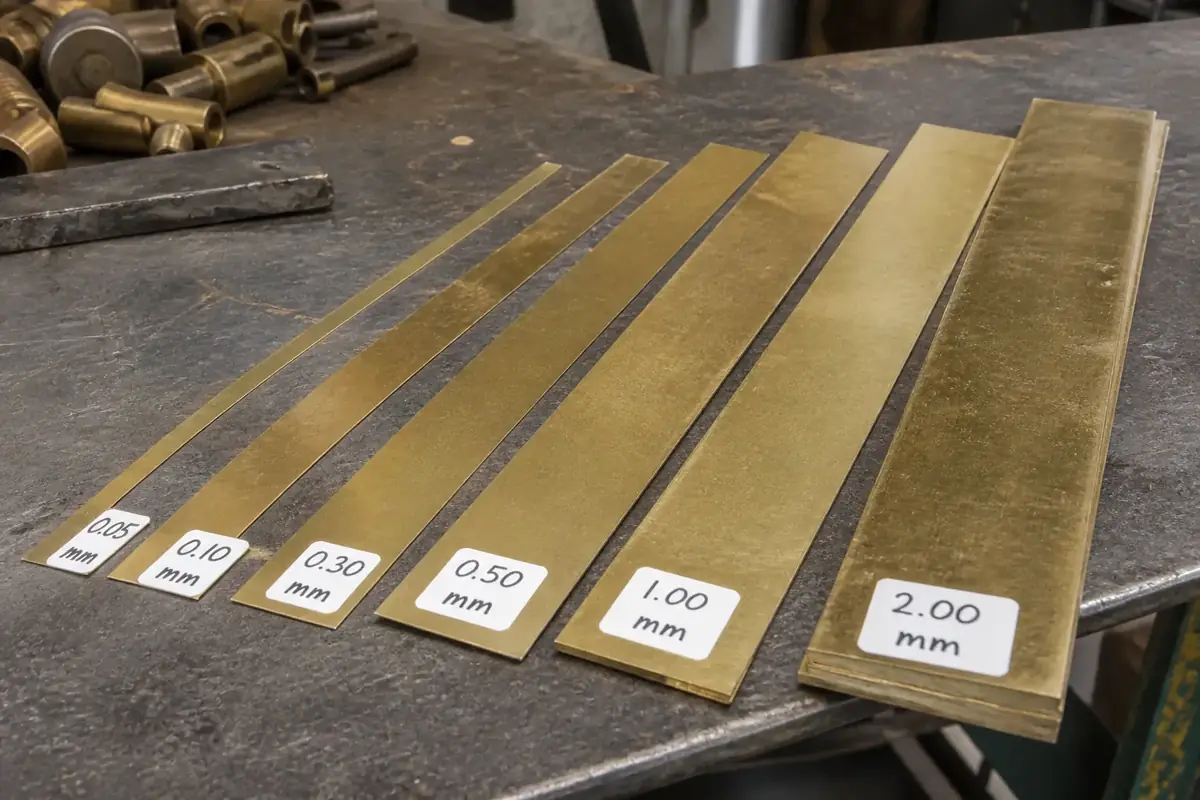
Thickness sets stiffness, acoustic feel, and how boldly a bend shows. Temper sets how the metal moves in tools. Soft or annealed stock forms and embosses more willingly. Harder tempers resist denting on switch plates and finger plates but need gentler bend radii.
Write both numbers. “Half-hard, 0.8 mm, 1220 mm coil width” tells a rolling or slit house what to do. “Yellow sheet for crafts” does not. Craft buyers ordering brass sheets for crafts can accept wider cosmetic variation; OEM hardware cannot.
Alloy still matters. Free-cutting rod chemistry is not automatically the right rolled sheet chemistry. For grade and market price drivers that affect flat products, use brass alloys, grades, and price factors.
Practical temper checks
- Prototype the tightest bend before locking a hard temper for appearance parts.
- Ask whether coil set will affect flatness after blanking.
- Confirm grain direction if long architectural strips must stay straight on walls.
- Sample polish response—some tempers burnish unevenly under aggressive buffing.

Brass shim sheet and precision stock
Brass shim, brass shim sheet, and brass shim stock exist to fill gaps, set machine alignment, and tune assemblies. Buyers care about thickness accuracy and flatness far more than decorative colour match. Laminated shim packs and single-gauge sheets serve different maintenance habits—say which you need.
Do not recycle architectural strip tolerances onto shim. A wall trim that is 0.05 mm heavy may still look fine; a shim that is 0.05 mm heavy can tilt a bearing housing. Call out thickness tolerance explicitly and protect edges in packing so soft gauges do not crease.
Architectural trim and protective profiles
Rolled and formed brass shows up as brass skirting, brass floor trim, brass stair nosing, brass corner guards, brass corner protectors, and brass corner trim. These profiles take scuffs, mop chemicals, and luggage hits. Finish durability and fixing method matter as much as the raw sheet price.
Brass strips for furniture and brass strips for wall programs often need colour consistency across batches. Lacquered bright brass and living finishes age differently—decide which patina story the interior designer actually wants. Broader décor contexts continue in brass home décor, mirrors, trays, and planters.
Cladding and laminate-style wraps are related but not identical to thick plate. Confirm substrate, adhesive system, and fire/building rules for the destination market before you treat decorative wrap like structural plate.

Door, switch, and mounting plates
Brass door plates, brass finger plates, door finger plates, brass letter plate assemblies, brass switch plates, antique brass switch plates, and brass wall plates are finished hardware categories built from sheet blanks. Edge radius, screw hole positions, and finish wear under fingerprints decide returns more than mill gloss on day one.
A light fixture mounting plate or T-slot style accessory plate is an engineering blank: hole pattern, flatness, and load path come first. Cosmetic matching to nearby luminaires comes second. Keep electrical earthing and insulation clearances in the drawing notes when plates sit behind live gear.
Finish options—polished, brushed, antique—should reference a visual standard. Details on appearance routes sit in brass finishes: antique, polished, brushed.
Plated brass, jewellery blanks, and surface calls
Search language often blends substrate and coating: gold plated brass, 14k gold plated brass, 18k gold plated brass, silver plated brass, chrome plated brass, and brass gold plated jewellery. For sheet programs, specify base metal first, then plating system and thickness. Plating does not fix the wrong temper for forming.
Jewellery and craft blanks cut from sheet need clean edges and controlled hardness for stamping or engraving. Industrial chrome-style coatings on hardware plates need adhesion after forming—sequence blank → form → polish → plate, and write that sequence into the process note.
Wire and chain forms that pair with sheet jewellery or hanging hardware are covered separately in brass wire, chain, and allied forms.
“Order the sheet you can form; plate the part you can sell—never reverse that order on a hope and a kilo rate.”
Pital plate vs industrial plate stock
Queries for brass plate for eating, pital plate, and a brass plate set usually mean traditional dining utensils—not mill plate for CNC nesting. Those products are spun, pressed, or hand-finished housewares with polish and weight expectations of their own.
Industrial buyers asking for brass plate for sale or comparing brass plate price lists should still state thickness, cut size, and alloy. Soft marketing photos of dining thalis do not substitute for a fabrication blank drawing. Keep the categories separate so quotes stay comparable.
Specs comparison: matching flat form to job
Use this table to keep RFQs honest across mixed flat-product programs.
| Form / SKU family | Priority specs | Typical end use | Common failure |
|---|---|---|---|
| Brass sheet metal | Thickness, temper, surface | Stamping, cladding, blanks | Crack on bend; orange peel |
| Thick brass plate | Thickness, flatness, cut size | Mounting plates, heavy blanks | Warp after cutting |
| Brass strips | Width, temper, edge, colour | Furniture/wall trim, stampings | Camber; colour mismatch |
| Shim stock | Thickness tolerance, flatness | Alignment, gap filling | Oversize gauge; creases |
| Hardware plates | Hole pattern, finish wear | Doors, switches, letters | Finger marking; edge sharpness |
| Perforated sheet | Hole/pitch/open area | Screens, panels, overlays | Weak borders; pattern drift |
What drives brass sheet price and plate quotes
Brass sheet price and brass plate price move with copper markets, but conversion cost often dominates thin gauges and cut-to-size work. Wide architectural sheet, precision shim, and small craft packs are not comparable on a single “per kg” screenshot.
Serious brass sheet suppliers will ask for temper, surface, and blank size before locking a number. If a quote arrives without those questions, assume assumptions—and verify them before you buy brass sheets for sale listings at face value.
Packing is part of price. Soft sheet scratches in transit; unprotected corners of stair nosing arrive looking used. Budget interleave paper, edge guards, and carton strength when you compare landed cost.
Blanking, forming, and finish sequencing
Flat brass rarely stays flat in the customer’s hands. Door plates get pierced and radiused. Furniture strips get brake-formed. Shim gets sheared into awkward shapes that must still measure true. Sequence the operations on the RFQ: blank → form → polish → plate or lacquer → pack. Skipping that order is how formed parts crack after plating baths harden residual stress stories.
Tooling notes help. Soft temper that embosses a logo may oil-can on a large switch plate. Hard temper that stays flat may orange-peel under aggressive polish. Prototype both extremes when cosmetics and geometry fight each other. For perforated panels, keep solid borders wide enough that the sheet does not act like a floppy net during handling.
Colour match across batches is a real cost. Architectural brass strips for wall programs that span multiple floors need retained masters and lighting notes. A “close enough” coil photographed under warehouse fluorescents can look green beside yesterday’s lacquered lot in warm lobby LEDs.
Storage and site handling
Bright sheet fingerprints permanently if site crews handle it with bare hands and then delay lacquer touch-up. Issue gloves, interleaf paper, and a simple rule: unfinished faces stay covered until install day. Stair nosing and corner guards take luggage hits—specify whether the finish is sacrificial living brass or a protected lacquer system that must be repaired after damage.
Cut-to-size blanks reduce scrap on site but raise conversion cost at source. Nesting drawings from the buyer help mills and fabricators quote honestly. Without nesting, every “approx sheet size” guess becomes someone’s margin padding.
Buyer RFQ checklist for flat brass
- Form — sheet, plate, strip, shim, perforated, or finished hardware plate.
- Thickness and tolerance in mm (and width/length or coil width).
- Temper / hardness and any grain-direction notes.
- Alloy and plating stack if coatings are required after forming.
- Surface standard — mill, brushed, polished, antique target.
- End use — machine shim, wall trim, door plate, craft blank, dining utensil.
- Secondary ops — blanking, piercing, forming, lacquer.
- Packing — scratch protection and marking rules.
One sentence that names the end use prevents half the wrong-material shipments in this category. Use it.

FAQ: brass sheet, plate & strips
Do door plates and craft sheets share the same stock spec?
They may share a sheet family, but hardware needs tighter cosmetic and edge control for daily handling. State the end use on the RFQ.
What is the difference between brass sheet and brass plate?
Sheet usually means thinner rolled stock; plate means thicker material. Specify thickness in millimetres so the words cannot fight each other.
What temper should I order for strips that must bend?
Softer tempers form more cleanly; harder tempers resist dents. Match temper to the tightest bend and prove it on a sample blank.
Is a brass plate for eating the same as industrial plate?
No. Pital or dining plates are finished utensils. Industrial plate is fabrication stock. Keep RFQs in separate lanes.
How do shim sheet and decorative strip differ?
Shim prioritises precise thickness and flatness. Decorative strip prioritises colour, edge, and visual match. Write tolerances accordingly.
Can I order gold plated or chrome plated brass as sheet?
Specify base sheet first, then plating on the formed part. Coatings do not replace correct temper and thickness selection.
What drives sheet and plate price quotes?
Metal markets, gauge, width, temper, finish, cut-to-size work, and volume. Thin precision stock and wide architectural sheet rarely share one kilo logic.
When is perforated brass sheet the right call?
When open area and hole pattern are functional or visual requirements—screens, panels, overlays. Specify hole, pitch, and borders before pricing.
Incoming checks for flat brass lots
Mic thickness at several points across width—not only the label edge. Check temper with a simple bend coupon when forming is critical. For decorative lots, compare colour under the same light as the install site. For shim, verify thickness with a calibrated stack method and reject creased corners that will read as local high spots.
Document coil or sheet IDs against the certificate. When a wall of brass strips for furniture shows a colour step halfway down a run, you want lot traceability, not a shrug. Scrap a suspect master early; replacing installed trim later costs more than the metal ever did.
Conclusion
Flat brass earns its keep when thickness, temper, and end use are named in the same breath. Sheet, plate, strip, shim, and finished hardware plates are related—not interchangeable.
Sample the bend, protect the surface in transit, and separate dining-plate language from mill-plate language. Do that, and brass sheet plate and strips become a controlled input instead of a guess priced by the kilo.
Sourcing Brass Sheet, Plate or Strip?
Share thickness, temper, and cut sizes for a direct sheet and strip enquiry. Review flat forms and related fabrication options with supply-desk support on Jamnagar.net.