Brass Home Decor: Mirrors, Trays, Planters, and Accents

A room rarely needs twenty yellow objects. It needs a few well-chosen brass home decor mirrors trays planters that share finish, scale, and purpose. Mirrors bounce light. Trays organise surfaces. Planters and bowls land the eye. Candle holders and wall pieces finish the story—if you stop before the shelf groans.
Indian metal workshops supply both solid brass and brass-look assemblies with glass or wood. Quality spreads wide. This hub treats brass home decor as a buying and styling checklist: construction, finish matching, moisture reality for planters, and packing for fragile glass.
Coordinate metal with doors and lights early. A polished mirror beside antique handles reads accidental. Cross-check finishes in antique, polished, and brushed brass finishes before you commit a whole floor.
Highlights
- Start with one mirror + one tray + one vessel; add accents later.
- Match finish to hardware and lighting in the same sightline.
- Use liners in planters unless the metal is built for water.
Table of contents
- Building one metal story in a room
- Brass mirrors and brass-and-glass frames
- Trays, cake stands, and serving surfaces
- Planters, plant pots, and moisture rules
- Bowls, urli, vases, and centrepieces
- Candle holders, stands, and candle cups
- Wall art, hangings, and small accents
- Finish coordination with hardware and lighting
- Decor category comparison table
- Styling scale without clutter
- Room-by-room buying notes
- Quality tells without a factory visit
- Hospitality and staging programs
- Care, gifting, and trade notes
- FAQ
Building one metal story in a room
Brass items for home decor work when they repeat a finish language. Mixed “gold,” “champagne,” and “antique” in one cabinet usually looks like leftover shopping, not design. Pick polished, brushed, or antique as the hero, then let wood, stone, and fabric carry contrast.
Brass accents should support architecture—door levers, light stems, mirror frames—not fight them. If the room already has busy patterns, choose quieter bowls and trays. If walls are plain, a brass sun wall hanging or bold framed mirror can take the lead.
Brass and wood pair naturally on consoles. Brass and glass show up in trays, mirrors, and some candle lanterns. Name the materials on the PO so shops do not substitute coated steel that only photographs like brass under warm bulbs.
“Three related brass pieces beat twelve random gold SKUs. Restraint is the finish that never tarnishes.”
Brass mirrors and brass-and-glass frames
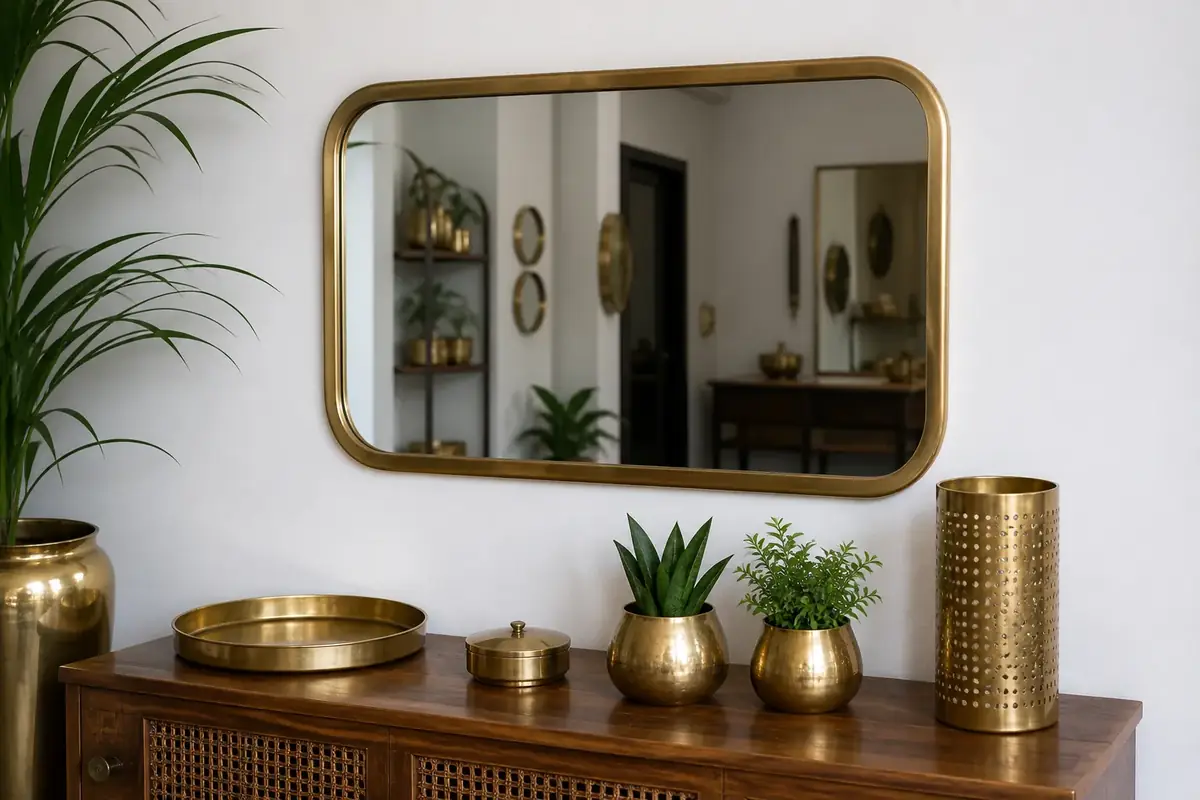
A brass framed mirror or polished brass mirror is often the largest reflective surface in the metal story. Round, arched, and rectangular frames each change how a wall feels. Antique brass wall mirror and antique brass round mirror styles soften bright rooms; high polish amplifies light in darker halls.
Brass and glass quality shows at the rebate: glass should sit firm without stress cracks, and mirror backing should resist bathroom humidity if that is the destination. Dressing-table mirrors and floating-frame looks need stable stands or secure wall cleats—do not hang heavy frames on a single weak nail.
Side light reveals waviness in cheap mirror glass and uneven polish on frame faces. Approve samples the way you would approve door hardware: same finish master, same lighting.
Oversize statement mirrors need two-person handling notes in the carton. Corners take the first hits in stairwells. Request corner protectors and a clear “glass this side” mark. For gallery walls, keep frame depths consistent so a brass floating frame does not project oddly beside thinner art.
Antique brass mirror bathroom programs face steam and cleaners. If the frame finish is living unlacquered brass, expect faster darkening near showers. That can be a design feature—just do not promise jewellery-case brightness in a wet room without maintenance.
Placement notes
- Entry mirrors: leave door-swing clearance and bag-hook space.
- Dining mirrors: watch glare from pendant lights.
- Bathroom mirrors: confirm moisture-appropriate backing and finish system.
Trays, cake stands, and serving surfaces
Trays are the organisers of brass home decor items. A rimmed tray collects bottles, coasters, and remote controls so the console does not look like a parts bin. Handles should be smooth; sharp solder edges catch sleeves.
A brass cake stand doubles as a dessert pedestal or plant riser when not in food service. Check plate flatness and pillar joins. Nested tray sets help hospitality programs; label diameters so staff do not mix unstable stacks.
Glass-inset trays need the same seating discipline as mirrors. If the glass rattles in the showroom, it will rattle after shipping. Felt pads under tray feet protect lacquered consoles during everyday use.
Planters, plant pots, and moisture rules
A brass planter, brass plant pot, or large brass planter can be solid metal theatre—or an expensive water stain waiting to happen. Most decorative shells want a removable liner. Overflow saucers protect floors when guests overwater.
Antique brass planter finishes hide water spots better than mirror polish, but standing water still attacks seams and lacquer. Outdoor use needs an honest weather conversation; many indoor planters are not marine hardware.
Drainage holes cut into thin decorative brass without a liner plan often create drips onto wood. Prefer liner systems unless the SKU is engineered for soil and water. When in doubt, pot the plant in a nursery container and drop that insert into the brass shell—simple, reversible, and floor-safe.
“If the planter costs more than the console, assume you will use a liner. Floors are harder to replace than plastic inserts.”
Bowls, urli, vases, and centrepieces
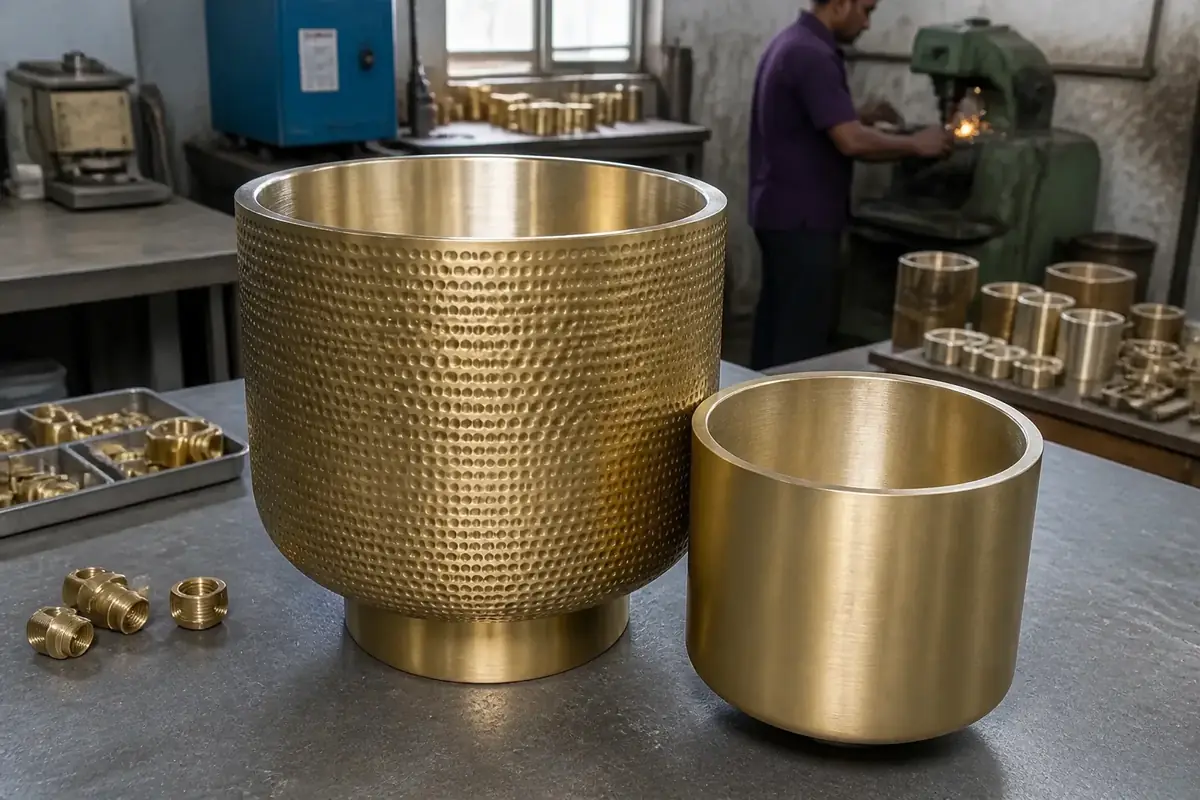
A brass bowl, small brass bowl, or brass bowl set covers keys, fruit, or empty sculptural space. Brass bowl decor and brass decorative bowl listings should state diameter and depth; shallow bowls suit floating flowers, deeper ones suit fruit.
Brass urli / brass urli bowl forms are wide traditional vessels popular as entry centrepieces. An urli bowl with stand or brass urli with stand changes height and tip risk—check stand welds and floor pads. Antique brass bowl finishes photograph richly with petals and water; wipe mineral spots if you use tap water displays.
Brass vase decor and a large brass vase need stable footprints. Narrow necks look elegant and tip easier on busy sideboards. Brass fruit bowl pieces should have smooth interiors if they see daily citrus oils and washing.
A brass globe, basket, or sculptural cube can act as a single statement object. Keep those one-per-room unless you are staging a shop display.
Candle holders, stands, and candle cups
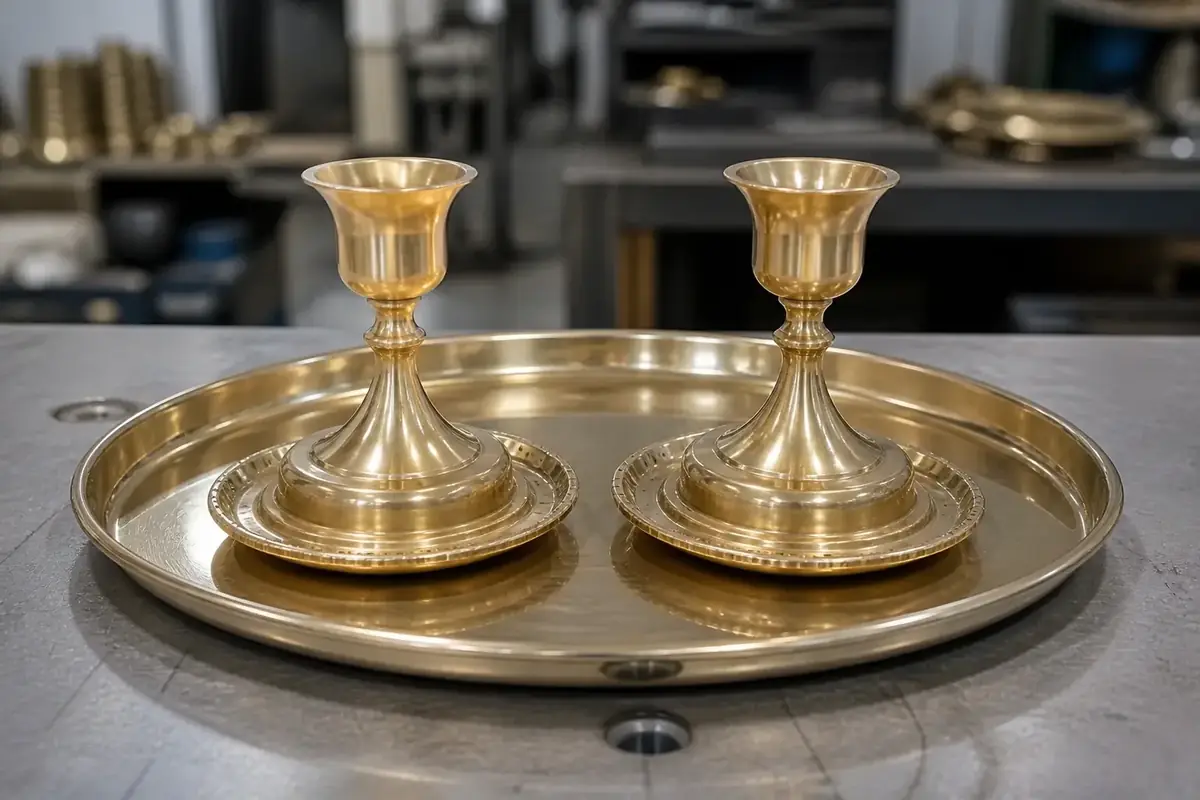
Brass candle holders, brass candle stand pieces, and brass candlesticks are classic accents. Match candle cups to your candle diameter so wax does not lean. Antique brass candle holders and antique brass candlesticks hide drips better than polished stems; polished stems look sharper on formal tables.
Barley-twist and figurative stems need especially stable bases. Pair holders on a tray to catch wax. A single brass candle accent on a shelf is enough when the mirror already dominates the wall.
Open flame rules still apply: clearance from curtains, no unattended burn, and cool-down before moving holders. Diffusers and non-flame fragrance objects are safer on crowded bookcases if you want metal presence without fire risk—a brass diffuser can fill that role when designed for it.
Cluster candle cups on a tray when entertaining so wax stays contained and the composition reads intentional. Odd numbers—three or five stems—usually look less rigid than perfectly mirrored pairs on long dining tables, unless full left-right symmetry is the explicit design brief for that room.
Wall art, hangings, and small accents
Brass wall decor and brass wall art range from geometric panels to figurative hangings. A brass wall hanging or brass sun wall hanging needs a rated hook and a wall that can take the load. Hollow lightweight pieces suit drywall better than solid cast discs. Ask for the approximate hanging weight before you drill into the wall, and always use proper wall anchors rated well above that number.
Smaller accents—brass coasters, brass paper towel holder, basket forms, and desk objects—should share the hero finish. Too many tiny metals create visual noise. Gift-leaning assortments overlap with brass decorative gift items; keep shrine-specific pieces in the pooja guide when the intent is religious use.
Finish coordination with hardware and lighting
Decor does not live alone. Door levers and cabinet knobs teach the eye what “brass” means in that house. Align with brass door hardware, handles, knobs, and hinges when renovating whole floors.
Pendants and wall lights add another metal plane. If stems are brushed and the mirror is mirror-polished antique, the clash will show in evening photos. Use brass lighting and electrical fittings as the third leg of the finish triangle.
Lacquered decor near candles and kitchens will age at edges. Living finishes will darken. Neither is a defect if you sold the right expectation.
Decor category comparison table
| Category | Primary job | Spec focus | Common failure |
|---|---|---|---|
| Mirrors | Light + wall anchor | Frame rigidity, glass seat, hang rating | Rattle glass; weak cleats |
| Trays / cake stands | Organise surfaces | Rim, handles, flat plate | Wobbly pillars; sharp edges |
| Planters | Greenery scale | Liner, seams, footprint | Water damage without insert |
| Bowls / urli / vases | Centrepiece mass | Diameter, depth, stand stability | Tippy stands; thin dent-prone walls |
| Candle holders | Warm accent light | Cup size, base mass | Lean candles; wax on furniture |
| Wall hangings | Vertical interest | Hook strength, weight | Pulled anchors; finish mismatch |
Styling scale without clutter
Use the “one hero, two supports” rule on each surface. Console: mirror hero, tray support, bowl or planter support. Dining table: urli or vase hero, candle pair support—then stop. Bookshelf: one wall hanging axis or one sculptural object, not both fighting.
Repeat shapes. Round mirror with round tray calms a room. Mixing every silhouette from the catalogue creates restlessness. Leave negative space; brass reflects it back as glow rather than clutter.
Seasonal swaps help: heavier planters in monsoon corners, brighter polished trays for festive hosting, quieter antique bowls for everyday. Storage for off-season pieces should use soft wraps—polished rims scratch each other in bare stacks.
Lighting colour temperature changes how brass reads. Warm bulbs push polished brass toward gold; cool daylight LEDs can make the same piece look paler. Approve finishes under the lamps you will actually install, especially when a polished brass mirror faces a cool pendant.
Pet and child households should favour stable bases and skip slender candlesticks on low tables. A heavy urli on the floor may be safer than a tippy vase at toddler height. Choose rounded rims on trays used as play-adjacent catchalls.
Outdoor covered balconies can host planters with liners, but monsoon wind tips tall stems. Weight the base or switch to lower bowls. Unfinished iron stands under brass bowls can rust and stain stone—specify protective feet.
When layering brass and glass coffee-table objects, keep heights stepped: low bowl, medium candle, taller vase—not three identical heights fighting. The eye wants a quiet hierarchy more than another SKU.
Room-by-room buying notes
Entry: A mirror for last looks, a tray for keys, maybe a small bowl. Skip tall unstable candle stems near swinging doors. If you want seasonal flowers, an urli with a low centre of gravity beats a tippy vase.
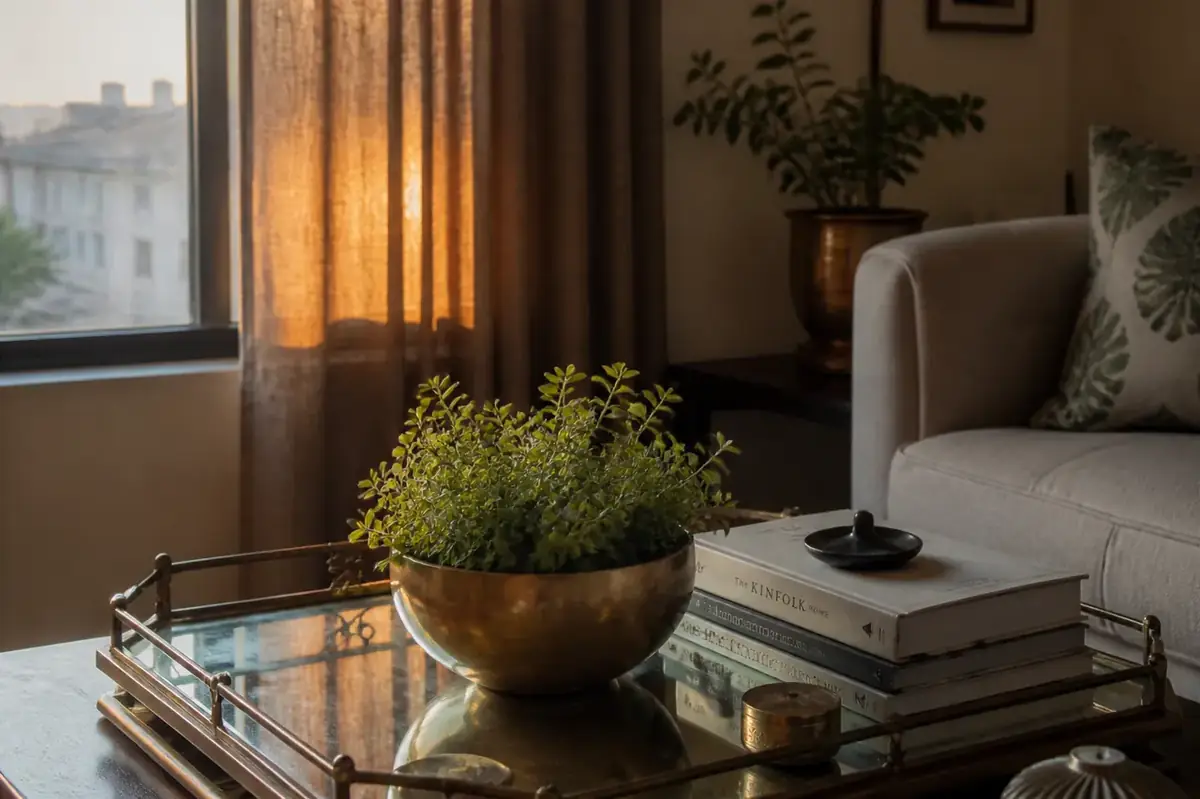
Living room: Let one large object lead—framed mirror, large planter, or wall hanging. Support with a tray on the coffee table and a candle pair. Bookshelf metals should be smaller so spines remain readable.
Dining: Centrepiece urli or vase plus candle holders on a runner tray keeps wax off wood. Avoid mirror glare aimed at seated guests. Cake stands earn their keep at parties and store nested afterward.
Bedroom: Softer antique finishes reduce glare at night. Dressing-table mirrors need sturdy stands; paper-towel-style utilitarian brass belongs in kitchens and baths unless the design is intentionally hotel-minimal.
Bath and kitchen accents: Moisture and cleaners attack lacquer. Prefer finishes you are willing to maintain, and keep planters on saucers away from raw wood vanities. A brass paper towel holder or coaster set should match nearby taps only if you already locked that finish family.
Quality tells when you cannot visit the workshop
Ask for weight, wall thickness range, and material notes—solid brass versus brass-plated steel. Request close-ups of joins, hanging hardware, and glass edges. Side-light photos expose orange-peel lacquer and uneven antique rub better than face-on catalogue shots.
For mirrors, ask how the glass is retained and whether the backing is humidity-rated. For planters, ask whether a liner ships in the box. For candle cups, ask the intended candle diameter in millimetres, not “standard.”
Return policies matter for glass SKUs. Budget a receiving inspection the day cartons arrive; freight claims weaken when boxes sat opened for a week.
Hospitality and staging programs
Hotels and rental stagers need repeatable SKUs. Lock a finish master and a short approved list: one mirror size, one tray size, one planter size, one candle pair. Reorders should match last year’s shade, not chase a new “trending gold.”
Spec sheets should include replacement glass part numbers where possible. A whole mirror frame should not scrap because one pane cracked in housekeeping. Keep a spare tray and candle pair in storage for high-traffic rooms so replacements match without emergency reorders in a different shade lot.
Care, gifting, and trade notes
Dust with soft cloths. Keep harsh abrasives away from antique contrast and lacquered shine. Water displays need occasional wipe-downs. Full cleaning methods live in brass cleaning, care, and maintenance.
Gift buyers should state finish and size, not only “something brass.” Trade buyers should separate glass-containing SKUs in packing specs and approve finish masters across mirrors, trays, and planters as one program when rooms will be staged together.
Wholesale assortments sell better when SKUs ladder: small bowl, medium bowl, large planter—same finish family. Random one-off shapes force retailers into discount bins.
E-commerce imagery should show scale against a common object—book, plant, or hand—because mirror diameters and planter heights compress on phones. Include a second image of the underside or hanging hardware; serious buyers look for those cues.
When bundling a tray with coasters and a candle pair, pre-match finishes in the warehouse. Customer disappointment spikes when the tray is antique and the cups arrive bright polished from a different bin. Kit packing is a finish-control process, not only a marketing bundle.
For export, humidity indicators in mirror cartons are cheap insurance. Fogged silvering discovered months later is hard to allocate between factory and freight. Document glass specifications the same way you document alloy notes on industrial parts.
Designers specifying whole-home packages should issue one finish board covering decor, door hardware, and lighting. Fragmented approvals are how “all brass” rooms still look pieced together. The metal can be excellent and the project still fail the photograph if shades drift.
FAQ: brass home decor
How do I keep brass accents from looking cluttered?
Limit each surface to a hero and two supports. Repeat one finish family instead of mixing every yellow tone.
What brass home decor pieces make the strongest first purchase?
A framed mirror, one tray, and a bowl or candle pair usually set the metal story. Add planters and wall art once scale feels right.
How do I choose between polished and antique brass for decor?
Polished is bright; antique hides fingerprints and reads heritage. Match nearby hardware and lighting finishes.
Can a brass planter hold real plants with water?
Use a liner unless the planter is built and sealed for moisture. Decorative shells alone often are not enough.
What should I check on a brass and glass mirror or tray?
Frame rigidity, glass seating, backing protection, and hang hardware. Rattles in the showroom become transit damage later.
Are brass candle holders safe for daily use?
Yes when bases are stable, cups fit the candle, and clearance is clear. Never leave flames unattended.
How do urli bowls differ from regular brass bowls?
Urli forms are typically wide and shallow, often used as decorative vessels. Stands change height and tip risk—inspect welds and pads.
What wall decor works best in brass?
Hangings and wall art with honest weight ratings and one shared finish. Match hooks to wall type.
Conclusion
Strong brass decor is an editing job. Mirrors, trays, and planters do the heavy lifting; bowls, candles, and wall pieces refine. Finish matching with doors and lights keeps the metal story intentional.
Buy construction you can hang, water, or dust without drama. Then give the room enough empty space that the brass can actually shine. A coherent finish board shared with door hardware and lighting will do more for the final photograph than another small accent bought on impulse. Edit first, decorate second, and let mirrors, trays, and planters carry the metal story with quiet confidence.
Need Decor Components or Wholesale Brass Accents?
Source mirrors, trays, planters, and matching finish programs through a direct Jamnagar supply desk. Share your assortment brief or browse categories on Jamnagar.net.