Brass Lighting and Electrical Fittings: Educational Guide

Brass shows up twice in the electrical world: as warm metal in lamps and pendants people choose for rooms, and as dependable hardware in glands, terminals, and conductive parts people rarely photograph. This hub on brass lighting and electrical fittings keeps those lanes clear so designers, importers, and OEM buyers ask for the right drawings.
Jamnagar’s machine shops and finishers supply many turned and cast components used in brass lighting assemblies and industrial electrical hardware. Finished luminaires may be wired and certified elsewhere. Understanding the metal parts—canopies, arms, bushings, brass gland bodies, switch covers—helps you write RFQs that factories can answer without guessing lamp type or IP rating.
The tone is educational. For alloy background that affects both décor and conductive parts, see brass alloys, grades, and price factors.
Highlights
- Split decorative luminaires from safety-critical electrical hardware in every PO.
- Finish names (antique, gold, silver, black-and-brass) are not alloy grades.
- Wiring standards and certifications travel with the destination market—not with the polish.
Table of contents
- Two lanes: décor lighting vs electrical hardware
- Pendants, hanging lights, and ceiling mounts
- Table, floor, and standing brass lamps
- Wall lights, sconces, and antique styles
- Lanterns, hurricane lamps, and vintage looks
- Finishes: polished, antique, gold, silver, mixed
- Glands, switches, sockets, and clamps
- OEM components inside a light fixture
- Category comparison table
- Sourcing notes for trade buyers
- FAQ
Two lanes: décor lighting vs electrical hardware
Lane one is visual: brass lamp families, pendants, wall lights, and ceiling fixtures chosen for atmosphere. Lane two is functional: brass cable gland products, conductive hardware, and mechanism parts that must meet electrical practice. Mixing the lanes in one vague RFQ produces quotes that cannot be compared.
Industry use cases for both appear across building, marine, and machinery contexts in brass applications by industry. Your job as a buyer is to state which risk profile applies: “looks right under a dining table” versus “seals a cable into a panel.”
Some projects need both—brass pendants in a lobby and brass glands in the plant room. That is fine. Put them on separate lines with separate QC. Shared finish language across a building is optional; shared safety standards are not.
“A pendant can forgive a soft highlight. A gland cannot forgive a soft thread.”
Pendants, hanging lights, and ceiling mounts
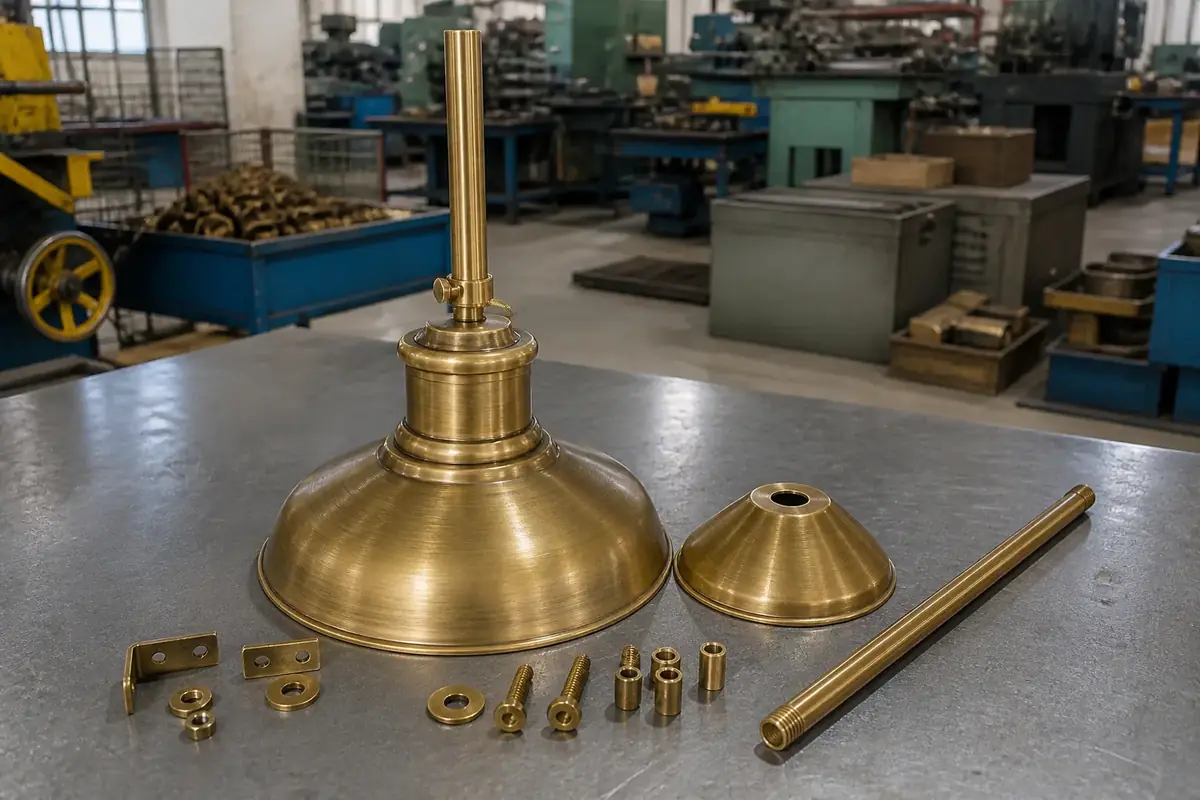
Brass pendant light and brass pendant programmes dominate hospitality and residential schedules. Related searches include brass hanging lamp, brass hanging lights, brass ceiling lights, and flush styles such as antique brass flush ceiling light or antique brass flush mount light. Each changes canopy size, rod or chain suspension, and shade interface.
Antique brass pendant light usually means finish direction. Chain-hung versions may use decorative chain that should match tone—not a random steel zinc plate. Glass-and-brass combinations need clear notes on who supplies glass, who supplies metal, and how the two meet at heat-exposed sockets.
Black and brass ceiling light, black and brass light fixtures, and related mixed schemes are popular. Specify which parts are black-coated and which remain brass so replacements and multi-lot orders stay consistent. Hand-finished antique work needs a physical master the same way door hardware does.
Pendant checklist
- Canopy diameter and ceiling box compatibility.
- Drop length; adjustable rod/chain notes.
- Lamp holder type and maximum wattage / LED module spec.
- Weight and fixing method for plaster vs concrete.
- Finish master including chain/rod and canopy together.
Table, floor, and standing brass lamps
A brass lamp can mean a small bedside piece or a tall living-room statement. Brass floor lamp, brass standing lamp, and brass floor lamps for living room need base stability and cord management as much as polish. A 5 feet brass lamp stresses packing design: stems dent, joints loosen, and finishes scuff if cartons are lazy.
Small brass lamp and antique brass lamp lines often target hospitality bedrooms. Brass lamps vintage styling may include spun shades, fabric shades, or glass. Floor lamp antique and black and brass floor lamp variants follow the same engineering: tip resistance, switch type (floor, inline, base), and plug standard for the market.
Brass lamp price conversations go wrong when buyers compare a hollow tube decorative stem to a heavy cast base with complex wiring. Weight, labour on antique finishing, shade inclusion, and testing explain most of the spread—not a single metal rate.
Lamps sit beside décor objects in many catalogues. If your programme also includes trays or mirrors, coordinate finish via brass home décor: mirrors, trays, and planters—but keep electrical safety docs on the lighting PO.
Cord sets, switches, and plugs are destination-specific. A lamp that ships with the wrong plug standard becomes a warehouse rework project. State voltage, plug type, and whether the buyer will rewire locally. If local rewiring is planned, metal kits without moulded plugs may be cleaner than forcing a non-compliant cord through customs.
Shade rings and harp hardware should be called out as brass, plated steel, or other. Mixed metals under one “brass lamp” name create colour mismatch when antique finishing is applied only to visible cast parts. Photograph the full assembly from base to finial under the same light you will use for e-commerce—cool warehouse LEDs lie about warm brass.
Tip tests and base weight matter for tall living-room lamps and hotel bedside pieces that get bumped by luggage carts. A beautiful stem with a light hollow base is a tip-over claim waiting to happen. Define minimum base diameter and mass, or require a tip test method in the sample approval pack.
Wall lights, sconces, and antique styles
Brass wall lamp, brass wall lights, antique wall light, and antique brass wall light SKUs need backplate size, projection, and whether wiring is concealed or surface. Swing-arm reading lights add joint durability. Up/down sconces add shade or glass retention notes.
Hotel corridors punish weak fixings and loose arms. Specify pull-test or torque expectations for adjustable joints when volume justifies it. For residential one-offs, a solid backplate and proper wall plugs still beat overbuilt laboratory language—match the brief.
IP ratings matter near bathrooms and outdoors. Decorative indoor sconces should not be silently reused as exterior wall lanterns without weather design. Say the environment on the drawing.
Bathroom sconces beside mirrors need glare and placement notes as much as brass tone. Drivers and transformers—if remote—should be listed even when the visible brass plate is the only part sourced from Jamnagar. Incomplete BOMs create “the light flickers” tickets that land on the metal supplier unfairly.
Picture lights and cabinet lights are small cousins with the same finish discipline. Narrow arms and tiny canopies show plating flaws faster than large pendants. Raise the visual AQL on small parts or accept more polish labour in the quote.
Lanterns, hurricane lamps, and vintage looks
Brass lanterns and brass hurricane lamp forms bridge décor and traditional lighting. Some are electrified; some remain candle or oil-style decorative objects. State fuel versus electric clearly—shipping, labelling, and liability differ.
Vintage cues—aged patina, cage frames, seeded glass—are finish and fabrication choices. They do not remove the need for safe lamp holders and strain relief on electrified versions. Heat near antique lacquers can accelerate dulling; LED modules reduce heat load on many modern builds.
Candle lanterns sold as décor should be labelled for open-flame use where relevant, including heat clearance from fabrics. Electrified hurricane conversions need hidden cord exits that do not spoil the silhouette—resolve that in design review, not after tooling.
Finishes: polished, antique, gold, silver, mixed
Buyers search brass light gold, gold brass light, brass light silver, silver brass light, and hand brass light as colour and craft cues. Translate those phrases into finish process language: lacquered polish, antique highlight, nickel-leaning “silver” tones, or hand-rubbed patina. Ambiguous colour words create lot drift.
Deep finish guidance lives in antique, polished, and brushed brass finishes. For lighting, add heat and fingerprint notes: wall switches beside a polished sconce will show wear differently than a high ceiling canopy.
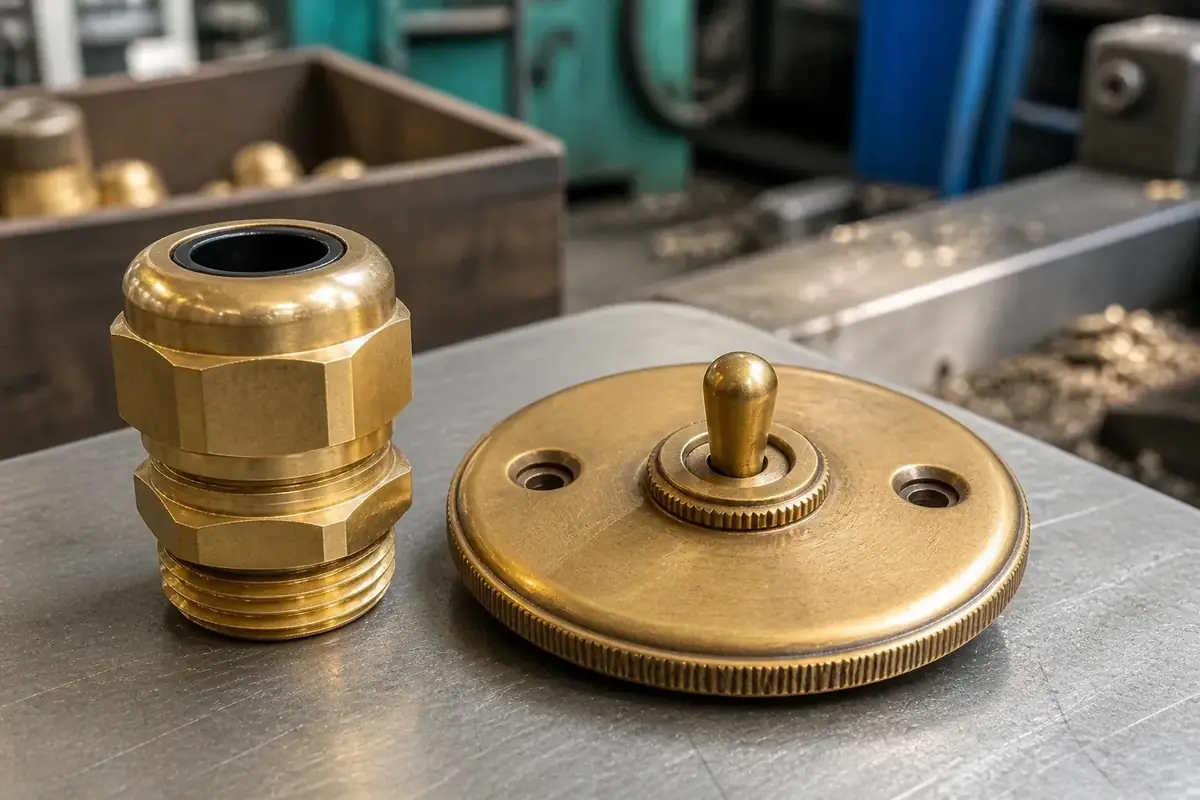
Antique brass light switch covers often sell as décor plates. Match them to nearby luminaires if the room schedule demands it—and still specify the electrical mechanism separately.
“Approve canopy, arm, and chain as one finish family. Matching only the shade ring is how dining rooms look accidental.”
Glands, switches, sockets, and clamps
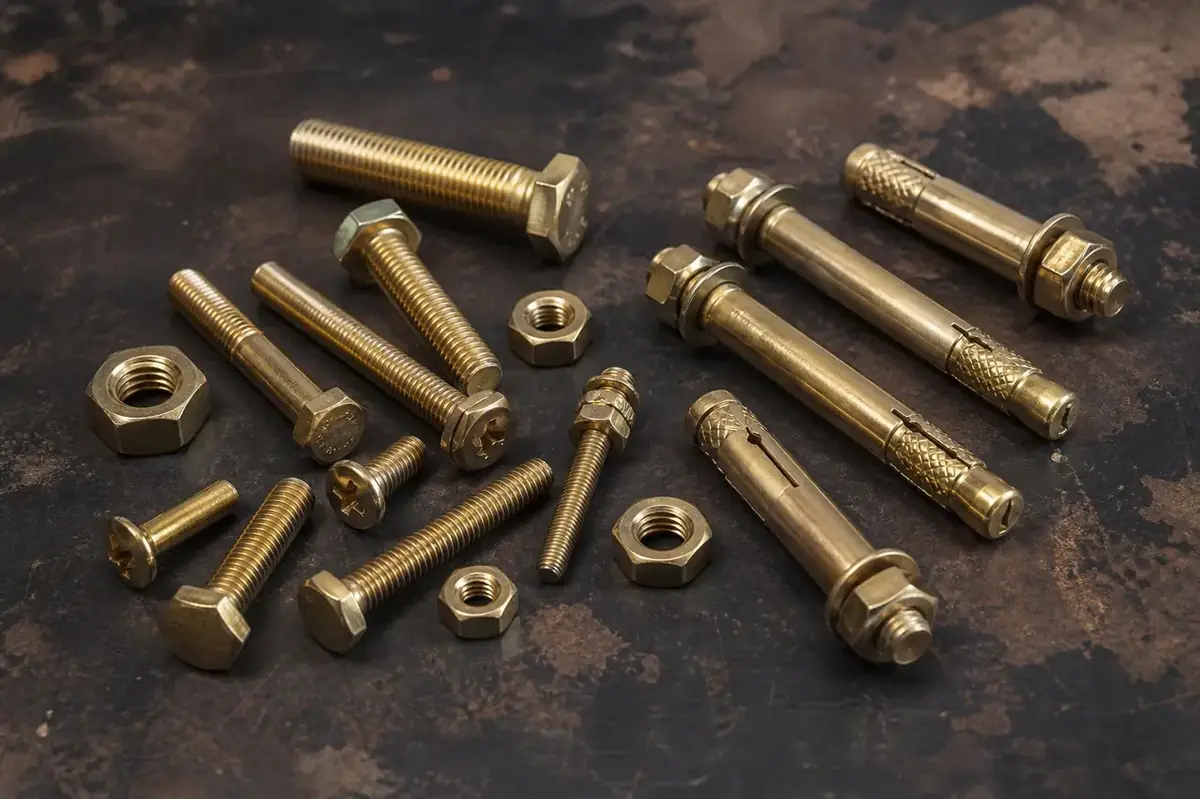
Brass cable gland and general brass gland products are industrial workhorses: thread into enclosures, clamp cable, and often provide sealing. They need thread standard (metric, PG, NPT, etc.), cable diameter range, and material notes. Decorative polish is optional; dimensional integrity is not.
Brass switches and brass sockets may mean toggle dollies and cover plates with vintage styling, or industrial switchgear hardware. Clarify. Decorative plates over modern mechanisms are common in restoration projects; the plate shop and the mechanism shop may differ.
Brass clamp parts appear in cable management and fixture assembly. Brass fan searches sometimes mean decorative fan hardware or entirely different products—do not assume lighting OEMs supply ceiling-fan motors. Keep scope sentences explicit.
Bushings, nipples, and threaded inserts inside luminaires and electrical assemblies often come from the same turning cells as other precision parts—see brass bushings, inserts, collars, and bearings.
Gland RFQs should list cable outer diameter range, armour if any, thread standard into the enclosure, and whether a locknut and earth tag are included. “Brass gland, medium” is not a size. Industrial buyers who send photos of a dusty sample without callipers still deserve a polite request for dimensions—guessing creates returns.
Switch and socket cover programmes for restoration work need module compatibility charts for the destination country’s wiring accessories. A UK-style plate on a different module family wastes a container. Include cut-out drawings and screw centres. Earth continuity rules remain the electrician’s domain; your metal plate still must not defeat them.
Where brass glands and decorative lighting share a factory group, keep plating baths and inspection plans separate if coatings differ. A decorative antique dip is a poor surprise on a precision gland thread. Router cards and rack labels prevent that cross-contamination more effectively than hoping operators remember.
OEM components inside a light fixture
A finished pendant rarely starts as one casting. Typical brass metal content includes canopy, tube or arm sections, cast decorative elements, turned reducers, lock nuts, and shade rings. Glass, wiring, lamp holders, and LED drivers are often bought in.
OEM buyers should balloon the BOM: which parts are brass, which are steel plated to look like brass, and which are plastic. Plated steel stems can be legitimate if labelled and corrosion-tested; silent substitution under a “solid brass” claim is not.
Heat path matters near halogen legacy specs; LED conversions change thermal loads and sometimes allow thinner decorative sections. If you redesign for LED, re-check shade rings and joint compounds that assumed higher heat.
Cluster and multi-arm fixtures multiply joint count. Every knuckle is a chance for looseness in transit. Define thread locker rules, knurled lock rings, or set-screw positions. Sample shake tests in the packing carton catch more failures than static shelf photos. If arms ship detached, include assembly torque notes for the destination warehouse.
Strain relief at cable exits is part of the metal design when cords leave through brass tubes. Cheap plastic bushings that crack void the elegance of a heavy canopy. Specify bushing material and pull-test expectations for portable lamps that get unplugged daily in hotel rooms.
Component RFQ prompts
- Alloy and finish for each metal part number.
- Thread interfaces between tubes, clusters, and holders.
- Wall thickness on load-bearing arms.
- Salt spray or humidity notes for coastal hospitality projects.
- Assembly torque and thread-locker rules if relevant.
Category comparison table
| Category | Primary specs | Finish focus | Common miss |
|---|---|---|---|
| Pendant / hanging | Canopy, drop, weight, holder type | Canopy + chain/rod match | Ceiling box incompatibility |
| Flush / ceiling | Depth, diffuser, lamp access | Edge highlight consistency | Heat build-up with wrong lamp |
| Floor / standing lamp | Height, base, switch, plug standard | Stem scuff resistance | Weak packing on tall stems |
| Wall light / sconce | Backplate, projection, IP if needed | Fingerprint zones | Indoor SKU used outdoors |
| Cable gland | Thread, cable range, seal rating | Usually functional, not décor | Buying by colour instead of size |
| Switch / socket covers | Module compatibility, earth rules | Match to room metals | Plate without compliant mechanism |
| OEM turned parts | Threads, concentricity, alloy | Plating before/after assembly | Silent steel substitution |
Sourcing notes for trade buyers
Decide whether you need finished luminaires, metal kits for local wiring, or only machined components. Each path has different documentation: packing lists and shade SKUs for retail lamps; melt certificates and gauges for glands; wiring diagrams and mark approvals for export lights.
- Map the room schedule: pendant, flush, wall, floor—then assign finish families.
- Separate industrial electrical hardware onto its own RFQ.
- State destination plug, voltage, and certification expectations early.
- Approve finish masters that include chain/rod/canopy together.
- Design packing for the tallest and most polished SKU, not the average one.
- Plan spares for high-breakage parts: glass, shades, set screws, finials.
Educational buying still benefits from concrete samples. Photograph samples under the same colour temperature as the installation. Warm LED against antique brass looks different from cool showroom fluorescents—judge finish in context.
When programmes span décor lighting and panel hardware, keep commercial conversations honest: decorative labour and industrial machining are different cost structures. Comparing a hand-finished hurricane lamp to a CNC gland on “brass kg price” helps no one.
Hospitality rollouts should freeze a lighting schedule by room type the same way door hardware uses a door matrix: lobby pendant, corridor wall light, guest bedside lamp, bathroom sconce, back-of-house utility. Attach finish codes and spare ratios. Night staff replace broken bedside lamps; if the finish lot drifted, every replacement photographs badly online.
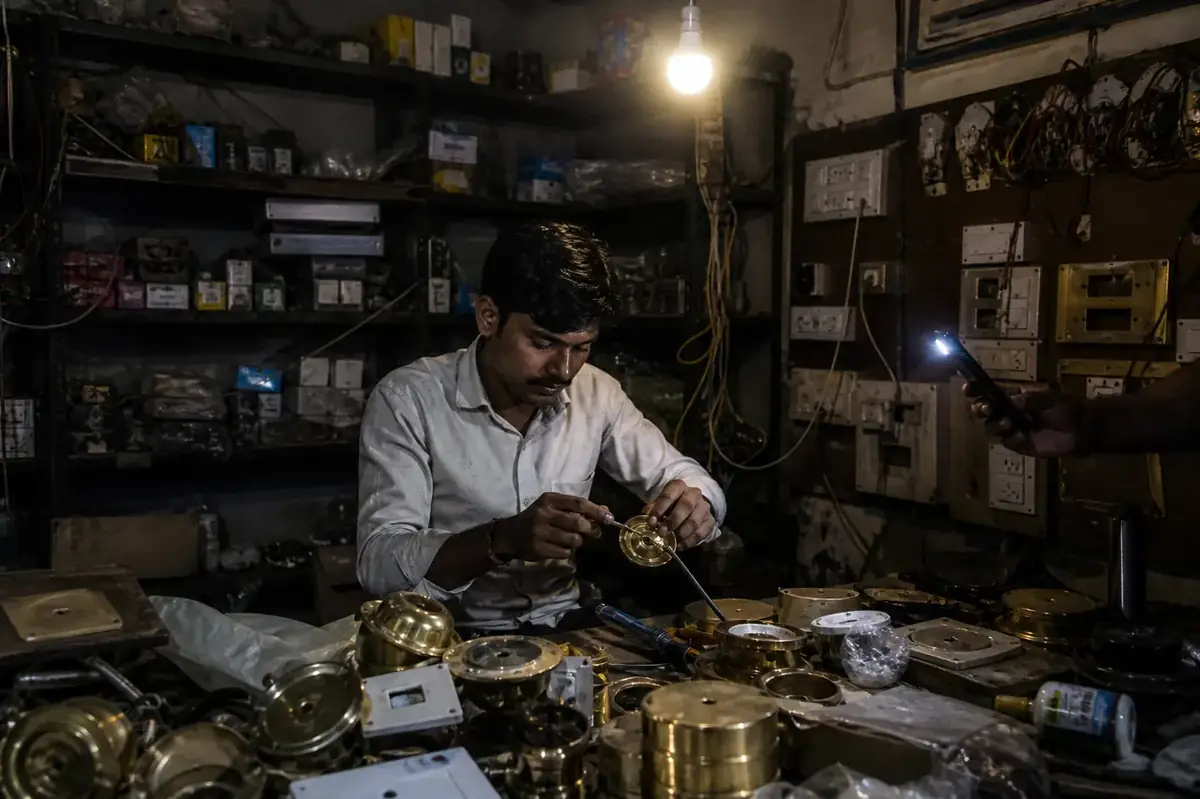
For OEM metal kits, define which assembly steps happen at origin versus destination. Soldering lamp holders, potting drivers, and hanging shades may be cheaper near the customer—but then packing must protect unfinished threads and unlacquered edges. Write the split of work on the PO so neither side assumes the other will lacquer “obvious” faces.
Certification timelines belong on the project plan, not as an afterthought when the container arrives. If a market requires specific marks on luminaires, decide who holds the certificate—factory, importer, or private-label owner—before tooling money is spent. Brass polish will not substitute for missing paperwork at customs.
Finally, train merchandising teams to stop using “antique brass” as a single SKU attribute across lamps, glands, and switch plates. Search traffic may lump them together; your ERP should not. Clean category hygiene is how educational hubs turn into cleaner purchase orders.
FAQ: brass lighting and electrical fittings
How should OEMs source brass components for lighting assemblies?
Split the BOM into metal parts, bought-in electricals, and glass/shade. Approve finishes on metal kits before wiring freezes the assembly.
What counts as brass lighting and electrical fittings?
Decorative luminaires and functional electrical hardware both qualify—but they need different specs. Pendants and lamps are one lane; glands and conductive parts are another.
Are antique brass pendant lights a different alloy from polished brass lamps?
Usually the difference is finish. Confirm base metal and thickness separately from antique or polished appearance.
What should buyers specify for a brass floor lamp or standing lamp?
Height, base stability, switch and plug standards, finish, shade interface, and packing for tall stems. Living-room scale lamps fail in transit more often than they fail in design.
How do brass cable glands differ from decorative brass lighting parts?
Glands are sized and tested for cable entry and sealing. Lighting parts prioritise silhouette and finish. Different drawings, different QC.
Can brass switches and sockets be purely decorative covers?
Covers can be decorative; mechanisms must follow electrical rules. Specify both layers so you do not receive plates without a compliant path to wire them.
What finish options are common on brass wall lights and ceiling lights?
Polished, lacquered, antique, brushed, and black-and-brass mixes. Use one master sample per family across flush, pendant, and wall SKUs when rooms must match.
Why does brass lamp price vary so widely?
Weight, fabrication route, wiring, shades, finish labour, and certification drive cost. Colour adjectives alone do not explain quotes.
Conclusion
Brass earns its place in lighting for warmth and craft, and in electrical hardware for machinability and thread integrity. Treat those strengths as two specifications that sometimes share a factory town—not as one blurry catalogue page.
Write clear RFQs: silhouette and finish for luminaires; thread and seal for glands; compliance for anything that carries current. Samples under real light finish the story.
When the lanes stay separate, quotes become comparable—and brass lighting programmes stay beautiful without borrowing risk from industrial parts they never meant to buy.
Need Electrical Brass Parts or Lighting Components?
Browse factory-linked electrical and component categories, or share drawings for glands, turned parts, and metal kits via Jamnagar.net.