How to Clean and Care for Brass Without Ruining the Finish
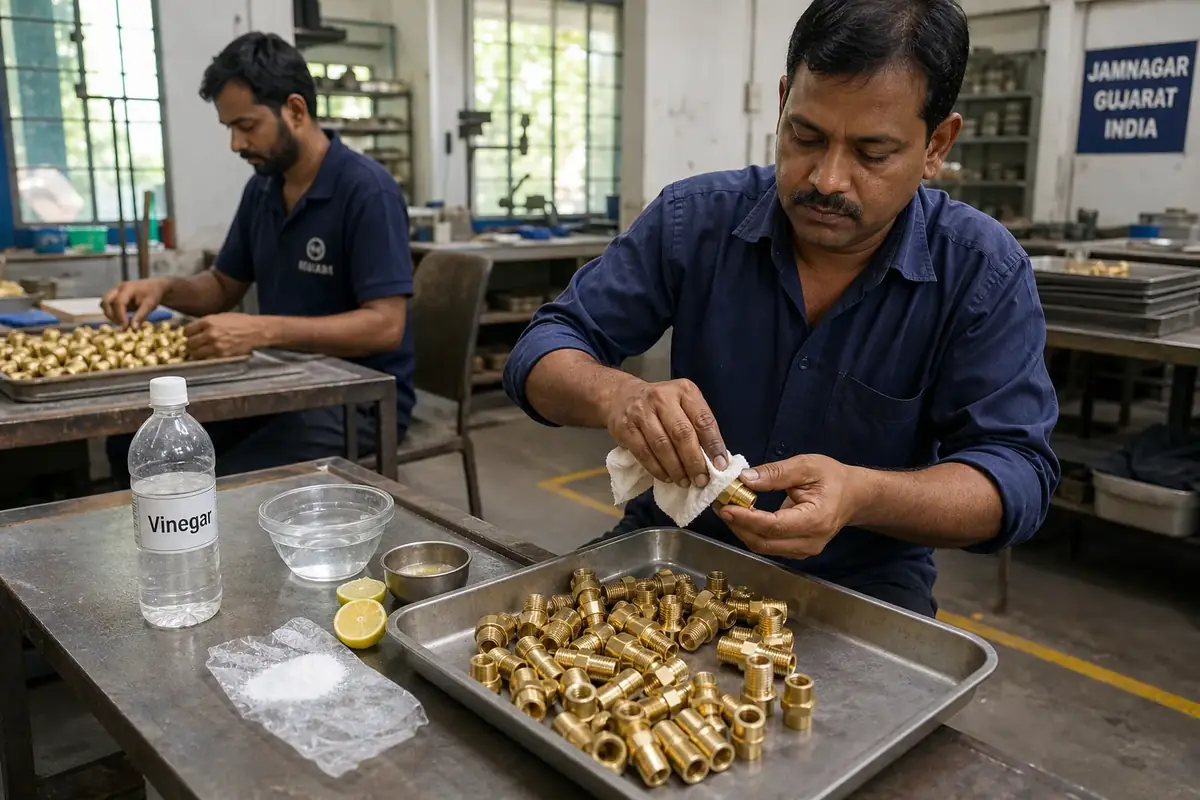
Brass tarnishes because copper-zinc alloys react with air, moisture, and fingerprints. That is chemistry, not a factory defect. Learning how to clean and care for brass starts with one question: what finish is on this piece, and was the darker tone intentional?
Aggressive scrubbing can restore mirror shine—and erase the antique look you paid for. The safer habit is identify, clean gently, then decide whether pital polish, a brass polishing compound, or a professional refinish is actually required.
This guide is for homeowners, retailers, and importers who handle polished décor, door hardware, faucets, pooja items, and utensils. It stays practical and avoids miracle claims.
Quick Lookup
- Identify lacquered vs bare vs antique before any abrasive step.
- Soap and soft cloth first; polish compounds second.
- Faucets and coated hardware usually want mild cleaners, not metal polish.
Table of contents
- Identify the finish before you clean
- Daily care that prevents heavy polishing
- Pital polish and brass polishing compound
- Household brightening methods—and limits
- How to clean a brass faucet
- Caring for antique and brushed looks
- Décor, door hardware, pooja, and cookware notes
- Care method comparison table
- Storage and display habits that reduce cleaning load
- Care cards retailers can actually give customers
- When to stop DIY and call a refinisher
- Mistakes that permanently change the look
- FAQ
Identify the finish before you clean
Bare polished brass darkens over time and can be brightened. Lacquered brass should stay relatively stable until the clear coat fails. Antique finishes intentionally keep dark recesses. Plated pieces may be brass-coloured over another metal—or brass with nickel/chrome elsewhere on the same product.
A quick check: if water beads and the surface looks glassy, you may be on lacquer. If high points are bright and grooves are brown-black by design, treat it as antique. When unsure, start with the mildest method on a hidden spot.
Finish vocabulary for buyers and retailers is mapped in brass finishes: antique, polished, brushed.
“The fastest way to ruin a gift piece is to polish an antique finish as if it were a neglected door knocker.”
Daily care that prevents heavy polishing
Dust with a soft dry cloth. Fingerprints hold salts and oils that accelerate local tarnish—wipe handles and frequently touched décor more often than shelf ornaments. Keep humidity swings in mind; bathrooms and coastal rooms push brass harder than dry closets.
For light soil, use lukewarm water with a drop of mild dish soap, then rinse residues and dry completely. Water spots left overnight become the next cleaning project. Microfibre works; paper towels can scratch soft polished faces if grit is present.
Storage matters for retailers. Separate polished pieces with tissue or foam. Do not nest raw polish against antique parts in the same tray if you care about colour matching at unpack.
Schedule beats heroics. A weekly wipe on door pulls prevents the thick oxidation layer that tempts people toward aggressive compound. Décor that only gets attention once a year invites exactly the over-cleaning that removes detail from chased surfaces.
Keep cleaning cloths dedicated. A rag used on stainless appliances or dusty floors will grind grit into soft brass. Label a brass-only cloth in commercial settings; the cost is trivial beside refinishing a lobby handrail.
Pital polish and brass polishing compound
Pital polish is everyday language in many Indian households and workshops for products that clean and brighten brass (pital). Used correctly on unlacquered bright brass, it cuts light oxidation. Used on lacquer or intentional patina, it can haze coatings or flatten contrast.
Brass polishing compound—sometimes shortened to brass compound—is typically a buffing abrasive for wheels or firm hand rubbing. Workshop compounds cut faster than consumer creams. They belong on bare metal that is supposed to shine, not on every “brass-coloured” object in the house.
Workshop tip from finishing floors: compound grades differ. A cutting compound removes oxidation quickly and can leave swirl; a finishing compound refines the shine. Home users often own only one paste and overcut detail on engraved plates. Stop when the tarnish is gone—do not keep cutting for sport.
Residue in crevices looks like fresh dirt a week later. Use a soft brush on carved décor after polishing, then a final dry cloth. On threaded hardware, keep polish out of threads if those threads must assemble cleanly afterward.
If a product ships with factory lacquer, assume polish is off-limits until a refinisher removes the coat. Many “brass” catalogue photos are lacquered bright; customers who polish them at home create cloudy patches and then blame the seller.
Sensible polish sequence
- Confirm the piece is bare polished brass, not lacquered or antique-by-design.
- Clean soap soil first so grit does not grind into the surface.
- Apply a small amount of polish or compound; work in sections.
- Remove residue fully; leftover film attracts dust and spots.
- Optional: thin wax or manufacturer-approved protectant for bare bright brass.
Household brightening methods—and limits
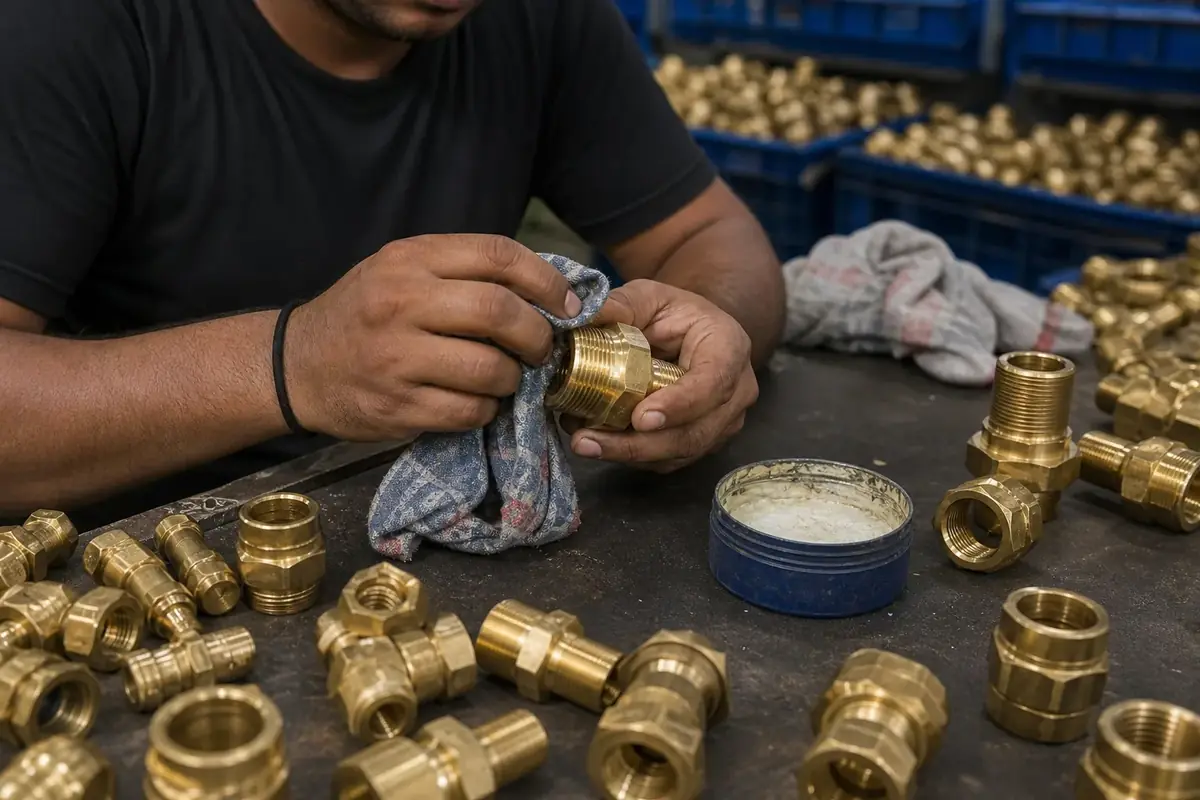
Kitchen acids—lemon with salt, vinegar mixes, tamarind pastes in some traditions—can brighten bare brass. They can also etch, strip patina, and destroy lacquer. If you try them, spot-test, keep contact brief, rinse thoroughly, and dry. Prefer commercial polishes formulated for brass when the piece is valuable.
Baking-soda pastes are milder abrasives. Still treat them as optional, not default. Never combine random chemical cleaners; reactions and staining are real risks on mixed-metal assemblies.
After any wet clean, drying is non-negotiable. Crevices in carved décor and threaded faucet bases hide moisture that restarts tarnish overnight.
How to clean a brass faucet
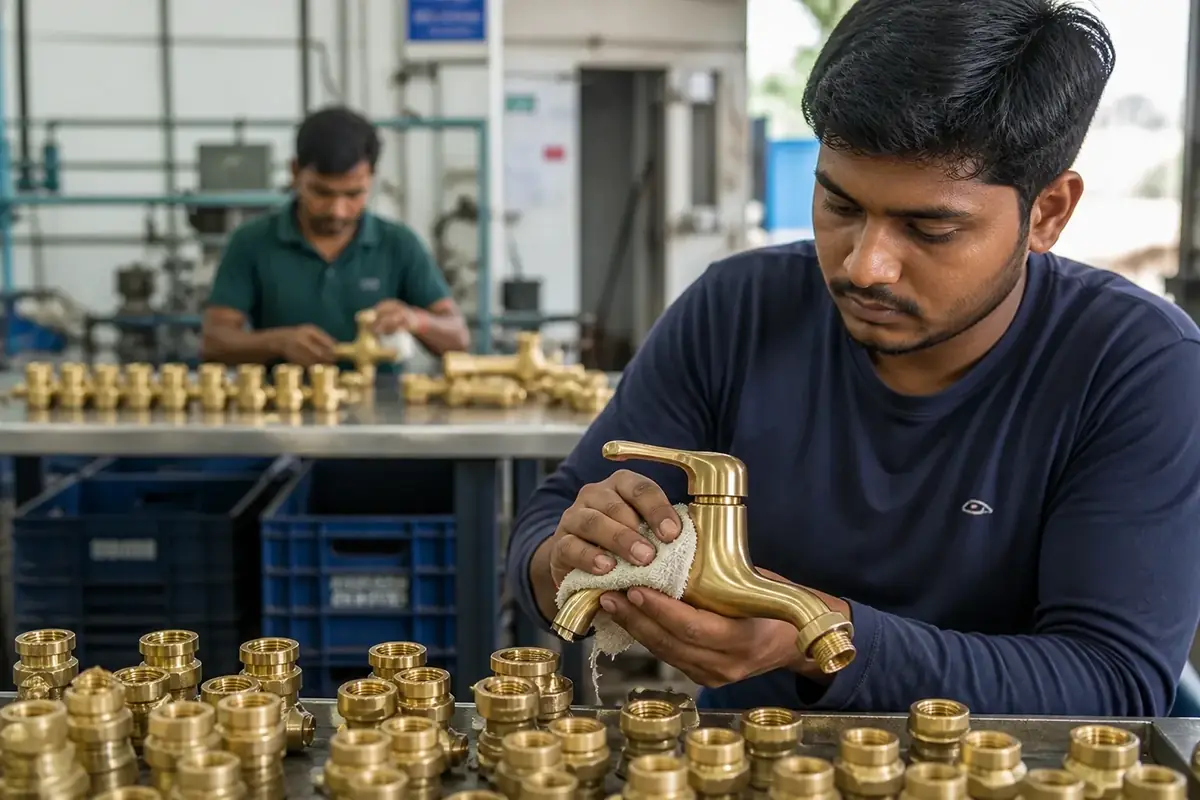
People searching how to clean brass faucet surfaces often meet coated products: clear coats or PVD-style finishes over brass or brass-look bodies. Harsh metal polish can scar that coating and leave blotchy bright patches that never match again.
Default method: mild soap, soft cloth, rinse, dry. Avoid steel wool, scouring powders, and toilet cleaners. Hard-water spots respond better to careful wiping after each use than to periodic aggressive scrubbing.
If coating has already failed and bare brass shows through, decide between living with a mixed look, professional refinishing, or replacement. Uneven DIY stripping rarely looks intentional on a bathroom fixture.
Aerators and base rings collect mineral crust. Soak removable plastic parts separately if the maker allows; do not force abrasive pastes into sealed cartridge areas. When a fixture still looks dull after gentle cleaning, the issue may be worn coating—not a lack of pital polish.
Caring for antique and brushed looks
Antique brass is a designed contrast, not neglected polish. Dust and gentle wipe only. If you must degrease, use mild soap sparingly and avoid pushing dark residue out of recesses unless you intend to re-antique the piece.
Brushed finishes show swirl direction. Wipe with the grain. Circular abrasive motion creates shiny blotches that read as damage under showroom lights.
Door hardware takes hand oils daily. A scheduled soft wipe beats annual rescue polishing. More on handles and related hardware sits in brass door hardware: handles, knobs, hinges.
Décor, door hardware, pooja, and cookware notes
Living-room décor—trays, planters, mirrors frames—usually wants appearance stability. Prefer dusting and mild soap; polish only bare bright pieces on a schedule you accept repeating. See also brass home décor mirrors, trays, and planters.
Pooja and ritual items often mix polish tradition with practical soot and ash. Clean gently, dry fully, and avoid inventing health claims around shine. Category detail: brass pooja and religious items guide.
Cookware and utensils need food-safe common sense: wash, rinse, dry. Do not treat kitchen brass like a workshop buffing project with unknown compounds. Buying and use context: brass cookware and utensils buying guide.
Door knobs and handles collect skin oils that etch bright spots into antique finishes if ignored. A soft weekly wipe preserves the designed contrast better than a quarterly assault with compound. Hinge barrels collect dust; brush lightly rather than flooding with liquid cleaners that creep into interiors.
Mirrored trays and polished planters show swirls immediately under daylight. Wipe with the dominant polish grain if one exists; on mirror-bright faces, use straight overlapping strokes and inspect before the cloth dries with residue lines.
For utensils, separate exterior shine routines from interior food-contact cleaning. Never assume a workshop brass compound is appropriate near cooking surfaces. When in doubt, mild soap and thorough drying win.
“Dry is half of clean. Most ‘mystery spots’ are yesterday’s water left in a crease.”
Care method comparison
| Surface | First method | Optional next | Avoid |
|---|---|---|---|
| Lacquered brass | Dust + mild soap | Professional re-lacquer if failed | Abrasive polish, strong acids |
| Bare polished brass | Soap clean + dry | Pital polish / brass compound | Leaving residue / wet storage |
| Antique / toned | Dust + gentle wipe | Targeted degrease only | Bright buffing of recesses |
| Brass faucet (coated) | Mild soap + soft cloth | Maker-approved cleaner | Scouring powder, steel wool |
| Brushed brass | Wipe with the grain | Mild soap if soiled | Circular abrasive rubbing |
Storage and display habits that reduce cleaning load
Brass near open windows, kitchens, and bathrooms works harder. Cooking vapours and humidity accelerate tarnish on bare polished pieces. If you want low maintenance, prefer lacquered or well-cured clear coats for those rooms—and accept that coats eventually need renewal.
Retail shelves should separate raw polished SKUs from antique lines. Soft barriers between items stop rub marks that customers mistake for defects. In humid warehouses, silica gel in cartons helps plated and polished lots more than extra plastic wrap alone, which can trap condensation against metal.
Gloves for staff handling bright showpieces reduce fingerprint etching. It feels formal until you compare a glove-handled tray to one passed bare-handed through a humid afternoon unpack.
Care cards retailers can actually give customers
A short care card prevents return arguments. Three lines beat a novel: (1) dust with soft cloth; (2) mild soap only if needed, then dry; (3) do not use abrasive polish on antique or lacquered finishes. Add faucet-specific notes when the SKU is coated sanitary hardware.
If you sell pital polish beside the product, label which SKUs accept it. Selling polish next to antique figurines without guidance trains customers to destroy the look they liked in the store photo.
Importers can ask factories for finish-specific care text in English (and other languages as needed) at PO stage. Consistency across cartons matters when multiple finishing cells supply one brand assortment.
When to stop DIY and call a refinisher
Deep pitting, peeling lacquer in patches, pink copper show-through from dezincification, or structural looseness on handles are beyond cloth-and-cream fixes. Continued abrasion makes blotches permanent. A refinisher can strip, correct, and re-lacquer or re-antique as a deliberate program.
Architectural hardware on exterior doors may need scheduled professional attention in coastal cities. Home methods that worked on an indoor tray will not keep an ocean-facing knocker bright without coating strategy.
For commercial washrooms, train cleaning staff away from acidic bathroom chemicals on brass-look faucets. One aggressive overnight cleaner can strip a floor of fixtures. Procurement and facilities should share the same care sheet.
Mistakes that permanently change the look
- Polishing antique décor to “make it new.”
- Using bathroom limescale removers on brass-look faucets.
- Leaving lemon-salt paste on overnight.
- Buffing lacquer until it clouds, then blaming tarnish.
- Storing damp cloths against polished plates in retail drawers.
- Mixing unknown workshop brass compound on food-contact utensils.

FAQ: cleaning and caring for brass
How should brass cookware and pooja items be cared for?
Gently, with thorough drying and product-specific habits. Avoid abrasive programs that invent health benefits from shine alone.
Does lacquered brass need regular polishing?
No. Intact lacquer slows tarnish. Polish can scratch or cloud it. Clean mildly; refinish when the coat fails.
How do you clean and care for brass without removing the intended finish?
Identify lacquered, bare polished, antique, or plated surfaces first. Dust and mild soap are the default. Use abrasives only on bare bright brass meant to stay shiny.
What is pital polish used for?
It brightens brass (pital) that should look shiny. Follow directions, rinse residues, and skip it on lacquer or intentional patina.
When should someone use brass polishing compound?
When bare brass needs mechanical cutting of oxidation—buffing wheels or firm hand work. It is more aggressive than soap cleaning and can erase antique contrast.
How do you clean a brass faucet safely?
Mild soap and a soft cloth. Avoid harsh abrasives and strong acids that strip clear coats. Refinish professionally if coating has already failed unevenly.
Should antique brass be polished to bright yellow?
Usually no. The darker recesses are part of the design. Dust, gentle wipe, and approved care products keep the look intact.
Can lemon-and-salt or vinegar mixes damage brass?
Yes—they can etch, strip patina, and attack lacquer. Spot-test, keep contact short, rinse, and dry. Prefer milder methods when unsure.
Conclusion
Good brass care is mostly identification and restraint. Soap and drying solve more problems than heroic polishing. Pital polish and brass compounds earn their place on bare bright metal—not on every object that photographs yellow.
Match the method to the finish, and your décor, hardware, and gifts keep the look you actually bought.
Sticky rule: know the finish before the cloth moves.
Unsure Which Finish Will Last in Your Market?
Ask finish-durability questions for polished, antique, or lacquered brass programs before you lock an assortment on Jamnagar.net.