Brass Pooja Items: Types, Sizing, and Care
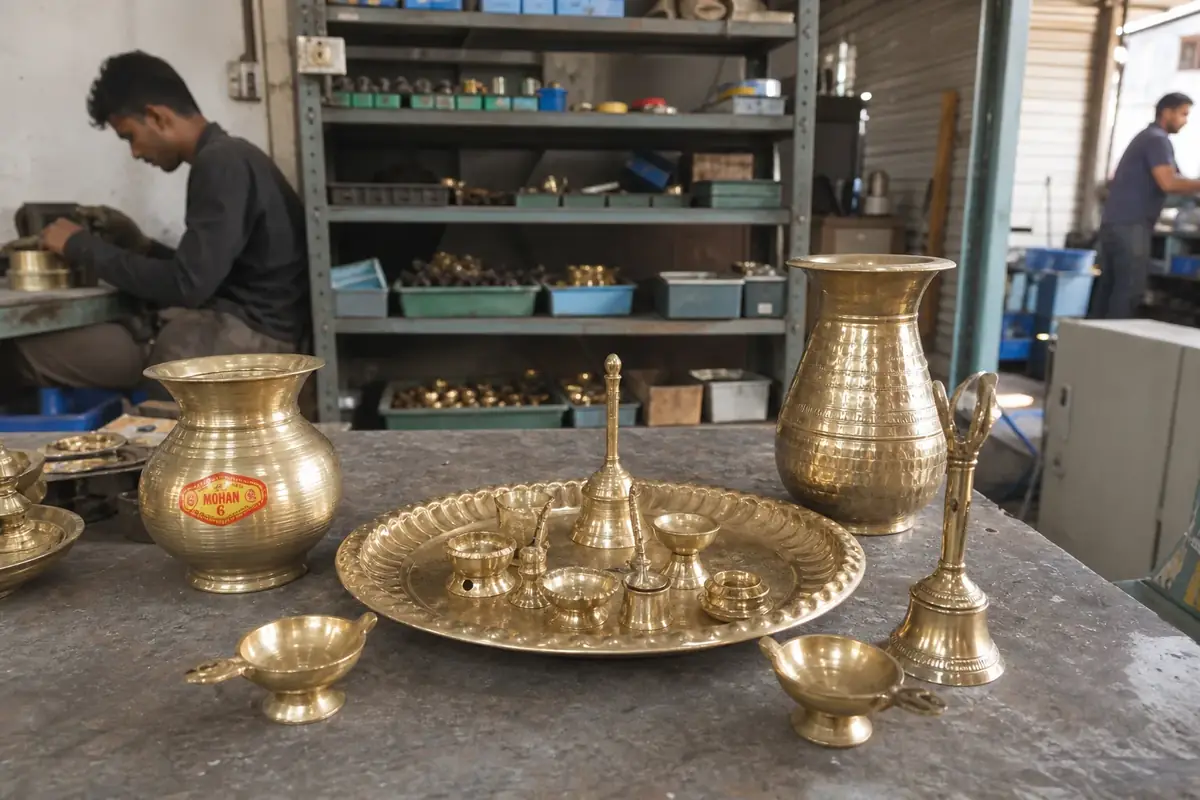
Households and temple committees buy brass pooja items for durability, traditional appearance, and the way pital takes polish or antique tone. This hub explains brass pooja items types and care in practical terms—shapes, sizes, weight, finish, and packing—so you can compare listings without chasing folklore or miracle claims.
Jamnagar and other Indian metal centres supply both cast and spun religious ware: diyas, thalis, bells, vilakku, and decorative wall pieces. Quality still varies. Thin spun shells and heavy sand-cast lamps can share a catalogue title and diverge completely in hand.
Use this page as an educational checklist for home mandirs, gifting, and wholesale assortment planning. Ritual practice belongs to your tradition and teachers; metal selection belongs to weight, stability, and care.
Highlights
- Buy by weight, wall thickness, and base stability—not photo zoom alone.
- Match lamp height to room clearance and flame safety.
- Separate polish care from antique finishes you want to keep dark.
Table of contents
- Why brass is common for puja ware
- Core brass puja items for a home mandir
- Diyas, deepam, samai, and kuthu vilakku
- Thalis, plates, bowls, and incense ware
- Murtis, wall hangings, and sacred symbols
- Sizing and what drives price
- Finish choices and everyday care
- Flame, hanging, and handling safety
- Buying comparison table
- Regional forms and naming
- Gifting and wedding-set practicality
- Receiving inspection checklist
- Notes for trade and bulk buyers
- FAQ
Why brass is common for puja ware
Brass casts and machines well for ornate shapes. It takes a bright polish for festive presentation and also accepts antique tones for heritage styling. Compared with thin plated steel novelties, solid or heavier-gauge brass puja items usually survive years of handling if cleaned sensibly.
That popularity creates a wide quality band. Some SKUs are gift-weight decorative shells. Others are temple-grade castings with thick bases. Neither is “fake” if priced honestly—problems start when lightweight shells are sold with heavy-metal photography.
Cultural preference for pital in many Indian homes is real. This site does not claim spiritual or medical effects from the alloy. Buy for craft, durability, and fit to your practice.
Solid feel still needs verification. Tap tests, seam inspection, and weighing against the invoice catch hollow shells sold with heavy adjectives. If a listing boasts temple grade, ask what that means in millimetres of wall or kilograms of mass—not in poetry.
Casting porosity on non-visible bases is common and often acceptable. Porosity cutting through an oil cup floor is not. Flip lamps and bowls during inspection; the underside always tells on thin production.
Core brass puja items for a home mandir
A compact set usually covers offering, light, incense, and sound. Exact pieces follow family and regional custom.
- Brass pooja thali / brass puja thali — tray for arranged offerings and small lamps.
- Brass plate for pooja — flat plate used alone or inside a deeper thali set.
- Brass diyas for pooja — small oil or ghee lamps; often multiple on one tray.
- Brass bowl for pooja — for kumkum, rice, water, or other offerings as per practice.
- Brass dhoop dani — incense cup; many prefer a dhoop dani with handle for aarti movement.
- Agarbatti stand with ash catcher — keeps ash off cloth and wood shelves.
- Ghanta (bell) — tone and weight vary; heavier bells cost more metal.
- Kalash / lota-style vessel — regional naming differs; check mouth diameter and stability.
Add a brass ganesha wall hanging, shankh, or symbolic plaques when wall space and tradition call for them. Keep walkways clear; mandir shelves overload easily during festival shopping. Leave a hand-width of free shelf for safe lifting of hot lamps.
“A thali that rings thin when tapped will dent the first time it slides off a crowded shelf. Weight is information.”
Diyas, deepam, samai, and kuthu vilakku
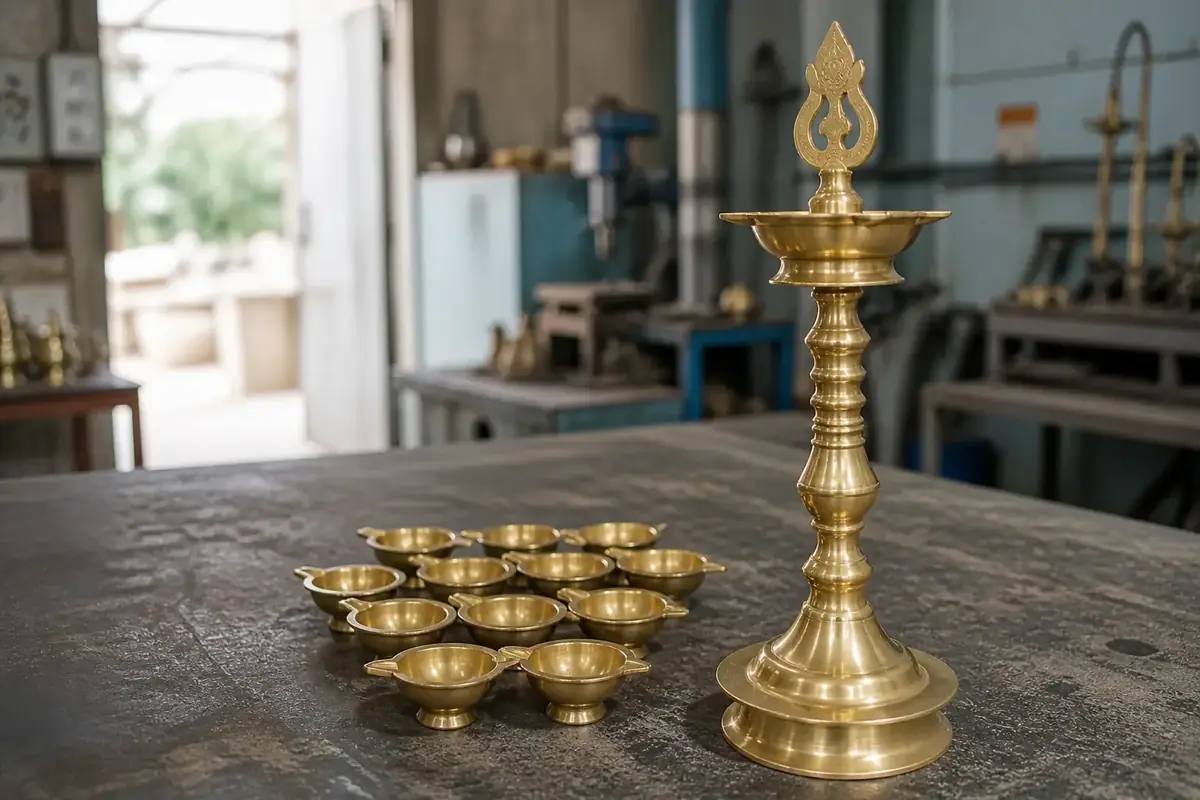
Small brass diya cups are the daily workhorses. Look for a stable foot, a clear spout or wick seat, and enough bowl depth for your oil or ghee habit. A big diya for pooja or multi-wick tray suits festivals; confirm the tray will not warp when warm.
Brass deepam and brass deepam stand language often points to standing lamps. Samai diya and kuthu vilakku forms are tall traditional lamps. Shoppers commonly compare 1 feet kuthu vilakku price through 3 feet, 5 feet, 6 feet, and 7 feet kuthu vilakku price bands—height is only one cost driver. Wall thickness, hollow versus heavier cast sections, and carved detailing move the invoice as much as the tape measure.
A small kuthu vilakku suits apartments. Tall temple lamps need floor space and careful transport packing. Ashtalakshmi deepam / ashtalakshmi vilakku styles add figurative work—inspect faces and joins before accepting a shipment.
Hanging and aarti lamps
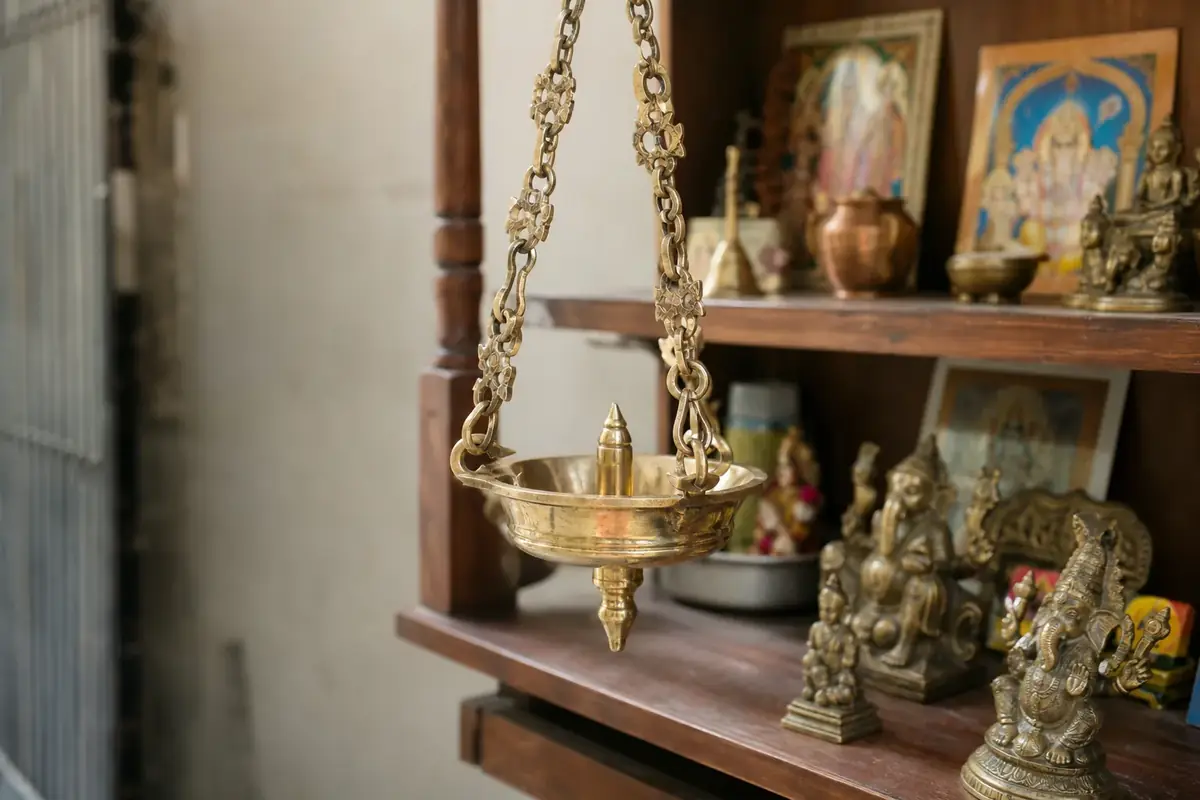
A brass hanging diya or hanging diya for pooja room / hanging diya for mandir can free shelf space. Check chain weld quality, hook rating, and swing clearance from curtains. An aarti diya with handle needs a cool-enough grip design and a bowl that will not spill when moved slowly.
Five-step diya stands and wall-mounted vilakku stand for wall designs help organise multiple flames. Confirm mounting hardware is included and suitable for your wall type.
Glass inserts and wick hardware
Some households use glass cups with brass frames—search language includes akhand diya glass. Match glass OD to the brass seat. A loose wick holder for diya that tips inside the cup is a soot and spill problem waiting to happen.
Thalis, plates, bowls, and incense ware
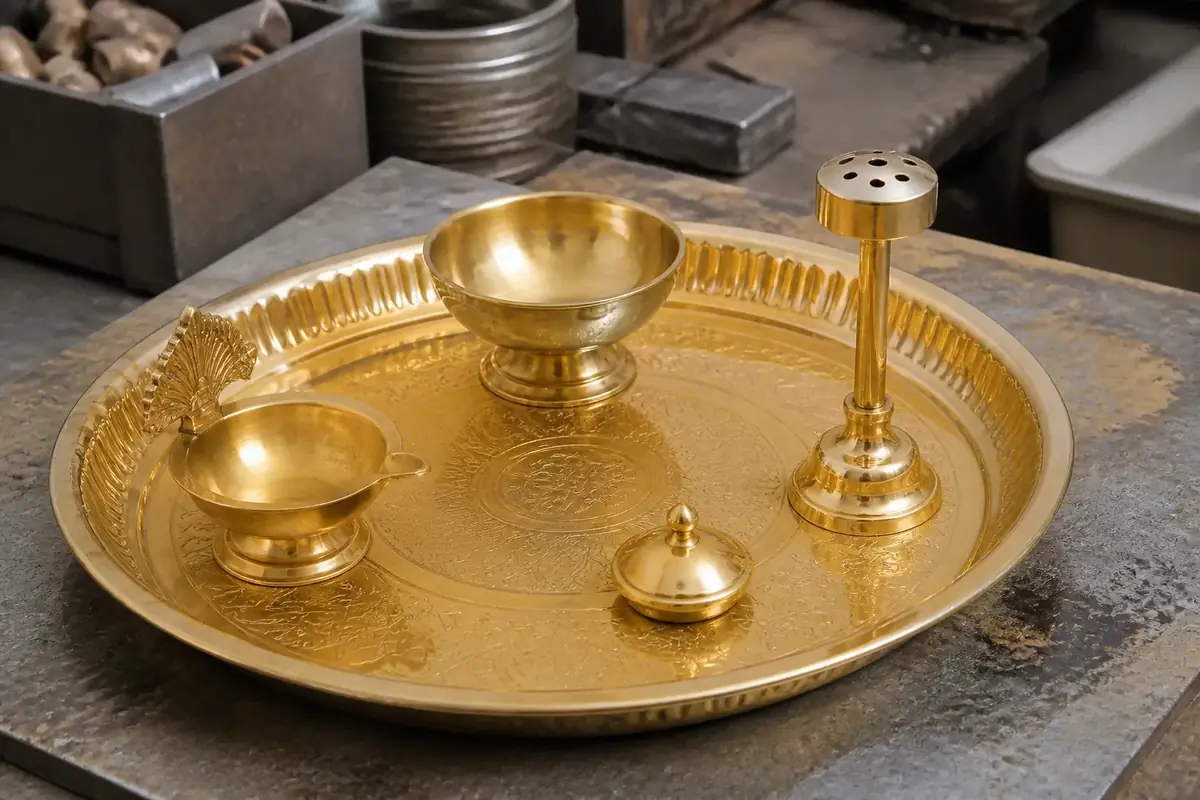
Thali diameter should fit your mandir shelf with room to lift safely. Raised rims help contain spills. Engraved centres look rich; deep engraving on very thin sheet can create stress points.
Incense ware deserves the same seriousness as lamps. A brass dhoop dani should sit flat. Ash catchers on agarbatti stands should be wide enough for your stick length. Hot ash on lacquered shelves scars furniture faster than people expect.
Overlap with kitchen vessels exists—lota shapes especially. If you also buy food-use brassware, read brass cookware and utensils buying guide for lining and use differences. Many families keep puja and kitchen sets separate for practical hygiene and habit, even when shapes look similar.
Murtis, wall hangings, and sacred symbols
Cast murtis—Ganesha, Lakshmi, Durga, Radha-Krishna, and others—span gift miniatures to heavy shrine pieces. Search interest in pital ganesh murti price, pital laxmi murti price, pital laxmi ganesh murti price, maa durga pital murti price, and pital radha krishna murti / radha krishna metal murti reflects size and detail shopping, not a single market rate.
Inspect fingers, ornaments, and facial lines. Porosity on visible faces is harder to live with than porosity under a base. Hollow thin casts can be appropriate for wall pieces; shrine murtis usually need enough mass to sit steady during cleaning.
Symbolic sets—shankh chakra tilak motifs, swastik om trishul plaques, and related wall emblems—should have clean edges and reliable hanging slots. A brass ganesha wall hanging needs a sealed hook path that will not tear soft drywall anchors.
Bells sold by weight bands (for example interest around 5 kg ghanta price) should be judged by tone preference, handle strength, and clapper security—not weight bragging alone.
Wall-mounted vilakku brackets and niche shelves deserve the same load thinking as hanging diyas. Soft stone, hollow brick, and gypsum board fail differently. Match fasteners to the wall, and keep oil reservoirs centred so drips do not stain painted niches.
When comparing pital ki murti price across sellers, ask for base dimensions and packing photos. A murti that looks identical online can differ by a kilogram once hollow cores and thin crowns enter the mix. Prefer sellers who state approximate weight ranges up front.
Sizing and what drives price
People search brass pooja items with price expecting a fixed list. Markets do not work that way. Metal cost, labour on chasing and polish, packaging, and retail margins all move. Use relative drivers instead of memorising a number from a screenshot.
- Mass: heavier pieces usually cost more raw metal.
- Process: sand cast, die cast, spun, fabricated sheet—each has a different labour profile.
- Detail: handwork on crowns, jewellery lines, and lamp stems adds time.
- Finish: mirror polish, lacquer, or antique tone—see antique, polished, and brushed brass finishes.
- Extras: glass cups, wooden stands, chains, and gift boxes.
For decor-adjacent religious gifts that sit more in living rooms than shrine cabinets, compare with brass decorative gift items overview and brass home decor: mirrors, trays, and planters.
Finish choices and everyday care
Bright polished lamps photograph well for festivals. Antique finishes hide fingerprints on frequently handled aarti pieces. Lacquer slows tarnish on display murtis; heat and soot still stress films near open flames.
After use, let metal cool. Wipe soot with a soft cloth. Store dry. If you want step-by-step cleaning methods for lacquered versus living brass, continue to brass cleaning, care, and maintenance.
Do not scour antique contrast off a lamp you bought specifically for that dark-recess look. Care should match the finish contract you paid for.
Store thalis vertically in padded racks when possible so stacked weight does not oval thin rims. Keep wick oil capped away from polished murti faces; aerosolised oil dulls shine into sticky film. Festival packing foam should be removed after ceremonies—some foams imprint texture onto soft lacquer if left pressed for months.
“Soot is part of lamp life. Panic polishing every week is how thin engraving disappears.”
Flame, hanging, and handling safety
- Keep flames away from fabric backdrops, loose flowers, and low shelves.
- Use stable bases on tall vilakku; pad uneven stone floors.
- Rate ceiling hooks for hanging diya weight with margin.
- Supervise open flames; extinguish fully before leaving the room.
- Mind hot handles on aarti diya and dhoop dani after use.
Safety is not ceremonial fine print. It is why thick bases and honest hardware matter as much as shine on every lamp.
Buying comparison table
| Item type | Check first | Common miss | Care note |
|---|---|---|---|
| Diyas / deepam | Bowl depth, wick seat, foot stability | Tippy miniature cups | Wipe soot after cooling |
| Kuthu vilakku / samai | Height clearance, base mass, stem joins | Buying height only | Protect floors; watch lacquer near heat |
| Thali / plate / bowl | Diameter, rim, sheet thickness | Paper-thin gift trays | Dry fully before stacking |
| Dhoop / agarbatti ware | Ash catcher size, handle comfort | Ash overflow onto wood | Empty ash when cool |
| Murtis / wall pieces | Detail integrity, base or hook strength | Photo-only detail checks | Dust soft; avoid harsh scouring |
| Ghanta | Handle, clapper, preferred tone | Weight without sound check | Store where it cannot dent thalis |
Regional forms without forcing one tradition
Lamp names travel with communities. Kuthu vilakku and samai styles are familiar in many South Indian homes. North Indian mandirs may lean on different thali layouts, kalash shapes, and aarti plate habits. Temple committees ordering in bulk should write the form name they actually use, plus a photo, rather than assuming every workshop shares the same vocabulary.
Symbolic plaques—om, swastik, trishul, shankh-chakra sets—also vary in proportion and mounting. Confirm hole spacing if you are replacing an existing wall set. A beautiful casting that does not hit the old anchor points becomes a repair job.
None of these notes prescribe ritual. They only reduce shipping mismatches when language and metal meet.
Gifting and wedding-set practicality
Gift sets often prioritise shine and box presentation. That is fine if the recipient will display the pieces. If the set is meant for daily lamps, include at least one stable diya and a usable thali, not only miniature novelties that tip.
Wedding and housewarming lists benefit from writing capacities: thali diameter, vilakku height, murti base width. “Large” means nothing in a courier carton. Include a care card that separates lacquered gift polish from living antique pieces.
For mixed decor-and-puja hampers, keep flammable packaging away from any demonstration lamps in retail displays. Foam chips and open flame are a bad pairing.
Receiving inspection for households and shops
On unboxing, check for transit bends in tall stems, loose clappers in bells, and glass inserts that shifted. Run a finger lightly around thali rims for burrs. Seat hanging diya hooks under load before the first festival rush.
Photograph any casting defect on murti faces immediately. Detail arguments are easier with day-of-delivery images than with memories after polishing attempts. Keep invoice weights when you bought by mass; swaps happen.
Notes for trade and bulk buyers
Assortment planners should separate temple-grade castings from gift-weight spun ware in catalogues. Mixed cartons without labels create retail returns. Specify polish level, antique master samples, and foam packing for tall vilakku stems.
Export packs need moisture protection on polished faces and blocking so bells do not bruise thalis. Photo samples are not enough when facial detail on murtis is the sellable feature—approve a golden sample per SKU family.
Retail planograms should separate oil-lamp SKUs from purely decorative wall art so staff do not demonstrate flames on lacquer-heavy gift shelves. Train teams to explain weight and stability in one sentence; customers shopping festival week decide fast.
Temple tenders sometimes request samples of tall vilakku before committing to dozens of units. Budget that sample lead time. Tall stems ship poorly when cartons are under-specced—foam sleeves and rigid outer boxes are cheaper than bent necks at site.
If you sell both kitchen bartan and puja ware, keep SKU codes distinct even when shapes overlap. Customer care scripts should never promise cook use for a thin decorative kalash, or shrine durability for a novelty keychain murti.

FAQ: brass pooja and religious items
Can the same brassware be used for kitchen and puja?
Shapes can overlap, but many households keep sets separate. Food-use pieces have different practical rules—see the cookware guide.
What brass pooja items are commonly bought as a starter set?
A thali or plate, a few diyas, a bowl, incense ware with ash catcher, and a small vessel cover most homes. Add murtis, bells, and taller lamps as needed.
How do I choose between a brass diya and a samai diya or kuthu vilakku?
Small diyas suit daily thali use. Samai and kuthu vilakku are taller standing lamps—match height to clearance and stability, and expect price to follow mass and detail.
What affects brass pooja items with price more than branding?
Weight, thickness, process route, hand finishing, and included accessories. Size labels without weight invite disappointment.
Are hanging diya for pooja room designs safe to use?
Only with adequate hook rating, flame clearance, and secure cups. Never leave open flames unattended.
How should I clean brass puja items without damaging finish?
Cool first, wipe soot gently, and match cleaner strength to lacquered or living brass. Protect antique contrast if that is the intended look.
What should I check when buying a pital murti?
Casting detail, base stability, finish evenness, and honest weight for the size. Compare those factors across pital ki murti options rather than price tags alone.
Do glass akhand diya inserts change the brass lamp I need?
Yes. Seat diameter, depth, and wick alignment must match the glass. Buy the pair as a system when possible.
Conclusion
Good brass puja ware is a materials decision: mass, stability, finish, and safe flame geometry. Tradition guides which forms you need; metalwork quality decides whether those forms last.
Shop with a shortlist, not a miracle checklist. When weight, base, and care match your space, the set earns its place on the shelf year after year. Measure twice, weigh once, and keep flame safety in the same sentence as shine every time.
Sourcing Brass Puja Assortments in Bulk?
Trade buyers can enquire for wholesale religious-ware assortments and finish options through a direct Jamnagar desk. Share your SKU list or browse related categories on Jamnagar.net.