Brass Cookware and Utensils: A Practical Buying Guide

Traditional kitchens still reach for pital—pots, glasses, lotas, and spice boxes that photograph warmly and last when made thick enough. This brass cookware and utensils buying guide sticks to workshop realities: weight, lining, lid fit, finish, and honest use labels. It does not make medical or wellness claims about cooking in brass.
Brass cookware ranges from serious stovetop vessels to gift-weight serving sets. Confusing those categories is the main retail failure mode. A hammered brass cooking pot and a thin decorative bowl may share a keyword and nothing else.
Use the checks below for household buying and for trade assortment planning. When alloy identity is unclear, revisit brass vs bronze vs copper before you pay for the wrong yellow metal.
Quick Lookup
- Separate cook, serve, and store SKUs in your shopping list.
- Ask about lining and food-contact suitability for the intended use.
- Compare weight and lid fit before chasing the lowest brass pot price.
Table of contents
- Cook, serve, and store: three utensil categories
- Brass cooking pots, pans, and uruli forms
- Dinner sets, glasses, and serving pieces
- Lota, bottles, jugs, and water pots
- Masala boxes, tiffin, and storage containers
- Tea sets, ghee pots, and milk pots
- Price drivers and per-kg thinking
- Buying specs comparison table
- Lining and food-contact honesty
- Heat habits that protect vessels
- Building a household set
- Care, storage, and common damage
- Notes for OEM and trade buyers
- FAQ
Cook, serve, and store: three utensil categories
Write your list in three columns. Cook means stovetop or heat-involved vessels—pots, pans, uruli, certain tea pans. Serve means plates, bowls, glasses, trays, and dinner sets. Store means masala boxes, canisters, lunch boxes, and water containers used without cooking heat.
Mixed gift hampers often blur the lines. That is fine for presentation. It is not fine when a thin serving bowl is later forced onto a burner because the listing said “cookware.”
Puja vessels can look similar to kitchen lotas and bowls. If you are buying shrine ware, use the educational hub on brass pooja items types and care instead of stretching kitchen specs onto ritual pieces.
Brass cooking pots, pans, and uruli forms
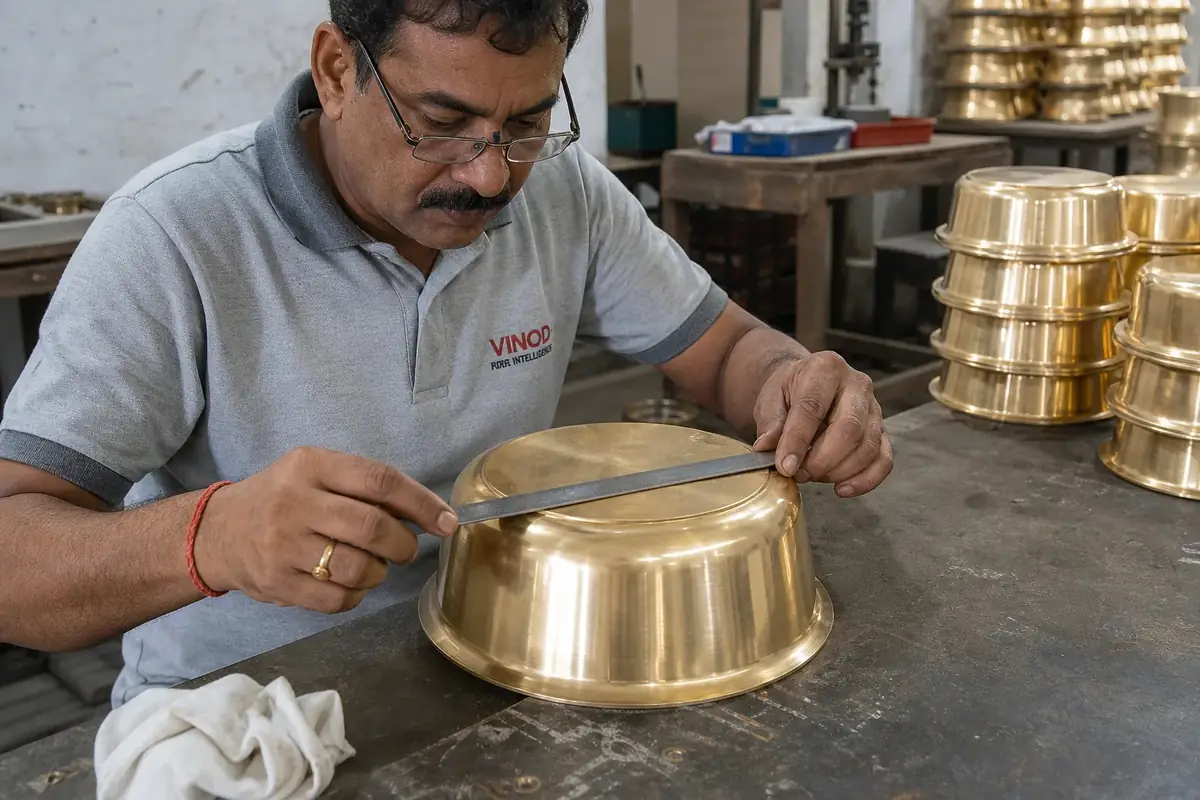
A serious brass pot or brass pan should feel substantial at the base, sit flat, and show even wall thickness. Handles and ears need secure joins. Hammer marks can be decorative or functional work-hardening cues—either way, look for thin spots near rims.
Brass uruli for cooking and wide traditional bowls need stable rings or stands if the belly is round. Festival vessels such as pithalai pongal paanai styles are often judged by capacity and thickness; ask for litres and kilograms, not only diameter photos.
Many cook-use brass vessels historically rely on tin or other food-contact linings on the interior. If a listing claims cook use, ask what lining is present, how to inspect wear, and when relining is expected. Unlined decorative brass is not automatically a cooking vessel.
Patila-style pots and deep brass cooking pot shapes should state capacity in litres. Diameter alone misleads when walls flare. Lid knobs need heat-aware design; glued decorative knobs fail early. Riveted or integral handles usually outlast ornamental screws into thin sheet.
When comparing two pots at similar brass pot price points, weigh them. A few hundred grams of missing metal often explains the “bargain.” Listen for tinny resonance on thin walls versus a duller, denser response on heavier vessels—imperfect science, useful triage.
“If the base rocks on a flat counter, it will rock on a burner. Flatness is a safety check, not a nitpick.”
Cookware set language
A brass cookware set should list every pot size and lid. “Set of 5” without diameters is marketing fog. Prefer nested stacks that still leave finger room for hot lids after cooking.
Dinner sets, glasses, and serving pieces
A brass dinner set, pital dinner set, or pital ka dinner set usually means thalis, katoris, glasses, and sometimes spoons. Compare piece counts and diameters. Brass dinner set price comparisons only work when the bill of materials matches.
Brass glass / pital glass tumblers vary from heavy traditional walls to light gift glasses. Engraving and mirror polish raise labour cost—hence wide spreads in brass glass price and pital glass price searches. A full pital bartan set should state whether spoons, trays, or lids are included.
Serving spoons, cutlery-style brass spoon set pieces, and small bowls belong in the serve column unless explicitly made for cooking contact with heat. Engraved spoon handles look premium; check that decoration does not create sharp flash on the grip.
Lota, bottles, jugs, and water pots
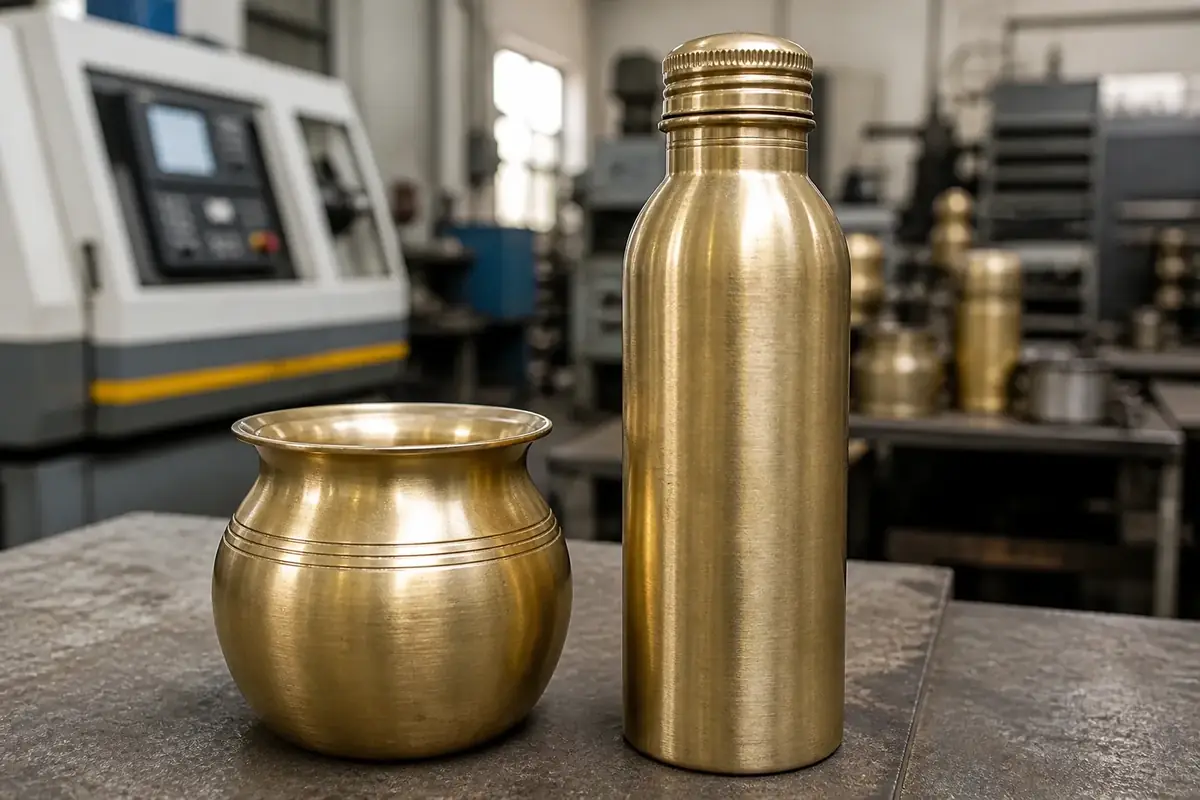
The brass lota remains a classic form. Check mouth finish, balance when full, and whether the base sits true. Pital ka lota price and brass lota price queries should always pair with capacity and weight.
Modern brass water bottle designs add caps and seals. Inspect threads, gasket condition, and interior cleanliness. Brass bottle price jumps when bottles include sleeves, carry loops, or heavier gauges. Related forms—brass water jug, brass water pot, brass water container—need the same leak and finish checks at spout and lid.
This guide does not claim health outcomes from storing water in brass. Buy for construction quality and cleaning practicality. Cap seals, smooth mouths, and interiors you can actually scrub matter more than slogan copy on the carton.
Masala boxes, tiffin, and storage containers
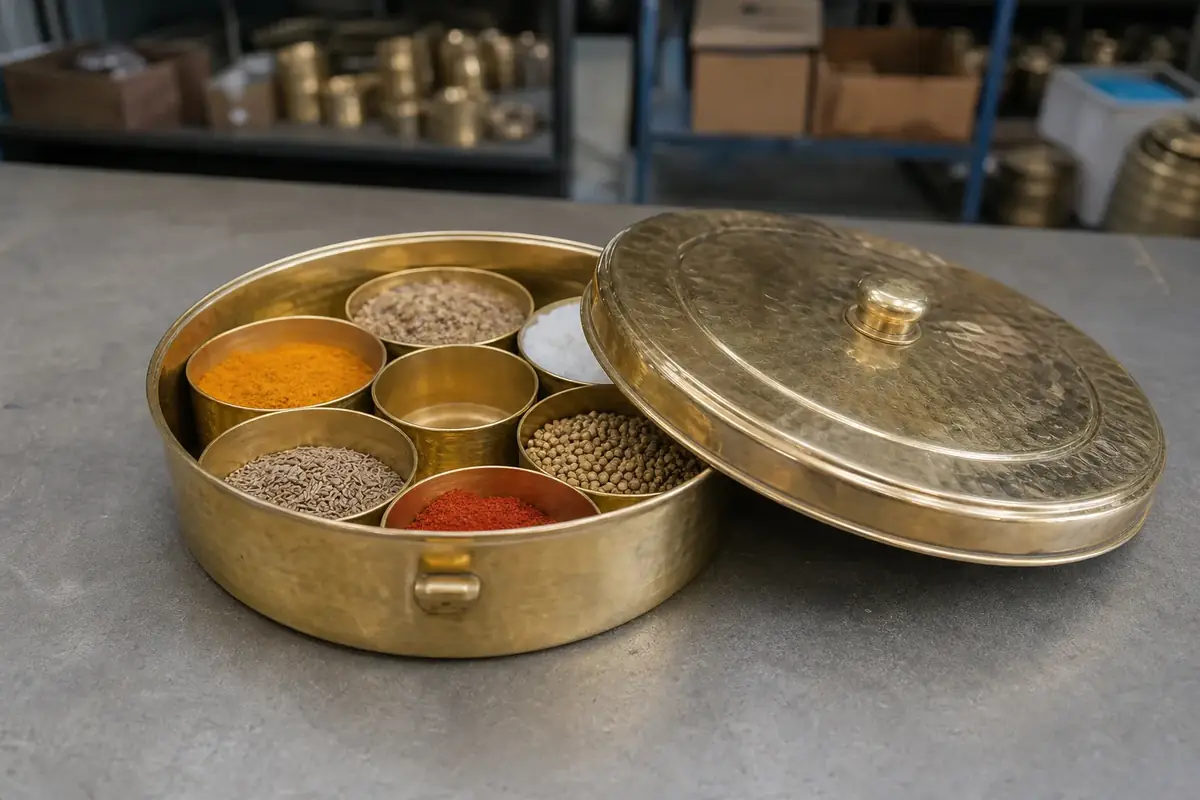
A brass masala box or brass spice box earns its keep with tight lids, smooth inserts, and hinges that do not pinch. Decorative piercing looks attractive; oversized gaps let aroma and dust travel. Brass storage containers and a brass container with lid should state intended dry-goods use clearly.
Brass lunch box / brass tiffin box stacks need reliable clamps and rims that nest without galling. Round containers sold as general brass jars or canisters may be decor-first—confirm food-storage suitability before packing spices long term. Open and close the clamps ten times in the shop; stiff hardware rarely loosens into true lasting comfort.
Tea sets, ghee pots, and milk pots
Brass tea set, brass tea kettle, brass tea pan, and brass tea cup assortments mix serve and heat categories. Kettles and pans need heat-use confirmation; cups may be serve-only. Spouts should pour without dribble trails down the body.
Brass ghee pot and brass milk pot forms should prioritise lid fit and clean interiors. Dairy residues demand prompt washing and full drying to avoid odour in seams.
Price drivers and per-kg thinking
Search interest in pital bartan price per kg, brass pot price, and set pricing reflects metal-cost awareness. Per-kg maths works best on plain heavy utensils. It fails on thin gift sets where polishing labour exceeds metal value.
- Alloy and scrap inputs — see brass alloys, grades, and price factors.
- Forming method: spinning, hammering, casting, fabrication.
- Lining and food-contact preparation.
- Polish, lacquer, or antique finish labour.
- Packaging for gift retail versus bulk trade.
Recycled content can be part of a responsible supply story when chemistry stays controlled. Context sits in brass recycling, scrap, and sustainability—still not a substitute for stating the grade you need.
Buying specs comparison table
| Category | Must-check specs | Skip if… | Price note |
|---|---|---|---|
| Cooking pots / pans / uruli | Base flatness, thickness, lining, handles | Rocking base; unknown lining for claimed cook use | Weight + lining labour |
| Dinner / bartan sets | Piece list, diameters, polish evenness | Missing piece count; paper-thin rims | Compare like-for-like sets |
| Lota / jug / bottle | Capacity, balance, cap seal (bottles) | Leaky threads; sharp unfinished mouths | Caps and gauges add cost |
| Masala / storage / tiffin | Lid fit, clamps, interior finish | Gaps; rough interiors for dry food | Hardware quality matters |
| Tea / ghee / milk pots | Spout pour, lid fit, heat-use label | Serve-only pieces sold as kettles | Spout work is labour |
Lining and food-contact honesty
Food-contact rules differ by market and by whether a vessel is sold for cooking, serving, or dry storage. This guide will not invent certifications you did not ask for. It will insist that the seller state the intended use in plain words.
Tin linings on traditional cook pots wear with scouring and metal spoons. When the lining thins, stop using the vessel for cooking until it is professionally relined or retired to decor. Serving thalis and glasses may be unfinished inside by design—still wash and dry them like any utensil.
Acidic foods, long soaks, and dishwashers are rough on many decorative finishes. If a gift set is lacquered for shine, hand-wash. If a heavy patila is sold for stove use, confirm heat guidance rather than copying a social-media recipe that ignores the maker’s notes.
Wholesale importers should keep lining and alloy notes in the SKU database, not only in a salesman’s head. Retail staff get asked the same cook-versus-serve question every week.
Heat habits that protect vessels
Empty preheating on fierce flames warps thin bases. Gradual heat and enough contents for the pot size are kinder to traditional brass cookware. Wide uruli bowls on ring stands need level floors; a tipped bowl of hot oil is not a styling problem, it is an emergency.
Induction buyers should not assume every brass pot will couple. Many traditional vessels expect gas or other flame/contact methods. If induction is mandatory in your kitchen, verify compatibility before the purchase, or keep brass in the serve and store columns.
Tea pans and milk pots scorch when forgotten on high heat. Habit beats alloy folklore: stay present, stir as needed, and clean promptly so residues do not bake into seams.
Building a household set without overbuying
Start with daily pieces: two glasses, one lota or jug, one serving thali, one spice box if you will actually use it. Add a cooking pot only after you confirm lining and heat use. Festival-only dinner sets can be thinner if they live in padded storage eleven months a year—say that out loud when you shop so you do not judge them by camp-stove standards.
Matching polish across a pital bartan set looks cohesive on a table. Mixing a mirror-polished glass with a heavy hammered pot is fine if you accept the visual contrast; problems start when shoppers expect identical colour from different processes.
Measure cupboard clearance before buying tall water pots or stacked tiffin towers. Beautiful brass that does not fit the shelf becomes floor clutter. Leave finger space around hot lids; tight cabinets and fresh-off-stove pots are a burn risk.
If you already own mixed metals—steel pans, copper bottoms, brass glasses—store brass nested with cloth separators. Harder stainless rims scratch softer polished brass quickly in a jostling drawer.
Care, storage, and common damage
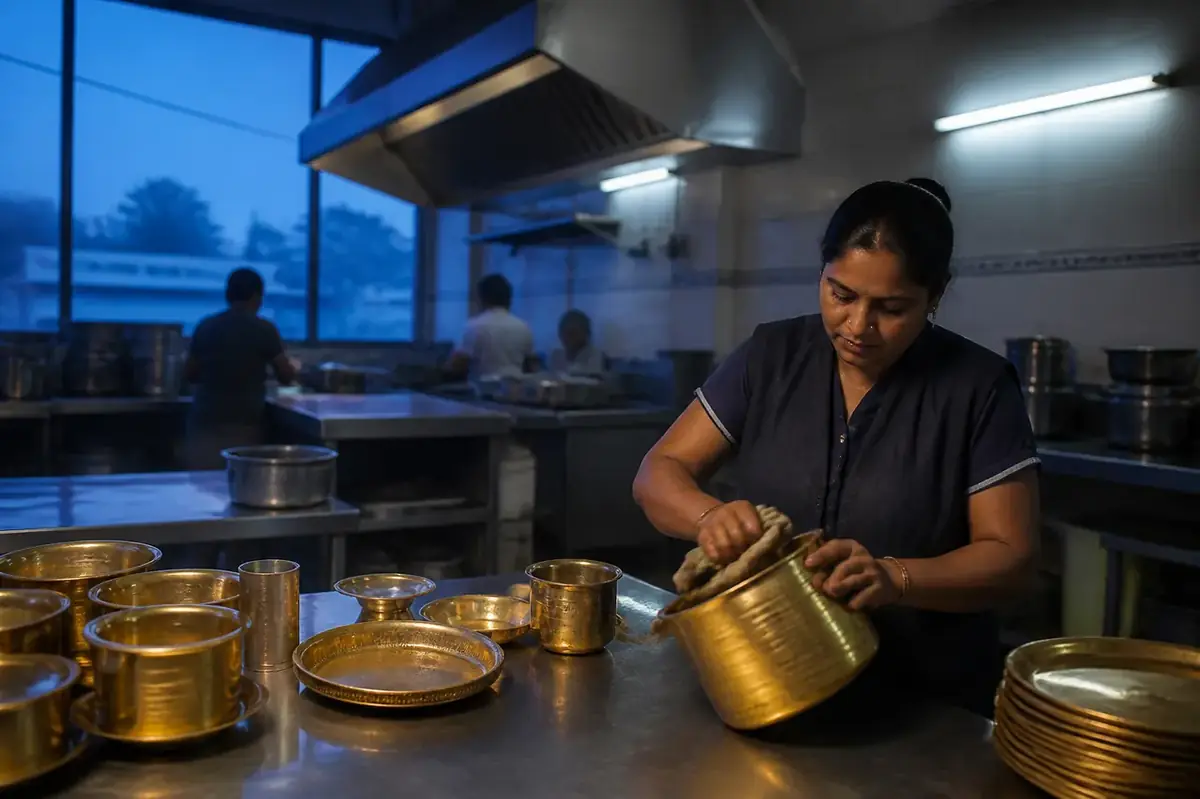
Wash promptly after dairy or acidic foods as appropriate for the piece, then dry fully. Nesting wet thalis is how water spots become permanent stains. Soft cloths beat scouring pads on engraved rims.
Lacquered serve ware wants gentler chemistry than living unlacquered brass. Step-by-step methods sit in brass cleaning, care, and maintenance.
Common damage modes: warped thin bases, worn lining on cook pots, dented gift glasses, and seized tiffin clamps. None of these are mysterious—most trace to wrong-category use or wet storage. A five-minute dry-and-separate routine after every wash prevents most of that list.
“A cheap per-piece set that dents in the first month is not cheaper than one honest pot bought by the kilogram.”
Notes for OEM and trade buyers
Catalogue copy should state cook / serve / store clearly. Retail returns spike when gift polish meets burner expectations. For private-label kitchen programs, lock capacity drawings, lining notes, and packing tests for nested sets.
Export cartons need separators for polished faces and corner protection on rectangular tiffin clamps. Photo approvals should include interior shots, not only hero angles.
Private-label kitchen brands should freeze capacity drawings the way industrial buyers freeze thread gauges. A “1 litre lota” that ships at 850 ml creates review damage faster than a slightly higher piece price. Include a simple care card: hand-wash guidance, lining inspection reminder, and a clear statement that the product is not sold with medical claims.
For mixed containers of glasses and pots, pack by weight class. Heavy patilas crushing nested pital glasses is a packing design failure, not bad luck. Vibration tests on prototype cartons pay for themselves on the first ocean lane.
FAQ: brass cookware and utensils
Are brass masala boxes and storage containers cookware?
They are storage utensils. Check lids and interiors; do not assume every decorative box is food-ready.
Why do brass glass and pital glass prices vary so much?
Thickness, engraving, polish, and set composition. Compare weight and finish, not the keyword alone.
What should I check first when buying brass cookware?
Intended use, thickness, base flatness, lid fit, and lining notes for food contact. Workmanship beats adjectives.
Is a brass dinner set the same as a brass cookware set?
Usually not. Dinner sets serve; cookware sets heat. Compare piece lists before comparing prices.
How is pital bartan price per kg useful?
It helps compare heavy plain vessels. It is a weak tool for thin gift sets or heavily finished lined pieces.
Can I put a brass pan or brass cooking pot on high heat?
Only when the maker’s guidance supports that use. When unsure, keep the piece in the serve column until confirmed.
What is the difference between a brass lota and a brass water bottle?
Lotas are traditional vessels; bottles add caps and seals. Judge bottles on threads and gaskets as much as metal gauge.
How do I care for brass utensils without harsh damage?
Mild wash, full dry, soft cloths, and finish-aware cleaners. Nested wet storage causes avoidable stains.
Conclusion
Buy brass kitchen ware by category and construction. Cook pieces need heat-ready geometry and clear lining notes. Serve and store pieces need finish honesty and lid discipline. Skip medical marketing noise; metal thickness still tells the truth in your hand.
A short written piece list beats a glamorous photo every time—especially when brass kitchen set language tries to mean everything at once. Write cook, serve, or store on the note before you pay, confirm lining where heat is involved, and weigh heavy pieces instead of trusting catalogue adjectives. That habit costs nothing and prevents most avoidable returns.
Looking for Trade Utensils or OEM Kitchen Brass?
Discuss cook, serve, and storage assortments with a direct Jamnagar supply desk. Share capacities and lining notes or browse related categories on Jamnagar.net.