Brass vs Bronze vs Copper: Key Differences Buyers Should Know
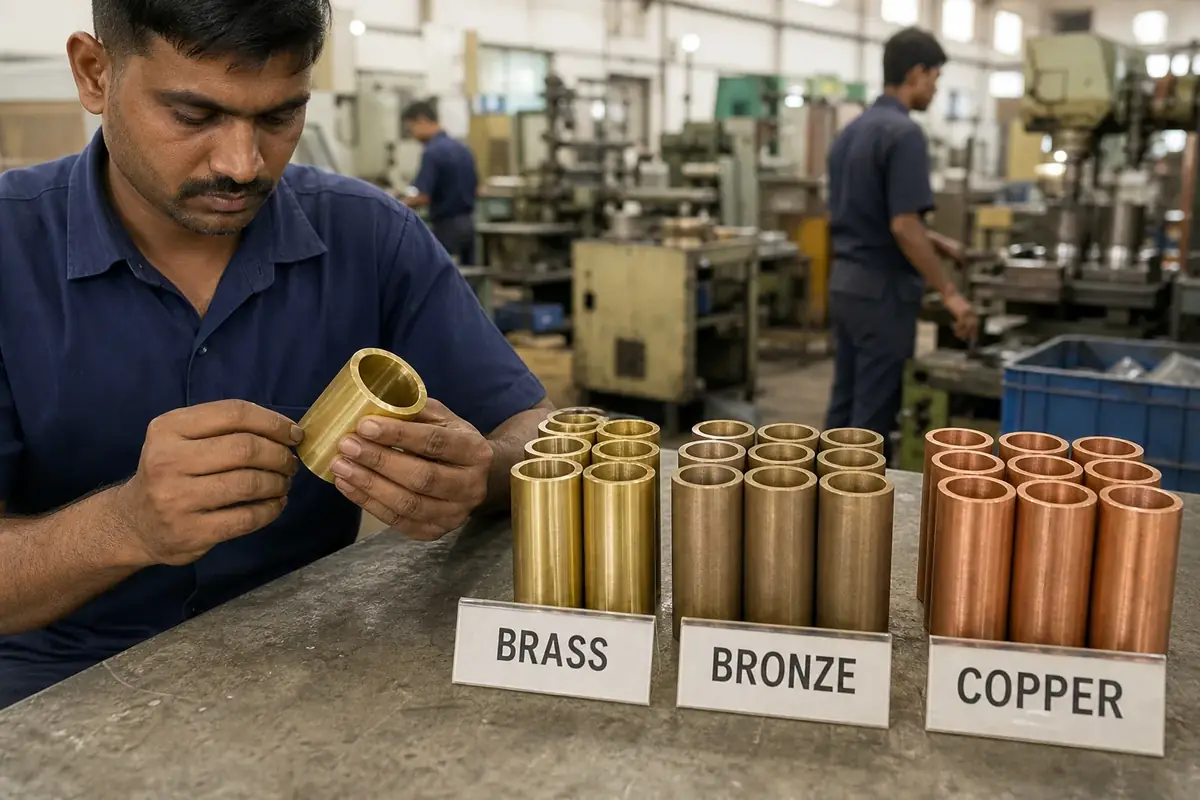
Procurement teams still write “yellow metal” on drawings and hope the shop knows which one. The practical brass vs bronze vs copper differences start with chemistry: copper is the base metal, brass is mainly copper-zinc, and bronze is typically copper-tin with other possible additions. Colour helps on the bench. Grade codes decide whether the part survives the job.
Jamnagar’s cluster lives mostly in the brass lane—rods, turned parts, forgings, and decorative hardware. Buyers still need the wider map. A bronze bushing quote is not a brass insert quote. A copper bus bar is not a brass terminal. Mixing those families quietly is how containers fail inspection.
This article gives a shop-floor comparison for engineers and buyers: what each metal is, how it machines, where it shows up, and how to write RFQs that do not invite substitutions.
Highlights
- Copper = mostly pure Cu; brass = Cu+Zn; bronze ≈ Cu+Sn (plus other elements).
- Yellow colour suggests brass, not proof of grade.
- Never swap bronze and brass on a sealed drawing without approval.
Table of contents
- Plain definitions: copper, brass, bronze
- Colour, weight feel, and shop identification
- Side-by-side comparison table
- Machinability and forming behaviour
- Corrosion and service environment
- Aluminum brass, brass steel, and look-alike language
- Where each metal is commonly used
- Electrical and thermal behaviour
- Standards language vs colour names
- Scrap segregation in brass clusters
- Buyer mistakes that mix the families
- Simple decision tree for first RFQs
- How to specify metal on an RFQ
- FAQ
Plain definitions: copper, brass, bronze
Copper is the elemental metal. In product form it appears as sheets, tubes, rods, and electrical conductors with a reddish colour that darkens as oxide forms. High conductivity and ductility drive many copper uses.
Brass is a copper-zinc alloy family. Zinc content and other additions change colour from red-brass tones toward classic yellow, and they change free-cutting behaviour, strength, and dezincification risk. When people say brass copper casually, they often mean the copper-zinc family rather than pure copper.
Bronze historically means copper-tin, though commercial bronzes can include aluminum, silicon, or other elements. Bronze and brass are both copper alloys, which is why the pair gets confused in catalogues. They are not twins. Tin-bearing bronzes often serve bearings, marine castings, and wear parts where brass would be the wrong default.
Trade talk also stacks the three words—brass bronze copper—as if they were one shopping aisle. Treat that aisle as three chemistry decisions, then pick the process route.
Historical naming adds fog. Some older texts call certain copper-zinc alloys “bronze,” and some commercial bronzes contain little or no tin. Modern purchasing should not rely on nineteenth-century synonyms. If the part is structural, pressurised, or regulated for contact with drinking water, the grade string on the certificate matters more than the folklore name on a shelf tag.
Workshop slang in Gujarat often defaults to pital when the bar looks yellow. That shorthand is fine on the floor for common free-cutting rod. It is not fine on an export invoice that must survive a customer audit. Translate slang into designations before the PO is signed.
“If the drawing only says yellow metal, the quote is guessing. Guessing is expensive after plating and freight.”
Colour, weight feel, and shop identification
Fresh copper reads red. Fresh brass reads yellow to gold depending on zinc. Many bronzes read browner or muted gold. Plating wrecks visual ID—nickel or chrome on brass can look like brass silver in buyer slang even though the core is still brass.
Density differences are real but hard to judge by hand on small parts. Scrap yards and melt shops care more about segregation of copper and brass streams than about casual colour calls. For production, ask for melt certificates or grade stamps rather than trusting a phone photo.
Magnet tests only separate ferrous mixes. Brass, bronze, and copper are typically non-magnetic, so a magnet will not tell copper & brass apart. It will tell you if someone mixed steel hardware into a “brass” lot.
Side-by-side comparison table
Values below are practical orientation, not a substitute for standards or mill certificates.
| Property | Copper | Brass | Bronze |
|---|---|---|---|
| Main composition | Mostly Cu | Cu + Zn (+ others) | Cu + Sn (+ others) |
| Typical colour | Red / salmon | Yellow / gold | Brown / muted gold |
| Machining (common grades) | Soft, gummy chips | Free-cutting grades excel | Varies; often tougher |
| Common product forms | Bus bars, tubes, sheet | Rod, turned parts, fittings | Castings, bearings, marine parts |
| Buyer watch-out | Softness; conductivity needs | Wrong zinc grade; lead rules | Wrong substitute for brass |
Machinability and forming behaviour
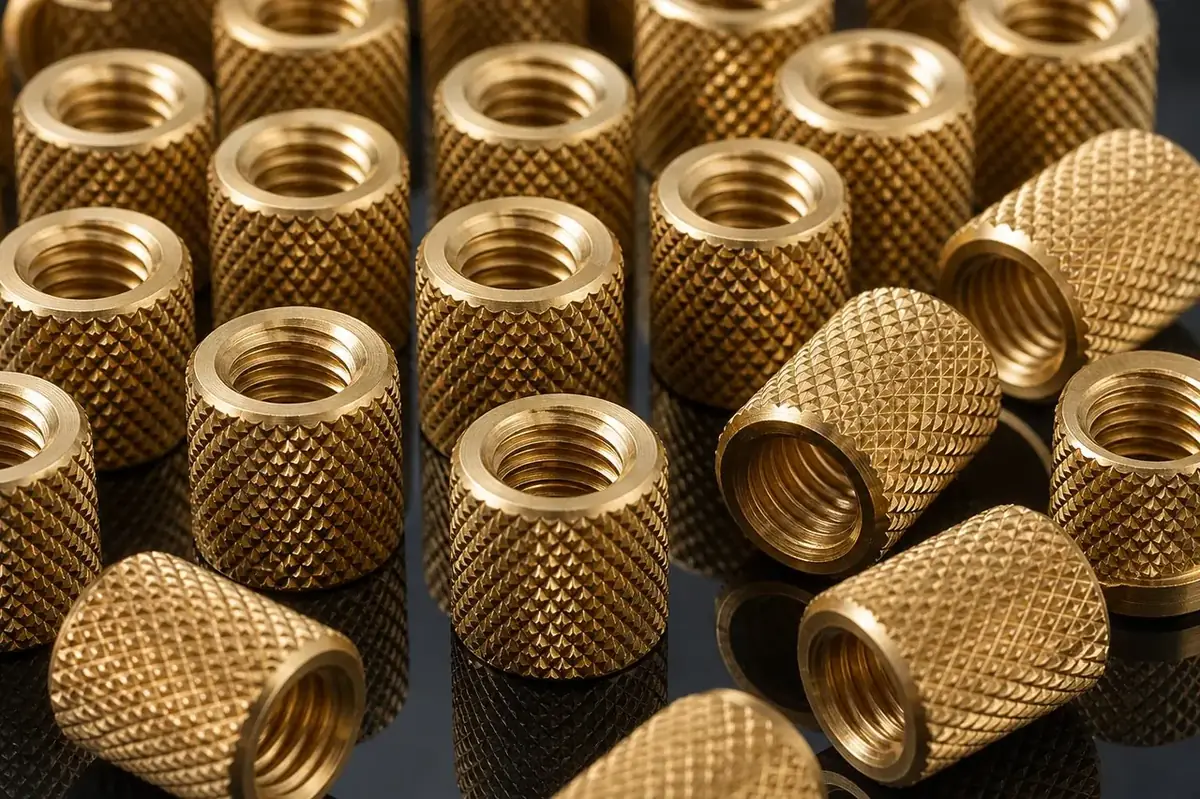
Free-cutting brass is why Jamnagar automatic lathes run hard. Chip breaking and tool life on common free-cutting grades beat soft copper for high-volume screws, inserts, and glands. Copper can be formed and drawn beautifully, but it is less forgiving as a high-speed turned commodity.
Brass bronze comparisons on the machine also depend on temper and lead or other free-machining additions. Some bronzes machine well; others load tools. Do not assume “copper alloy” means “same feeds and speeds as CZ-style rod.”
For rod and bar sourcing context inside the cluster, see brass rods, bars, billets, and patti. Grade and price drivers continue in brass alloys, grades, and price factors.
Corrosion and service environment
Copper forms familiar brown-green films outdoors. Brass can suffer dezincification in aggressive waters if the grade is wrong for the duty. Certain bronzes earn their keep in seawater or wear environments where ordinary yellow brass would be a poor default.
Aluminum brass exists specifically because aluminum additions can improve resistance in some aqueous services compared with basic brass. It is still a brass family alloy, not bronze and not pure copper—name the grade if that is what the drawing needs.
Indoor decorative hardware often cares more about tarnish and finish systems than deep corrosion science. Outdoor valves, marine fittings, and buried service need the chemistry conversation early.

Aluminum brass, brass steel, and look-alike language
Buyers also type brass steel, brass iron, and brass ironmongery when they mean hardware categories, not a single fused alloy. Brass ironmongery usually means brass door and building hardware. Brass-on-steel can mean steel cores with brass cladding or brass-look coating—confirm structure.
“Brass silver” often means nickel-tone plating on brass, not a silver-brass melt. “Brass chrome” language belongs in plating notes. Keep look-alike marketing words out of the alloy line on the purchase order.
“Catalogue colour names sell rooms. Melt certificates build assemblies that still fit next year.”
Where each metal is commonly used
- Copper: electrical conductors, plumbing tube in many markets, heat-exchange surfaces, architectural sheet.
- Brass: turned inserts, cable glands, sanitary components, fasteners, decorative hardware, many utensil and gift forms.
- Bronze: bushings and bearings, certain valves and marine castings, sculpture and specialised wear parts.
Utensil shoppers comparing copper-clad looks with pital brass ware should read the practical notes in brass cookware and utensils buying guide—food-contact lining and care matter more than the Instagram colour swatch.
Cluster context for why brass dominates local machining capacity sits in the Jamnagar brass industry hub. Scrap loops and remelt discipline connect to brass recycling, scrap, and sustainability.
Electrical and thermal behaviour in plain language
Pure copper usually wins when conductivity is the point of the part—bus bars, many cable conductors, and heat-spread surfaces. Brass remains conductive enough for countless terminals, links, and hardware pieces, but it is not a silent drop-in for a copper conductivity callout. If the drawing cites copper for electrical reasons, do not “value engineer” to brass without recalculation.
Thermal conductivity follows a similar caution. Copper moves heat eagerly. Brass is often selected because it machines cleanly and holds threads, not because it matches copper’s thermal curve. Cookware and heat-exchange conversations should keep those physics differences visible instead of treating every reddish-yellow metal as interchangeable.
Bronze grades used in bearings trade on wear and embeddability more than on looking similar to brass in a photograph. A bronze bushing beside a brass collar can share a shaft and still be two different engineering decisions.
Standards language beats catalogue colour names
Retail copy loves “golden brass,” “red brass,” and “naval bronze” as mood words. Some of those phrases map to real grade families; some are only marketing. For export components, put the standard designation on the purchase order and treat colour words as secondary.
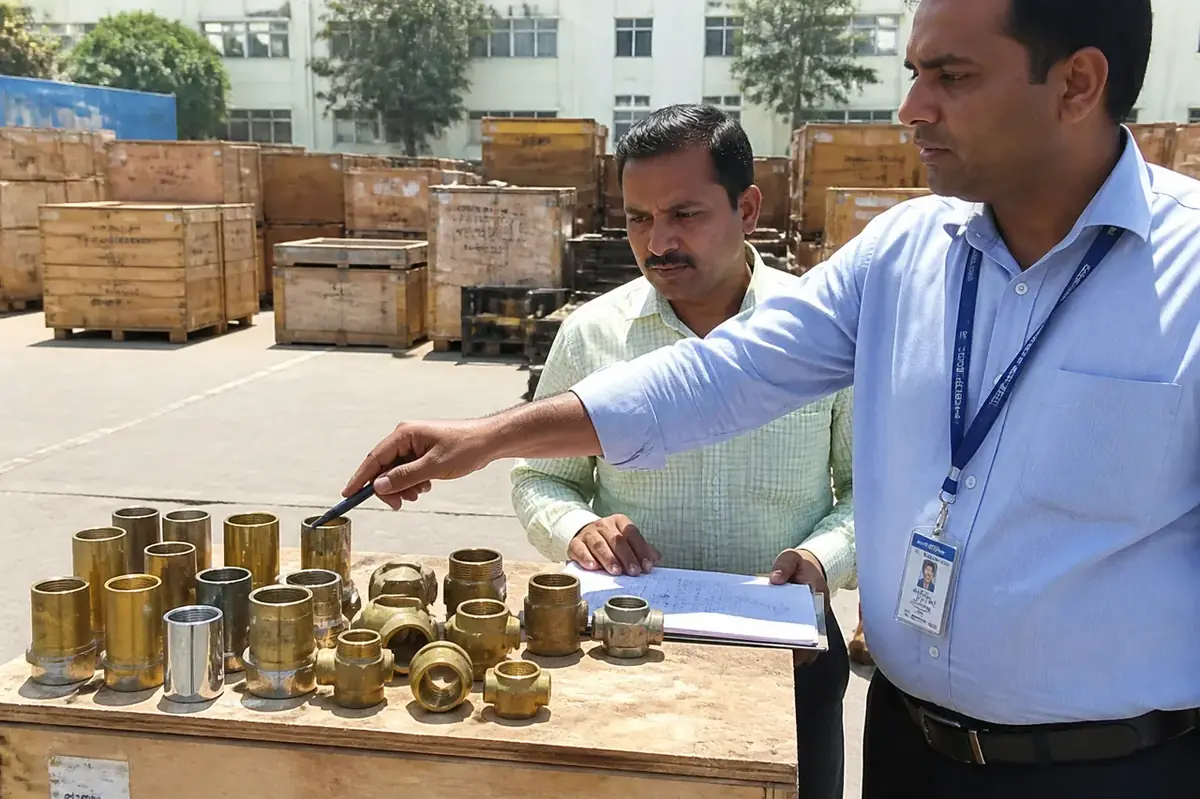
Incoming inspection can use XRF or wet chemistry when lots are critical. For everyday hardware, a melt certificate plus dimensional FAI is often the practical pair. The point is the same: identity first, cosmetics second.
When a supplier offers a “equivalent” alloy, demand a composition table and a reason. Equivalence for machining chip colour is not equivalence for dezincification resistance or bearing load.
Scrap segregation inside brass-heavy clusters
Jamnagar runs on copper-zinc loops. That density is an advantage only while turnings, billet ends, and rejected castings stay tagged. Copper bus offcuts tossed into a brass remelt change chemistry. Bronze bushings mixed into yellow-brass scrap do the same in reverse.
Buyers touring shops should ask how mixed metal is quarantined. A tidy floor is nice; labelled bins and heat traceability are nicer. Programs that allow uncontrolled remelt into precision rod are gambling with tool life and compliance.
Buyer mistakes that mix the families
- Accepting a bronze casting quote against a brass turned drawing because both were “copper alloy.”
- Assuming any yellow part is free-cutting brass suitable for high-speed cams.
- Ordering copper bus geometry in brass without checking conductivity needs.
- Using plated colour as proof of base metal.
- Letting scrap-mixed rod into a controlled export heat.
A simple decision tree for first RFQs
If you need high-volume turned hardware with yellow appearance and good chip control, start in brass rod grades and confirm zinc, lead, and compliance needs. If you need maximum electrical or thermal conductivity in a wrought form, start in copper and only migrate if engineering allows. If you need bearing wear surfaces or certain marine cast duties, evaluate bronze grades with the mechanical load in view.
Decorative consumer pieces often default to brass for colour and workshop availability. That default is fine when stated. It becomes a defect when a bronze sculpture quote is silently swapped to brass or when copper cookware expectations are pinned to a brass serving bowl.
Write the decision on the drawing notes: “Material: brass, grade X; substitutes prohibited.” Short sentences prevent long disputes.
How to specify metal on an RFQ
- Write the alloy family and grade standard—not only “brass” or “bronze.”
- State process route: extruded rod turn, forging, or casting.
- Note lead-free or drinking-water constraints where relevant.
- Separate plating appearance from base-metal identity.
- Forbid silent substitutions in the notes block.
Clear metal identity is the cheapest quality step in non-ferrous buying. Everything else—threads, lacquer, cartons—sits on top of that choice.
Attach a one-page material note to every recurring SKU: family, grade, allowed temper, forbidden substitutes, and whether plating may change appearance. When purchasing staff rotate, that note keeps copper and brass from collapsing into one yellow bin again.
Sample lots should travel with a cut coupon or tagged remnant from the same heat when the program is critical. Visual yellow match between a brass screw and a copper washer is not material approval—it is only colour coincidence under office lights.
FAQ: brass, bronze, and copper
Which metal should utensil buyers choose?
Choose based on design, lining, and care rules—not colour alone. Use the cookware guide for practical selection rather than metal folklore.
What are the main brass vs bronze vs copper differences?
Copper is largely pure Cu. Brass is copper-zinc. Bronze is typically copper-tin with other possible additions. Colour hints; certificates confirm.
Is brass harder than copper?
Common brasses are usually harder and stronger than soft pure copper, which helps machined hardware. Temper and grade still matter.
Can bronze and brass be used interchangeably for fittings?
No. Chemistry, corrosion behaviour, and machining response differ. Substitutions need engineering sign-off.
Why do buyers confuse copper and brass in scrap yards?
Both are valuable non-ferrous metals. Colour helps, but mixed lots still mis-sort. Keep streams segregated for melt control.
What is aluminum brass used for?
It is a brass with aluminum additions, often chosen for improved performance in certain water-related duties versus ordinary yellow brass. Confirm the exact grade for the environment.
How does brass compare with steel or iron for hardware?
Brass ironmongery is picked for corrosion behaviour, machinability, conductivity needs, and appearance. Steel and iron may win on strength and cost but need rust protection and different tooling.
Is brass silver a real alloy name?
Usually it is buyer slang for a silvery plated look on brass or a pale appearance. Ask for base metal and plating notes instead of relying on the phrase alone.
Conclusion
Copper, brass, and bronze share a family tree, not a parts bin. Write the alloy, forbid silent swaps, and treat plating colour as a separate line. That discipline keeps Jamnagar machining strengths pointed at the right chemistry.
If you remember one line: name the metal before you negotiate the minute. Piece price means little when the wrong copper alloy lands in a brass-shaped hole.
Need Alloy Advice for Your Brass Components?
Match grade and process to the drawing with a direct Jamnagar supply desk. Share your material notes or browse component categories on Jamnagar.net.