Brass Wire and Chain Specifications: Mesh, Light & Allied Forms
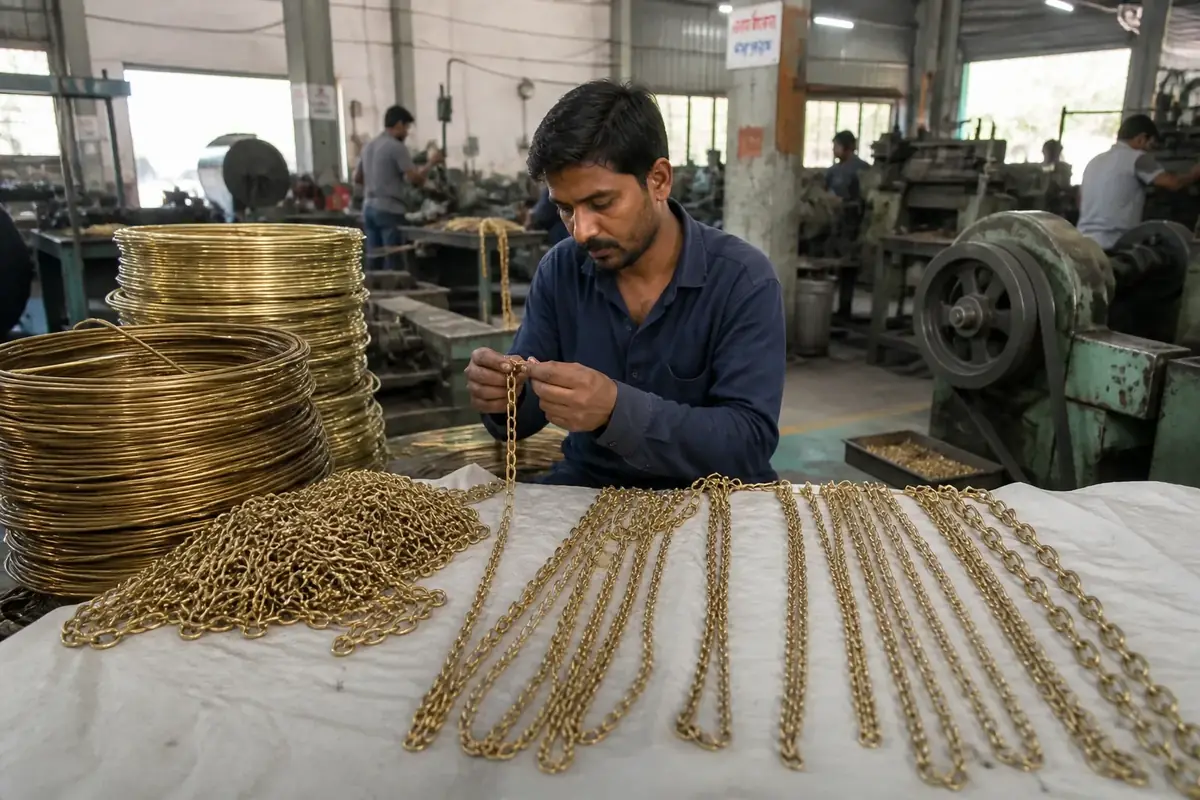
Wire and chain fail quietly until a pendant drops or an EDM spool jams. Buyers who write clear brass wire and chain specifications control diameter, temper, link geometry, and finish before colour photos do the talking. Soft marketing language—“golden chain”—is not a purchase order.
This hub covers industrial and decorative brass wire, formed brass chain, mesh, light-fixture chain, jhula hanging chain, and allied forms that share copper-zinc chemistry with rod and sheet but need different mill and finishing routes. Jamnagar’s wider ecosystem often fabricates ends, hooks, and hardware that complete these programs.
Use it to separate EDM wire from craft wire, and ornamental hanging chain from load-bearing suspension hardware. A few disciplined fields on the RFQ prevent most of the tangle, mismatch, and overload stories that show up after shipment.
Highlights
- Diameter + temper define wire; link style + wire dia define chain.
- EDM wire is a process consumable—not jewellery stock.
- Hanging chain needs an honest weight and safety note, not only a finish name.
Table of contents
- Brass wire basics: gauge and temper
- EDM brass wire vs craft wire
- Chain anatomy and duty classes
- Light chain and jhula hanging chain
- Wire mesh and screen forms
- Allied forms and finishing
- Specification comparison table
- Price drivers and packing
- Ends, joins, and assembly hardware
- RFQ checklist
- Sampling and incoming checks
- FAQ
Brass wire basics: gauge and temper
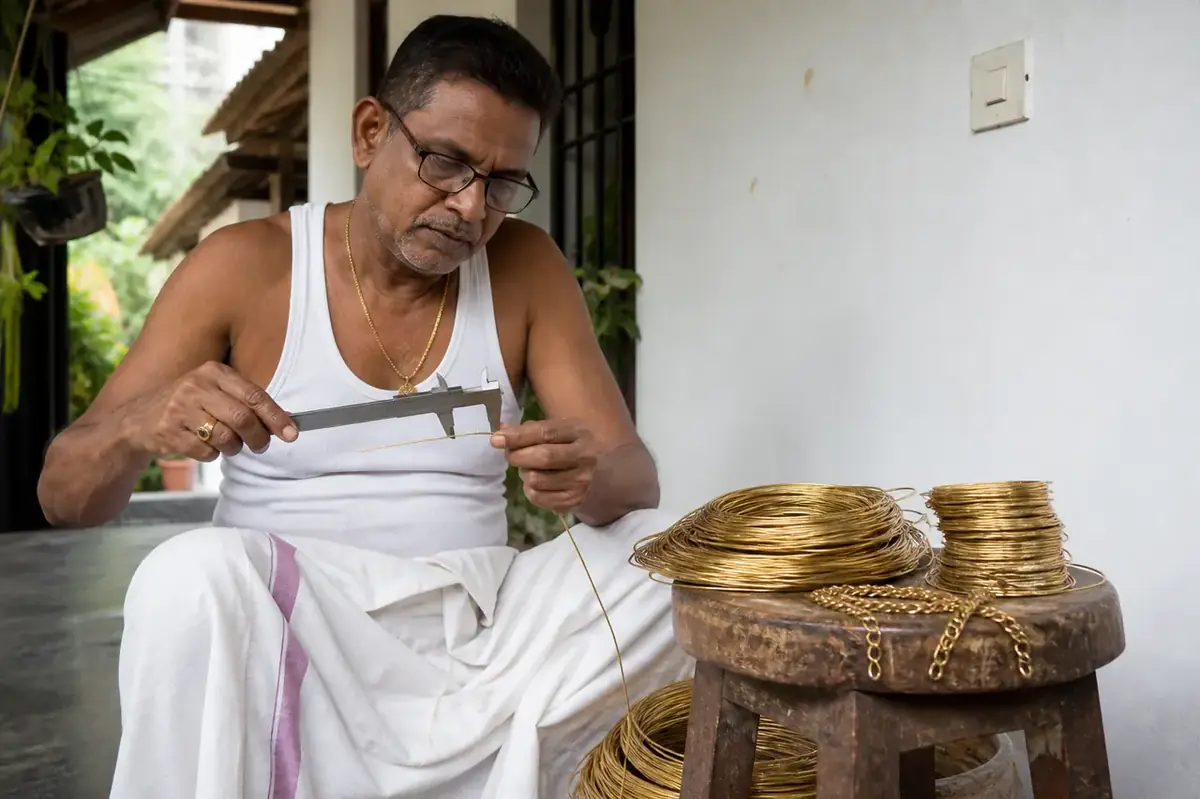
Drawn brass wire starts from rod or thicker wire and is reduced through dies to target diameter. Temper—soft, half-hard, hard—decides whether the wire wraps jewellery findings cleanly or holds a springy shape for clips and forms. Diameter tolerance and ovality matter for automated feeding; surface scratches matter for bright decorative work.
If your program still thinks in solid bar, confirm you truly need wire rather than small-diameter rod. Cut lengths of rod and continuous wire behave differently in tooling—see brass rods, bars, billets, and patti. Flat strip needs are closer to brass sheet, plate, and strips.
Spool size, traverse quality, and cast (coil set) affect downstream machines. A cheap coil that bird-nests on a feeder is not cheap.
“Write the diameter in millimetres twice—once for the metal, once for the spooler who will be blamed when it snarls.”
EDM brass wire vs craft and jewellery wire
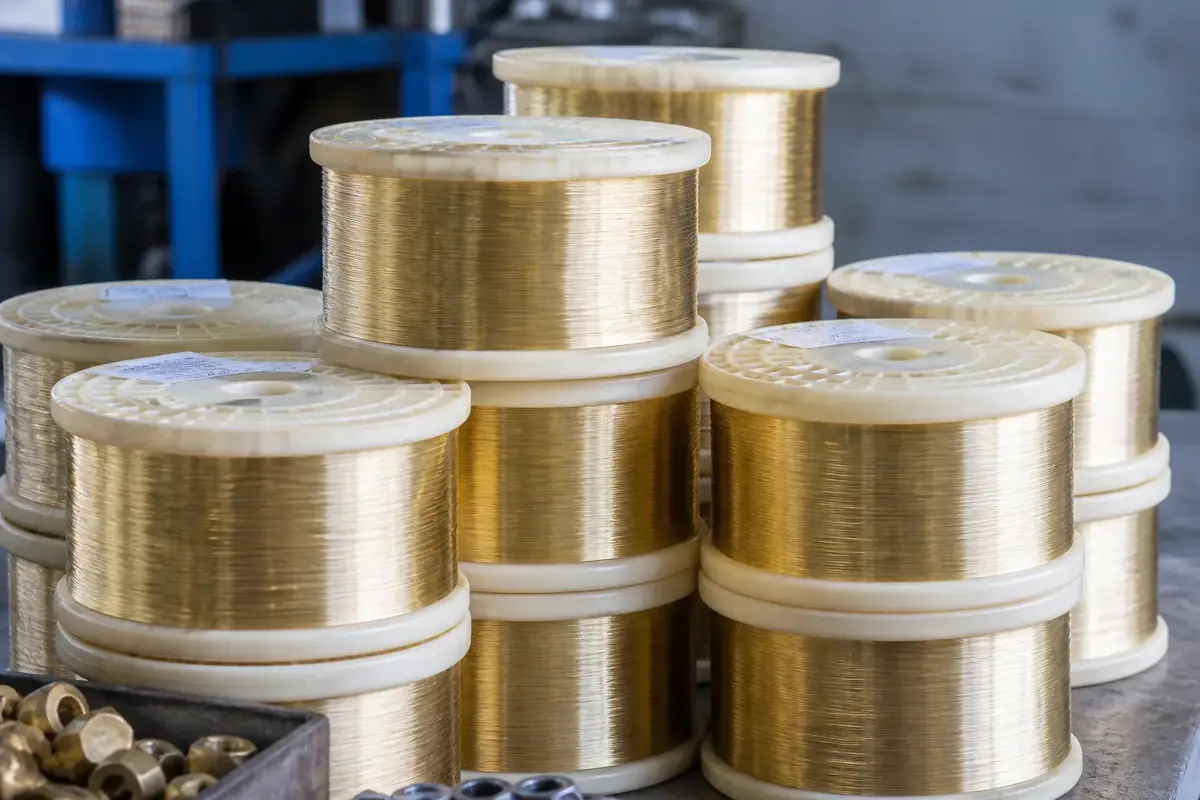
EDM brass wire is a machine consumable for electrical discharge machining. Buyers care about tight diameter control, tensile behaviour, coating layers where specified, and clean spooling that runs for hours without break. Jewellery wire cares about malleability, colour, and how solder or mechanical joins look after forming.
Do not cross-shop these on a single “brass wire” line item. An EDM spool that cuts steel dies well may be the wrong temper and cleanliness for hand-wrapped décor. Alloy and price context for copper-zinc feedstock lives in brass alloys, grades, and price factors.
Ask EDM suppliers about break rate expectations on your machine type and about humidity protection in packing. Moisture and rough handling create microscopic nicks that show up as wire breaks at the worst hour of a shift.
Chain anatomy and duty classes
Brass chain is formed from wire into links—round, oval, twisted, or decorative patterns—then finished. Critical specs include wire diameter, inside link dimensions or pitch, links per metre, weld or join quality where links are closed, and finish. Open decorative links that look handcrafted may not carry load the way welded industrial chain does.
Duty class is the missing field on many RFQs. Ornamental chain for gift packaging is one product. Brass chain for hanging fixtures or décor objects is another. People-carrying or heavy mechanical duty needs engineered chain and certified practice—do not invent a working load from a polished sample’s appearance.
Cut length, end links, and matching hooks or plates belong in the same conversation. Chain alone rarely finishes a hanging assembly.
Light chain and jhula hanging chain
Brass light chain hangs pendants and related fixtures. Buyers often search finish variants such as brass light chain gold, brass light chain silver, or hand-finished looks under brass light chain hand language. Match chain colour to canopy, holders, and body hardware—mixed gold-tone and bright brass under one LED temperature looks accidental.
Brass jhula chain and generic jhula chain searches usually mean suspension chain for swings, cradles, and decorative hanging seats in Indian retail vocabulary. Ask whether the chain is ornamental, light décor duty, or intended to carry people. If it carries people or dynamic loads, engineering review and hardware rating outweigh catalogue shine.
Fixture and décor ecosystems that consume chain alongside spun or cast brass forms continue in brass home décor and decorative gift items overview.

Brass wire mesh and screen forms
Brass wire mesh (also searched as brass mesh) is woven or welded from wire into sheets or rolls. Specify mesh count or aperture, wire diameter, weave, width, and whether the mesh must stay flat for framing. Filtration, EMI-style screens, insect screens, and decorative grilles each tolerate different openness and stiffness.
Edge finishing matters when mesh is cut to panels. Raw edges snag; framed edges need dimensional accuracy so doors and cabinets close. Cleanliness matters for food-adjacent or laboratory-adjacent screens—define washing or packaging rules if required, without overclaiming suitability.
Approve a physical swatch. Photos compress aperture and colour; fingers do not.
Allied forms, finishes, and search noise
Wire feeds chain making, mesh weaving, pins, and formed findings. Chain programs need end rings, S-hooks, and ceiling plates that match finish. Those small parts often come from the same non-ferrous cluster that turns fasteners and décor hardware.
Finish options include polished brass, lacquered bright, antique, and plated appearances that read as gold-tone or silver-tone. Lacquer extends shine indoors; outdoor or humid installs need a frank conversation about maintenance. Living finishes will change—say whether that is desired.
Search noise exists. A brass wireless doorbell is typically an electronic finished good, not a wire mill product. Unless you need a brass trim piece for an enclosure, keep that RFQ out of the materials lane.
“If the chain holds weight, write the weight. If the wire feeds a machine, write the spool. Everything else is catalogue poetry.”
Specification comparison table
Keep these rows on separate PO lines even when one trader can source all of them.
| Form | Must-specify fields | Typical use | Failure mode if vague |
|---|---|---|---|
| General brass wire | Dia, temper, alloy, spool | Forming, findings, fabrication | Wrong hardness; bird-nest coils |
| EDM brass wire | Dia tolerance, tensile, spool type | Wire EDM cutting | Breaks; poor cut finish |
| Decorative / light chain | Link style, finish, cut length, weight | Pendants, décor hanging | Finish mismatch; overload |
| Jhula / hanging chain | Link size, duty, finish, hardware | Swings, cradles, décor seats | Unsafe load assumption |
| Wire mesh | Aperture, wire dia, weave, width | Screens, panels, filtration | Wrong openness; wavy sheets |
Price drivers and packing reality
Brass wire price headlines follow copper, but conversion dominates fine diameters and precision spooling. Chain price adds forming labour, join quality, and finishing. Mesh adds weaving setup and width yield. Comparing a kilo of soft craft wire to a kilo of EDM wire without those notes is theatre.
Packing protects value. Wire spools need crush resistance and moisture barriers. Chain tangles in loose cartons and finishes scratch when links hammer each other at sea. Mesh sheets need flat support or careful roll winding with interleaf.
Label finish lots. Gold-tone and silver-tone appearances that look similar in warehouse light diverge under warm retail LEDs—retain a master link for each finish code.
Ends, joins, and assembly hardware
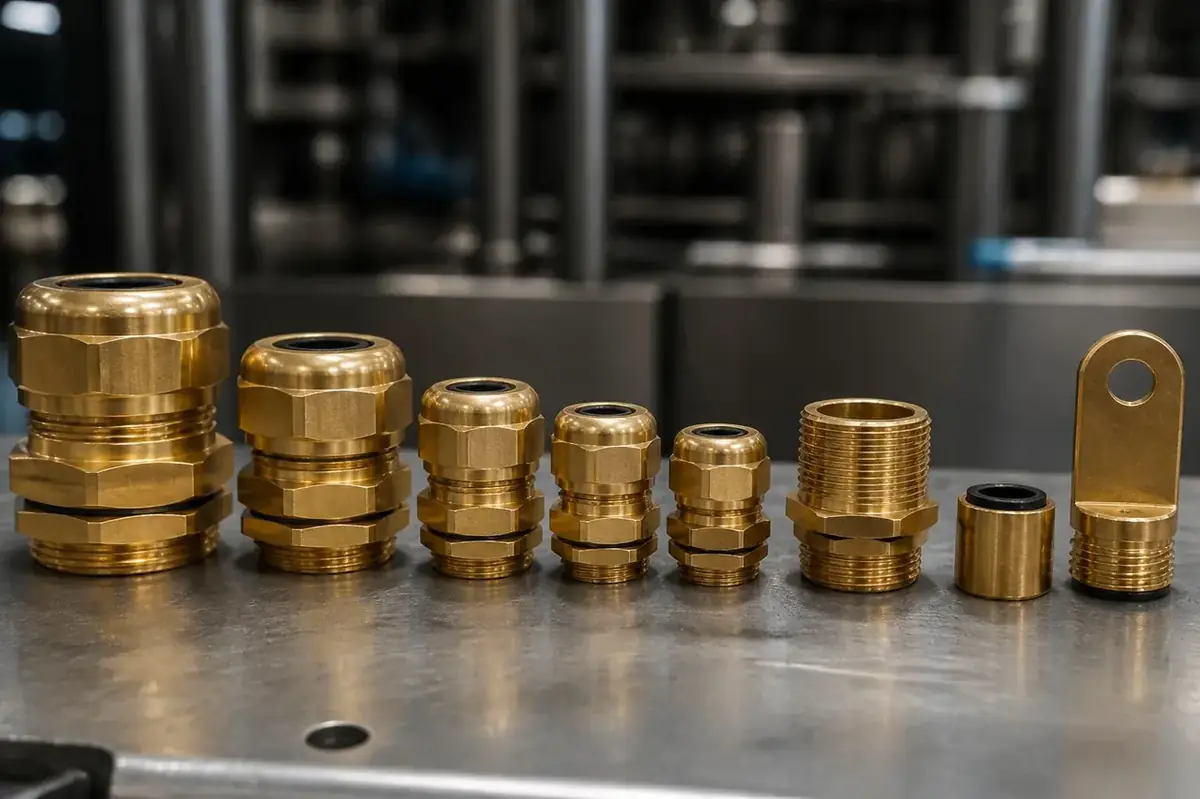
Chain programs stall when the links look right and the ends do not exist. Ceiling hooks, quick links, threaded plates, and decorative caps must match wire diameter and finish. Open the BOM early: metres of brass light chain plus N sets of end hardware is a clearer RFQ than “chain for hanging lights” with a photo of a competitor’s canopy.
Closed links versus open links change both strength and assembly labour. Open decorative links may need pliers work on site; closed or welded-style joins reduce tampering and accidental opening. Say which. For jhula programs, hardware at both ends often sees more stress than the mid-span links—inspect those parts as carefully as the chain face.
Wire forms that become pins, eyelets, or jump rings need cut-end quality. Sharp shear burrs cut textile and skin. Tumbling or barrel finishing may be required before plating. That secondary step belongs in the process note so quotes stay comparable.
Colour, lacquer, and ageing expectations
Bright lacquered chain stays “new” longer indoors; unlacquered brass will warm and spot according to fingerprints and air quality. Neither path is wrong—uncommunicated expectations are wrong. If a retailer wants living brass on mesh panels and frozen bright on adjacent light chain, write two finish codes and two care cards.
Gold-tone and silver-tone appearances can be lacquer tints, plating systems, or simply polished brass under different marketing names. Demand a physical master. Phone cameras lie about yellow metal more than almost any other category on this site.
Outdoor or coastal installs need humility. Brass mesh balcony screens and hanging chains near salt air age fast without maintenance plans. Specify environment on the RFQ so suppliers do not assume air-conditioned lobby duty.
RFQ checklist for wire, chain, and mesh
- Form — wire, EDM wire, chain, mesh, or cut assembly.
- Geometry — diameter/temper for wire; link and pitch for chain; aperture for mesh.
- Alloy and finish — including lacquer or plated appearance codes.
- Duty / load note — décor only, fixture weight, or higher duty with engineering input.
- Length or area — spools, cut chain metres, mesh sheet sizes.
- End hardware — hooks, rings, plates if part of the supply scope.
- Sample / swatch — retain masters for finish and geometry.
- Packing — anti-tangle, anti-scratch, moisture protection.
One clear duty sentence prevents the most dangerous misunderstanding in hanging-chain programs. Write it even when the buyer feels awkward asking about weight. Add environment—indoor dry, indoor humid, covered outdoor—so finish and hardware choices stay honest.
Common mistakes
- Ordering EDM wire with jewellery temper language.
- Matching light-chain finish by phone description only.
- Assuming jhula chain is rated for dynamic human loads without review.
- Buying mesh by “fine” or “coarse” without aperture numbers.
- Ignoring spool quality until production feeders jam.
- Mixing wireless doorbell electronics into brass wire material RFQs.
Wire and chain are visual products that still obey physics. Specify both the look and the load—or the process—and the quotes become comparable.
FAQ: brass wire, chain & allied forms
Is a brass wireless doorbell a wire product?
Usually not—it is an electronic finished good. Keep material wire RFQs separate unless you need a metal trim component.
What belongs in brass wire and chain specifications?
Wire needs diameter, temper, alloy, and spool notes. Chain needs link style, wire diameter, pitch or density, finish, length, and a duty/load note when hanging is involved.
Is EDM brass wire the same as craft wire?
No. EDM wire is a machining consumable with tight process specs. Craft wire prioritises forming and colour. Validate before any substitution.
What is brass jhula chain used for?
Typically hanging swings, cradles, and decorative suspension in retail language. Confirm load expectations—ornamental chain is not automatically people-rated.
How should I specify brass light chain?
Link style, finish, cut lengths, and fixture weight with margin. Match finish to the rest of the luminaire under real lighting.
What defines brass wire mesh quality?
Wire diameter, aperture or mesh count, weave, width, and flatness. Approve a swatch before volume orders.
What drives brass wire price?
Metal markets plus diameter, temper, spooling, finish, and volume. Precision EDM wire and heavy decorative wire convert at different costs.
Can one hanging chain serve lighting and décor equally?
Only when weight, environment, and finish all fit. Lightweight décor chain can look right and still lack margin for heavier fixtures.
Sampling and incoming checks
For wire, mic diameter at start, middle, and end of a spool sample; check temper with a wrap or bend test agreed in advance. For EDM wire, follow the machine builder’s guidance on trial cuts before releasing a new lot to production dies. For chain, measure link pitch over a counted run of links, not a single pretty link. For mesh, verify aperture with a loupe or gauge plate and check for broken wires at edges.
Retain finish masters in sealed bags away from workshop sulphur sources. Compare new lots beside the master, not beside memory. When a lighting program runs for years, that drawer of tagged links is worth more than another brochure photo.
Conclusion
Wire, chain, and mesh are copper-zinc forms with their own geometry language. Diameter and temper rule wire; links and duty rule chain; aperture rules mesh.
Separate EDM consumables from craft stock. Put weight next to hanging-chain finish codes. Pack against tangle and scratch. Those habits turn brass wire and chain specifications into deliveries that hang straight, feed clean, and match the sample you approved.
Looking for Brass Wire or Chain Forms?
Share gauge, link style, finish, and duty notes for a direct wire and chain forms enquiry. Explore allied non-ferrous options with factory-linked support on Jamnagar.net.