Custom Brass Components: Drawings, MOQ, and Sampling That Survive Production
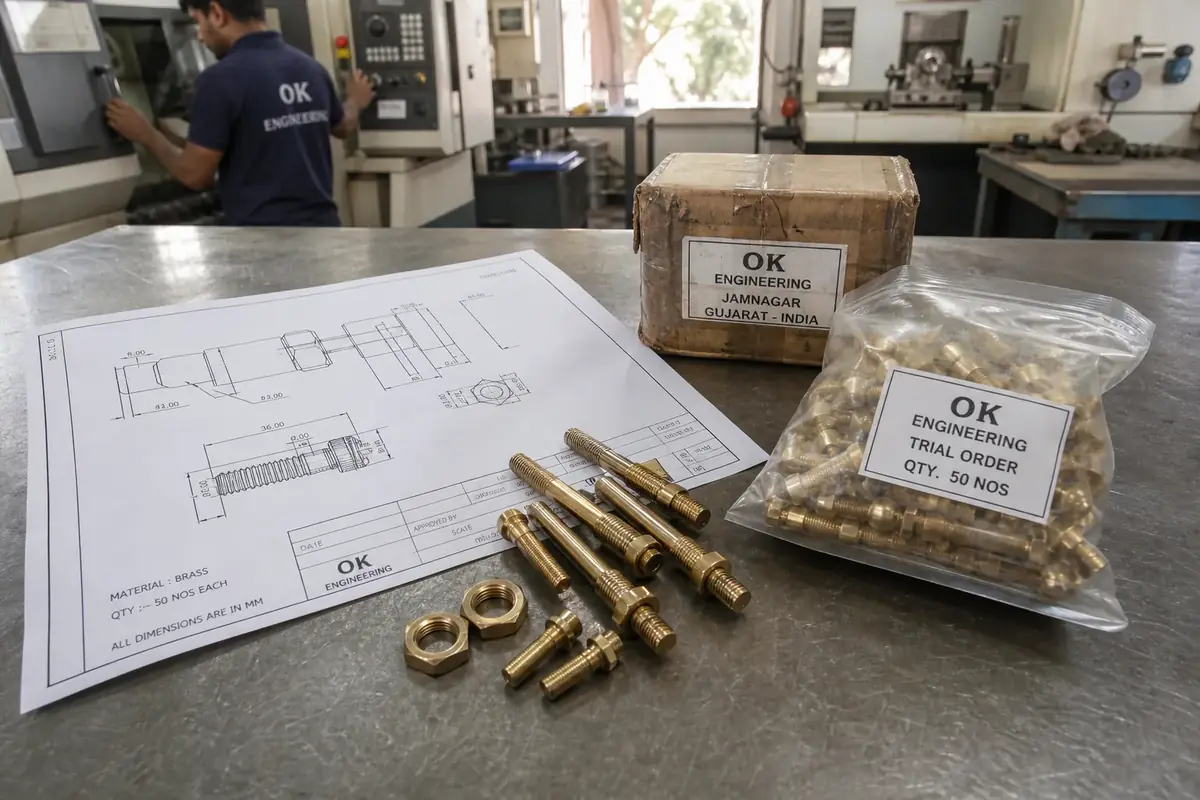
Custom work fails less often on machining skill than on fuzzy instructions. Shops in Jamnagar can turn, forge, stamp, or finish almost any copper-zinc shape—if the drawing, MOQ, and sample rules are clear. This guide walks through custom brass components drawings moq sampling as one connected process, not three separate emails.
Buyers also ask about semi-finished forms: brass blanks, brass discs, brass coin blanks, and brass plates for engraving. Those SKUs look simple and still need thickness control, flatness, and finish notes before anyone talks piece price.
Use this hub when you are moving from idea to first article. Pair it with manufacturer shortlisting and import checklists once the sample is approved.
Highlights
- Separate sample MOQ from production MOQ on every RFQ.
- Approve process notes, not only pretty sample photos.
- Blanks and engraving plates need thickness and flatness callouts like any functional part.
Table of contents
- The drawing → sample → MOQ loop
- What a usable drawing pack contains
- Brass blanks, discs, and coin blanks
- Brass plates and engraving workflows
- How MOQs really behave by process
- Sampling plans that protect production
- Drawing and sample readiness table
- Common custom-part mistakes
- Revision control when drawings keep moving
- What custom quotes are really pricing
- Communication habits that keep custom jobs on track
- From approved sample to import lot
- FAQ
The drawing → sample → MOQ loop
Treat custom sourcing as a loop. Drawings define acceptance. Samples prove the process. MOQ sets the commercial floor for that process. Changing one without revisiting the others is how “approved” parts become rejected containers.
A healthy sequence looks like this: RFQ with drawing → process proposal → paid sample or first article → written approval with locked notes → production MOQ release → incoming inspection against the same print.
For manufacturer shortlisting method, use the brass parts manufacturer buyer guide. For process route choices, see brass casting, machining, and CNC turned parts.
“A sample without a revision-controlled drawing is a souvenir, not an approval.”
What a usable drawing pack contains
Shops can quote from a photo. They should not produce from one. A usable pack for custom brass components includes dimensioned 2D views, tolerances on critical features, alloy grade, thread standard, finish, and a revision block with date.
Call out what matters. If concentricity between two diameters controls assembly, say so. If a chamfer is cosmetic, say so. Silent priorities invite shops to optimise for the cheapest interpretation.
Minimum drawing checklist
- Overall dimensions and critical tolerances.
- Alloy designation—not only “brass.”
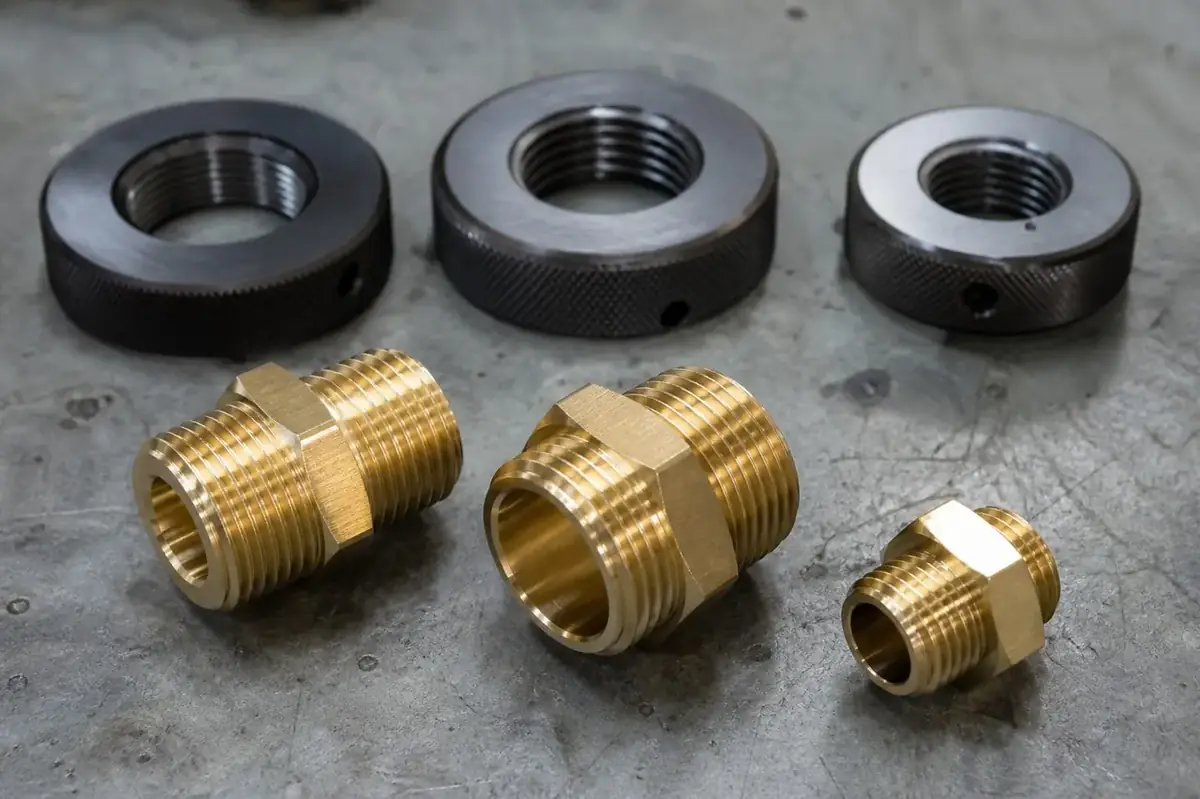
- Thread form, class, and gauge method.
- Finish: polished, nickel, antique, lacquered, or as-machined.
- Deburr notes and sharp-edge exceptions.
- Packing preference if finish is fragile.
Thread and tolerance language deepens in brass component specifications, threads, and tolerance.
Brass blanks, discs, and coin blanks
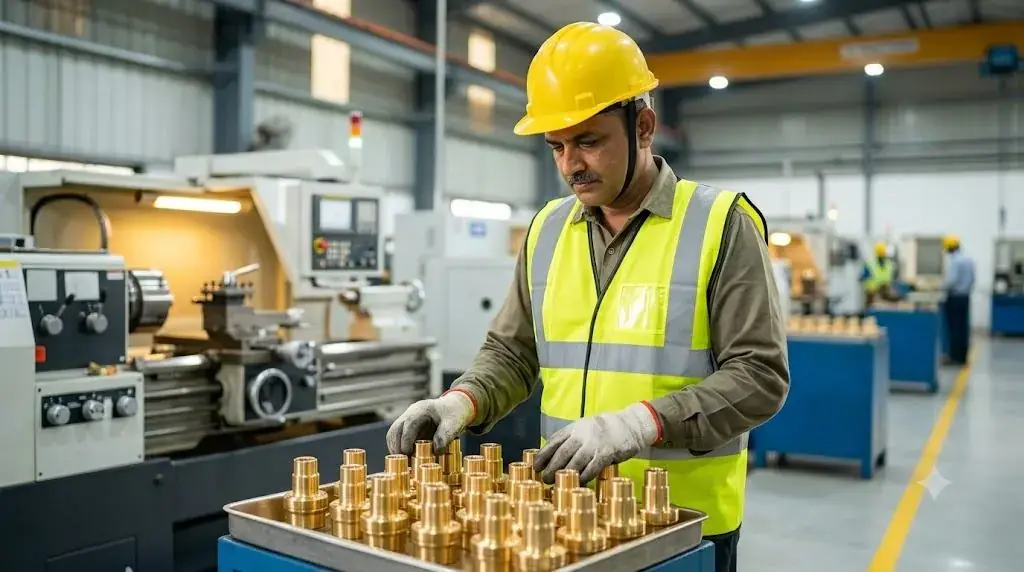
Brass blanks are starting shapes—cut, punched, or sawn—before final machining, stamping, or engraving. They save buyers who want local finishing control or who need feedstock for their own presses.
Brass discs are the round subset used for spinning, stamping, medals, valves seats blanks, or CNC facing. Specify diameter, thickness, flatness, and edge condition. Burr left from blanking can wreck progressive dies later.
Brass coin blanks sit tighter again. Diameter, thickness, weight band, and edge preparation matter for minting or token lines. Ask whether blanks are annealed and how lot weight is certified. Soft language like “coin size brass” is not a specification.
Blank RFQ fields that prevent remakes
- Alloy and hardness or anneal condition.
- Thickness tolerance and measurement method.
- Diameter or outer profile tolerance.
- Surface condition: mill, brushed, polished one side, etc.
- Edge: as-blanked, deburred, or machined.
Brass plates and engraving workflows
Brass plates for engraving are a high-intent custom category. Nameplates, dedication plaques, machine tags, and award plates all start with flat stock that must stay flat through polishing and cutting.
Brass engraving itself may happen at the factory, at a local trophy shop, or at the buyer’s site. Export programs often supply ready-to-engrave plates or finished engraved parts with lacquer. Clarify who owns artwork files, font licensing, and depth of cut.
People searching brass plate engraving near me usually need a local one-off. Volume buyers still benefit from Jamnagar for plate blanks or repeated finished plates. A common hybrid: prove artwork locally on a sample plate, then release production quantities overseas with locked artwork PDFs.
Engraving-plate notes that matter
- Thickness and flatness before polish.
- Whether lacquer is pre- or post-engraving.
- Corner radius, mounting holes, and bevel style.
- Vector artwork with stroke widths suitable for the process.
How MOQs really behave by process
MOQ is not a moral stance. It is the smallest quantity that covers setup, tooling amortisation, and material remnant risk. Cam-automatic shops dislike tiny lots because changeover eats the shift. CNC cells can run smaller samples at higher piece price. Forging dies want volume.
Always ask for two numbers: sample MOQ and production MOQ. Mixing them in one email creates false expectations. A shop that can cut 20 CNC samples may still quote 5,000 pieces as the production floor for that geometry on cam machines.
Blank and plate programs sometimes allow lower MOQs when material is standard sheet or rod. Special alloys or unusual thicknesses raise remnant charges. Ask how leftover strip or bar is handled in the quote.
Mixed-SKU POs complicate floors further. Ten engraving plate sizes in one “small order” can mean ten setups. Consolidate sizes or accept a setup fee line. Coin blank diameter changes mid-program force fresh tooling checks even when alloy stays the same.
Some buyers bridge MOQ gaps with shared tooling across related parts—same OD blank, different secondary ops. That works only when the drawing family was designed for it. Retrofitting unrelated parts onto one blank to chase a lower floor usually creates scrap, not savings.
Write annual volume beside first PO quantity. Shops plan rod purchases and plating slots differently for a one-off trial versus a twelve-month call-off. Honest forecasts earn better scheduling even when the first release is modest.
Sampling plans that protect production
Sampling is where custom programs live or die. Define quantity, measurement plan, and approval format before metal is cut. A soft “looks good” WhatsApp message is not a first-article report.
Include finish in the sample decision. Hand-buffed showpieces that production cannot repeat are a classic trap. If production will be barrel-finished or lacquered on a line, the sample should use the same route.
Decide who measures what. Buyer-side metrology and supplier-side metrology disagree when datums are unclear. Mark datum features on the print. For threads, name the gauge standard and whether plated parts are gauged before or after coating.
Split functional samples from marketing samples when needed. A polished cutaway for a sales booth is not the same approval as a dimensional first article. Keep both labelled so purchasing does not release mass production on a booth prop.
For blanks destined for local engraving, sample the blank flatness and polish grade under the lighting your engraver uses. A plate that looks fine in factory daylight can show waves under raking showroom light after letters are cut.
First-article pack contents
- Marked-up drawing with measured values.
- Alloy note or melt reference if available.
- Photos of finish under agreed lighting notes.
- Thread gauge results where applicable.
- Written process notes for production release.
Defect patterns and inspection habits are covered in brass product defects and quality checks.
“Approve the process that made the sample—or expect a different part when volume starts.”
Drawing and sample readiness table
| Part type | Drawing must lock | Sample focus | MOQ watch-out |
|---|---|---|---|
| CNC / turned custom | Critical dims, threads, concentricity | Gauge report + finish match | Sample vs cam production floor |
| Forged body | Die split, machining stock | First-off forge + machine faces | Die amortisation volume |
| Brass discs / blanks | OD, thickness, flatness, edge | Micrometer pack + edge photos | Sheet remnant charges |
| Coin blanks | Weight band, anneal, edge | Weight + diameter SPC sample | Tight process = higher floor |
| Engraving plates | Size, holes, bevel, lacquer stage | Artwork proof + polish grade | Mixed sizes raise setup time |
Common custom-part mistakes
- Sending competitor photos with no dimensions or alloy.
- Approving a hand-polished sample for a plated production route.
- Ignoring plating thickness on near-limit threads.
- Assuming blank thickness “around 2 mm” is good enough for coin or stamp work.
- Changing artwork after plates are polished and cut.
- Negotiating production MOQ before sample process notes exist.
Most of these mistakes are free to avoid and expensive to repair after ocean freight.
Revision control when drawings keep moving
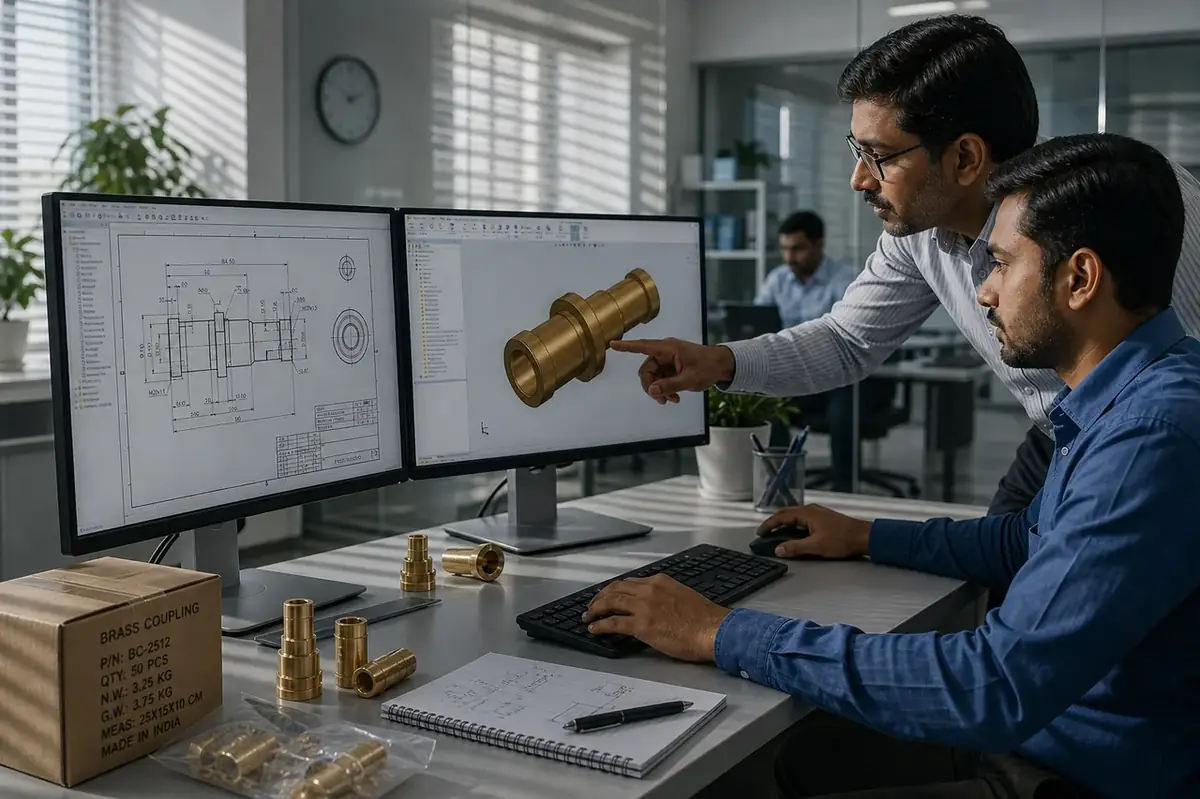
Custom programs rarely freeze on the first sketch. Engineering changes thread depth, adds a knurl, or shifts a chamfer after the sales sample ships. Without revision control, the shop runs yesterday’s file while your inspector holds today’s PDF. That fight is avoidable.
Put a revision letter and date on every print. When you approve a sample, write the revision on the approval note. When you change the print, decide whether old samples remain valid. Many buyers skip that sentence and later argue about “what we meant.”
For engraving plates and coin blanks, artwork files need the same discipline. A font swap after plates are bevelled and polished wastes metal and labour. Lock vector files with names that include revision, not “final_final2.ai.”
What custom quotes are really pricing
A custom brass quote bundles material, machine time, tooling or programming, secondary ops, finish, inspection, packing, and risk for remnant scrap. Asking only for “price each” hides which lever moves. If you need a lower number, change geometry, finish, or MOQ—not only the negotiation tone.
Sample charges often cover programming, special cutters, and hand work that will not repeat at the same rate in production. That is normal. What is not normal is treating a free sample from mixed scrap rod as proof for a regulated production alloy. Pay for the sample route you intend to scale.
Blank and disc programs price thickness tolerance tightly because coil or sheet yield changes. Coin blank weight bands add sorting labour. Engraving-ready plates add flatness and polish time before any letter is cut. Itemise those expectations in the RFQ so the quote is comparable across shops.
Communication habits that keep custom jobs on track
Send one controlled file set, not five conflicting WhatsApp photos across three weeks. Summarise open questions in a short bullet list: alloy, MOQ, sample qty, finish, packing. Ask the supplier to restate the process route in their own words before metal is cut.
Time zones and festival calendars affect sample turns. Build buffer when first articles must land before a tooling show or retail reset. Rush air samples are useful—but only if production notes travel with them. A beautiful courier parcel without a marked-up print is still incomplete.
If multiple factories quote the same drawing, compare process narrative, not only price. One shop may CNC the whole part; another may blank then turn; a third may cast then machine. Each path needs its own sample logic and defect watch-list.
From approved sample to import lot
Once the sample is locked, freeze revision numbers on POs. Ask whether production will use the same heat source, plating bath, and packing method. Then align Incoterms, carton marks, and moisture protection.
Import execution detail continues in importing brass components from India. Custom programs fail most often in the silent gap between “sample OK” and “container booked.”
If your custom part is actually a blank or plate that you will finish locally, say that on the PO. Export packing for raw polished plates differs from packing for finished engraved gifts.
FAQ: drawings, MOQ, and sampling
When is a photo enough instead of a full drawing?
Almost never for functional parts. Photos help style. Dimensions, alloy, and tolerances still decide acceptance.
What belongs in a drawing pack for custom brass components?
2D dimensions with tolerances, alloy, threads, finish, critical surfaces, and revision date. 3D helps communication; acceptance still needs a controlled print.
How do MOQs usually work for custom brass parts in Jamnagar?
They follow process economics. CNC samples can be small; cam and forge production floors are higher. Always separate sample MOQ from production MOQ.
What is the difference between brass blanks, discs, and coin blanks?
Blanks are semi-finished starts. Discs are round blanks for further work. Coin blanks need tighter diameter, thickness, and often weight control for minting or tokens.
How should buyers specify brass plates for engraving?
Lock alloy, thickness, flatness, pre-engrave finish, edge style, mounting holes, and whether lacquer is applied before or after engraving.
Can local “near me” engraving still fit an India supply plan?
Yes. Prove artwork locally if needed, then order repeatable blanks or finished plates at volume from the cluster with locked files.
What should a sampling plan include before mass production?
Sample quantity, measured dimensions, gauges, finish standard, packing notes, and written approval before production heats or dies release.
Why do samples pass and production lots fail?
Different heats, plating baths, hand polish versus bulk finish, or packing changes. Lock process notes on the approval form.
Conclusion
Custom brass work rewards buyers who treat drawings, samples, and MOQs as one system. Clear prints reduce wrong-route quotes. Honest sample plans prevent pretty prototypes that production cannot repeat. Separate MOQs keep commercial talks realistic.
Whether you need a complex CNC pin, a stack of brass discs, or plates ready for engraving, the same discipline applies: specify, sample, lock, then scale.
Keep one sticky note on the RFQ folder: approve the process, not only the piece.
Drawing Ready? Request Samples with Clear MOQs
Send controlled drawings for custom brass components, blanks, discs, or engraving plates and align sample versus production quantities on Jamnagar.net.