Brass Furniture Hardware for OEM Use: Specs That Survive Production

Furniture brands sell atmosphere. Factories sell millimetres and finish masters. When those two worlds meet, brass furniture hardware for OEM use has to carry both: the look of a showroom sample and the repeatability of a weekly packing list.
Jamnagar shops already turn, forge, cast, and finish a wide slice of brass hardware—from modern brass cabinet hardware pulls to structural brass legs, brass feet, rails, and castors. The OEM advantage is not “yellow metal available.” It is the ability to freeze mounting patterns, antique tones, and packing rules before a collection launches.
This hub maps common brass furniture applications and the specification habits that keep lots consistent across seasons.
Highlights
- Separate decorative accents from load-bearing hardware in RFQs.
- Freeze finish masters for antique and polished looks before volume.
- Match process cell to part: pulls ≠ rails ≠ castors ≠ shelf pins.
Table of contents
- OEM mindset versus retail brass shopping
- Cabinet, door, and window hardware
- Legs, feet, and seating hardware
- Tables, shelves, and accent pieces
- Rails, railings, and castor systems
- Small hardware that still needs drawings
- Finish families that define a collection
- Application vs process comparison table
- RFQ package for furniture OEMs
- Hospitality and contract furniture realities
- Collection launch sequencing
- Solid brass, plated metal, and honest labelling
- Modular cabinetry and shelf systems
- Motion hardware: castors, glides, feet
- Window hardware and architectural rails
- Care documents and aftersales kits
- FAQ
OEM mindset versus retail brass shopping
Retail buyers pick a look. OEMs pick a bill of materials. A coffee-table program that needs coffee table brass accents also needs screw patterns, glass clearances, and carton drop tests. A showroom brass dining table base that looks perfect once is not a production SKU until weld or joint notes exist.
Jamnagar capacity helps when you convert mood boards into part numbers. Keep structural parts and decorative trims on separate drawings even if they ship in one kit. That split prevents a polish shop from “improving” a load path you needed left alone.
Broader industry mapping sits in brass applications by industry.
“If the finish master is not sealed, the next lot will match last season’s memory—not last season’s sample.”
Cabinet, door, and window hardware
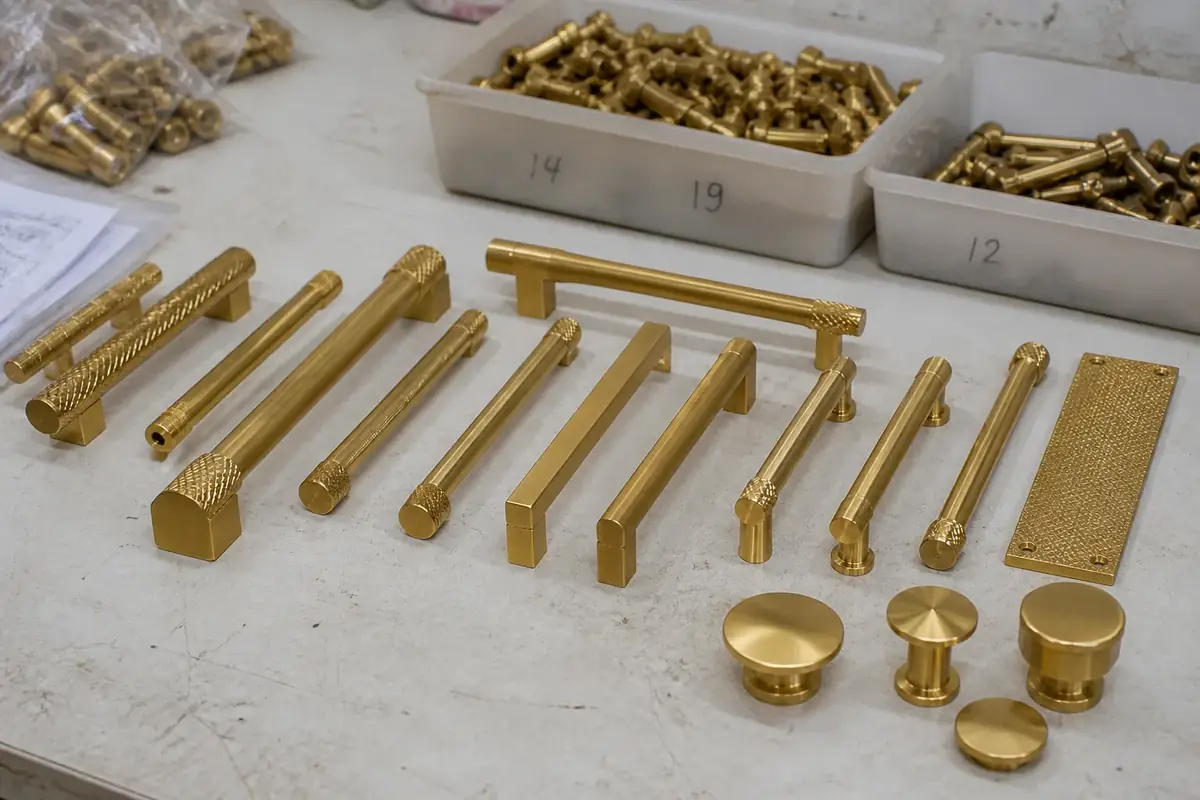
Modern brass cabinet hardware covers pulls, knobs, and backplates for a brass cabinet line. Call out centre-to-centre distances, projection, screw type, and whether the finish is living antique or sealed polish. Kitchen and bath adjacency may also push you toward corrosion-aware alloys or coatings—even when the part is “only decorative.”
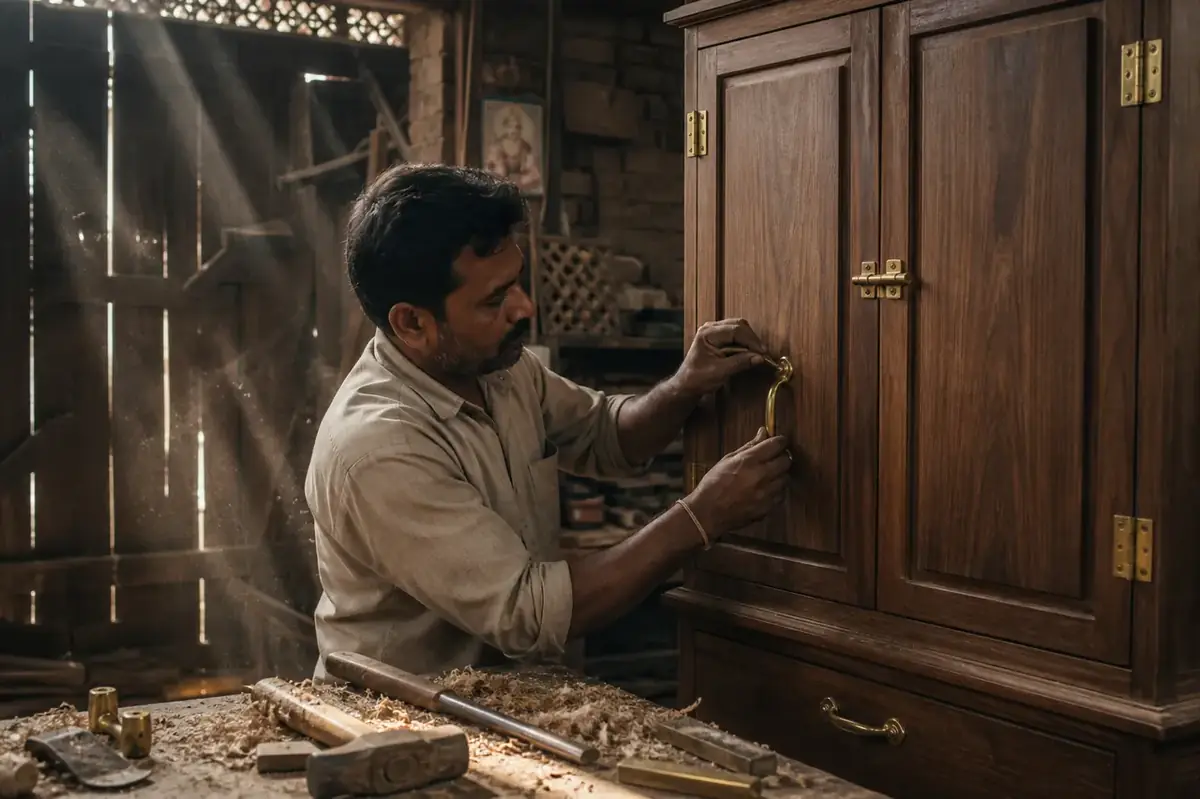
Brass door furniture and antique brass door furniture sit next door: levers, roses, escutcheons, and related sets. Consistency across left/right hands and across plating lots matters more than any single photogenic piece. Deep dive on handles and hinges continues in brass door hardware: handles, knobs, hinges.
Brass window hardware—stays, fasteners, lifts—needs operating load and weather exposure notes. A finish that looks rich indoors can streak on coastal windows if lacquer and alloy are wrong for the site.
Display and storage pieces such as a brass display cabinet often mix glass hardware, hinges, and small trims. Kit them with labelled bags so assembly lines do not swap finishes mid-build.
Legs, feet, and seating hardware
Brass legs appear on desks, occasional tables, and seating. A brass leg dining chair or brass dining chair frame may be tubular, cast, or hybrid. Specify wall thickness, weld or joint method, and floor-protection tips. A brass chair that looks delicate still needs fatigue thinking if it is used nightly in hospitality.
Brass feet and sabots protect timber legs and set visual weight. Threaded adjusters need pitch and engagement length. For bar seating and counter programs, a brass stool may share foot geometry with tables—standardise where you can.
Bed frames and canopy programs use heavier sections. A brass canopy bed structure is closer to railing work than to a cabinet pull: joints, straightness, and finish sequence dominate cost.
Tables, shelves, and accent pieces
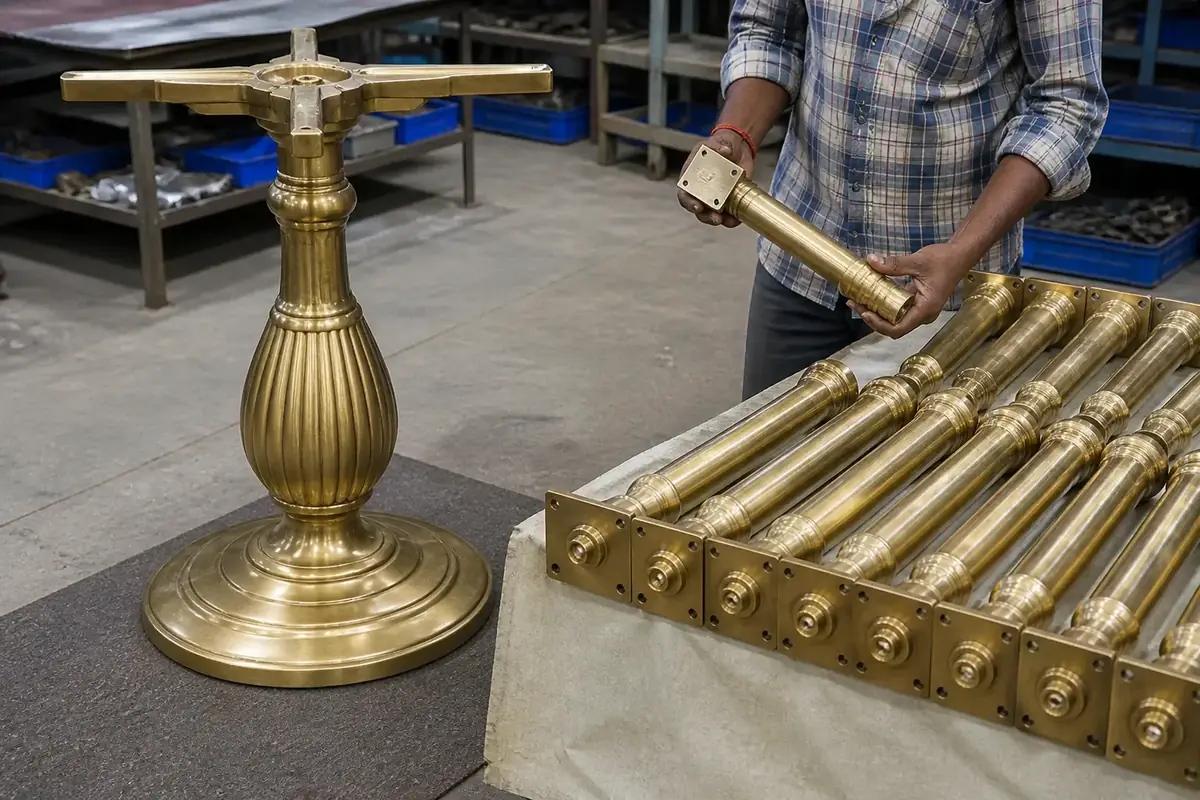
Occasional furniture is where style language proliferates: brass accent table, brass bedside table, brass end table, brass drink table, brass c table, and brass pedestal table bases. OEMs should translate those retail names into base OD, height, mounting plate, and glass or stone interface notes.
Shelf programs use brass floating shelf brackets, brass wall shelf standards, and brass corner shelf supports. Load rating and wall-anchor guidance belong in the hardware pack even if the metal shop only supplies the visible brass parts.
Brass desk accessories—trays, pen cups, paperweight blanks—can share finish with a desk frame. Keep accessory MOQs and furniture MOQs honest; they often need different packing density.
“A pedestal base that ships with a scratched collar is not a logistics problem—it is a packing specification problem.”
Rails, railings, and castor systems
Brass railing and brass handrails for stairs demand straightness, bracket spacing, and grip diameter. Hospitality bars add brass foot rail and brass bar foot rail assemblies that see shoes, cleaners, and constant touch—finish durability matters as much as shine.
Brass caster wheels / brass castor wheels combine visible brass housings with tires and bearings. Specify stem versus plate mount, swivel lock needs, and load per castor. Soft residential floors and commercial stone floors punish different tire choices.
These assemblies often mix purchased wheels with turned or stamped brass cups. Name who owns the BOM so quotes do not silently omit the tire.
Small hardware that still needs drawings
Brass shelf pins, brass shelf rail clips, and brass upholstery tacks look minor until a modular cabinet line discovers a diameter drift. Pin diameter and length must match the drilling system. Tacks need head style and shank grip for the textile stack.
Fasteners that hold brass to timber or metal should be specified, not assumed. Pair this hub with brass fasteners, screws, nuts, and bolts and, for threaded inserts in wood or plastic panels, brass bushings, inserts, collars, and bearings.
Appliance-adjacent trims sometimes get labelled brass appliances in retail language. For OEM work, treat them as finish-matched panels and handles with heat and cleaner exposure notes—not as kitchen folklore.
Finish families that define a collection
Polished, satin, brushed, lacquered, and antique darkening are different process routes. Living finishes that are meant to age need customer education; sealed finishes need adhesion and thickness control.
Keep one physical master per SKU family under controlled light. Photograph approvals with colour reference cards if teams are remote. Hand-rubbed antique on antique brass door furniture will never be CNC-identical—define a band of acceptance, not a single pixel colour.
If the collection mixes solid brass with plated substrates, mark that clearly on labels. Brand trust erodes faster from “solid brass” claims that fail a magnet or cut test than from honest plated SKUs.
Application vs process comparison table
First-pass routing for common furniture hardware families.
| Application | Typical process | Critical specs | Packing note |
|---|---|---|---|
| Cabinet pulls / knobs | Turned / forged + finish | CTC, projection, screw | Individual wrap |
| Door furniture sets | Cast/forge + machine | Handing, rose fit, antique band | Kit by opening |
| Table / chair legs | Tube / turn / weld | Load, straightness, joint | Edge guards |
| Foot & bar rails | Tube + brackets | Diameter, bracket pitch | Sleeve long lengths |
| Castor assemblies | Brass cup + bought wheel | Load, stem/plate, tire | Protect housings |
| Shelf pins / tacks | High-volume turning / heading | Diameter, length, finish | Counted bags |
RFQ package for furniture OEMs
- Exploded BOM with which parts are solid brass versus plated.
- Mounting drawings with hole patterns and screw specs.
- Finish master IDs and lighting notes for antique/polish acceptance.
- Load or cycle expectations for legs, rails, castors, and hinges.
- Annual volume by SKU and kit configuration.
- Packing: retail gift box versus bulk OEM carton.
- Sample timeline tied to collection launch—not to vague “soon.”
For sampling and MOQ structure, use custom brass components: drawings, MOQ, samples.
Hospitality and contract furniture realities
Hotel and restaurant programs punish weak hardware. A brass foot rail sees shoes and cleaners daily. Dining bases see chair scrapes. Castors on serving pieces see thresholds. Specify cycle expectations and cleaner chemistry when you can.
Contract packing differs from boutique retail gift boxes. Bulk OEM cartons need stronger separators; retail kits need labelled hardware bags so site installers do not mix antique and polished lots.
Replacement strategy matters. Keep spare pulls, shelf pins, and castor tires on a service BOM. A collection that cannot replace a single damaged knob becomes a brand problem two years later.
For stair and lobby work, brass handrails for stairs need bracket engineering coordinated with the fabricator—not only a pretty tube diameter on a mood board.
Collection launch sequencing
Launch calendars slip when hardware is treated as an afterthought to upholstery or stone. Freeze hardware drawings before photography if the shoot must match production. Samples that are hand-polished beyond production capability create marketing debt.
Stage SKUs: hero pieces first (brass dining table bases, canopy frames), then high-count smalls (pins, tacks, knobs). Smalls often have shorter tools but longer packing debates.
Colourways across a brass bedside table, brass accent table, and brass end table family should share one finish master family. Independent antique recipes per SKU guarantee visible mismatch on a showroom floor.
If a pedestal or C-table program shares legs with a desk line, standardise thread inserts and glides early. Shared platforms cut tooling and spare-part chaos.
Solid brass, plated metal, and honest labelling
Not every gold-toned accent must be solid throughout. Cost and weight targets sometimes favour brass-plated steel or zinc for brass desk accessories or large panels. That is fine when labelling and drawings tell the truth.
Problems start when marketing implies solid brass furniture hardware while the BOM is plated. Incoming checks—magnet, cut, or density—should match the claim you print for customers.
Hybrid assemblies are common: solid brass pulls on a plated stem, or brass cups on bought castor tires. Name each component’s material on the exploded view so quotes and QC do not assume one alloy for everything.
Living finishes that darken with touch need care cards. Sealed finishes need abrasion notes for hospitality. Finish chemistry is part of the product, not a last-minute polish choice.
Modular cabinetry and shelf systems
Modular lines multiply small hardware counts. Brass shelf pins and brass shelf rail components must match drilling grids across factories and continents. A 0.1 mm pin diameter drift becomes a rattling shelf at scale.
Brass floating shelf brackets and brass wall shelf standards need load ratings published to dealers. Hidden steel cores are acceptable when disclosed; surprise flex is not.
Brass corner shelf supports and display hardware for a brass display cabinet often mix glass clamps, hinges, and trims. Kit by opening and finish so installers stop improvising with leftover antique parts on polished jobs.
Upholstery programs add brass upholstery tacks with head style and shank grip specs. Textile stack thickness belongs on the note—tacks that look right on a sample board can fail on production foam denser than the mock-up.
Motion hardware: castors, glides, and adjustable feet
Brass caster wheels and brass castor wheels fail in the field more often from wrong tires and overloaded stems than from dull polish. Publish load per castor with a safety margin for dynamic loads—rolling a loaded cart is not the same as static display weight.
Glides and brass feet protect floors and set stance. Threaded adjusters need pitch compatibility with inserts in wood or metal frames. Cross-threading at install is a training issue and a tolerance issue—address both.
Bar and hospitality seating that uses a brass stool base with foot rings should define weld or joint inspection. Cosmetic polish over a weak joint is still a weak joint.
Keep spare tires, stems, and adjusters in the service catalogue. Motion parts wear; decorative pulls mostly do not. Plan SKUs accordingly.
Window hardware and architectural rails
Brass window hardware faces weather, condensation, and user force. Coastal projects need finish and alloy honesty; indoor-only lacquer systems disappoint on sea-facing sashes.
Brass railing and stair handrail programs need coordination drawings: bracket spacing, wall backing, and grip diameter. Fabrication shops and component suppliers must share the same centreline logic.
A brass bar foot rail in a public space sees cleaners and abrasion. Specify refinish or replace intervals in maintenance guides so facility teams do not sand through plating inventively.
Architectural timelines are unforgiving. Lock samples early, including antique bands for brass door furniture that must match window stays on the same elevation.
Care documents and aftersales kits
Ship care cards with living finishes and cleaner guidance for sealed nickel or lacquer. Hospitality buyers especially need refillable spare kits: pulls, pins, glides, and castor tires matched to finish masters.
That aftersales layer is part of serious brass furniture hardware for OEM use. It protects brand reviews when a single knob fails years after the collection photoshoot.
FAQ: brass furniture hardware for OEMs
What packing protects polished brass furniture hardware in export?
Wraps or trays, moisture control, and separators. Do not pack polished pulls like rough industrial blanks.
What should OEMs specify for brass furniture hardware?
Mounting geometry, finish family, load needs, alloy or plating truth, and packing. Photos set mood; masters set acceptance.
Are brass legs and brass feet the same sourcing category?
Related, not identical. Legs often carry structure; feet may be caps or adjusters. Spec load path and threads separately.
How do antique brass door furniture finishes stay consistent across lots?
Seal a master, define the darkening method, and accept a visual band under fixed light. Hand antique will never be pixel-perfect.
What matters when sourcing brass castor wheels for furniture?
Mount type, load rating, tire for the floor, swivel feel, and finish on exposed brass. Confirm the full BOM, not only the shiny cup.
Can one supplier cover modern brass cabinet hardware and structural rails?
Sometimes via a coordinated network. Pulls and long rails often need different cells—route by geometry.
How should OEMs handle brass shelf pins and shelf rails?
Match pin diameter to the drilling system; spec rail profile and load. Small parts still need dimensional control in modular cabinetry.
Is solid brass always required for decorative furniture accents?
No. Plated options exist. If marketing claims solid brass, put that on the drawing and verify as needed.
Conclusion
Furniture programs succeed when hardware is treated as engineered SKUs—not as catalogue jewellery. Freeze finishes, separate structural from decorative parts, and match Jamnagar process cells to legs, rails, castors, and cabinet pulls accordingly.
When your collection BOM is ready for production quoting, route the OEM hardware RFQ through a direct supply desk that understands finish masters as well as metal cutting.
Building a Furniture Hardware Program?
Submit finish masters, mounting drawings, and kit lists for an OEM hardware RFQ on Jamnagar.net.