The Jamnagar Brass Industrial Ecosystem: Scrap Recycling, Extrusion & Supply Chain Logistics
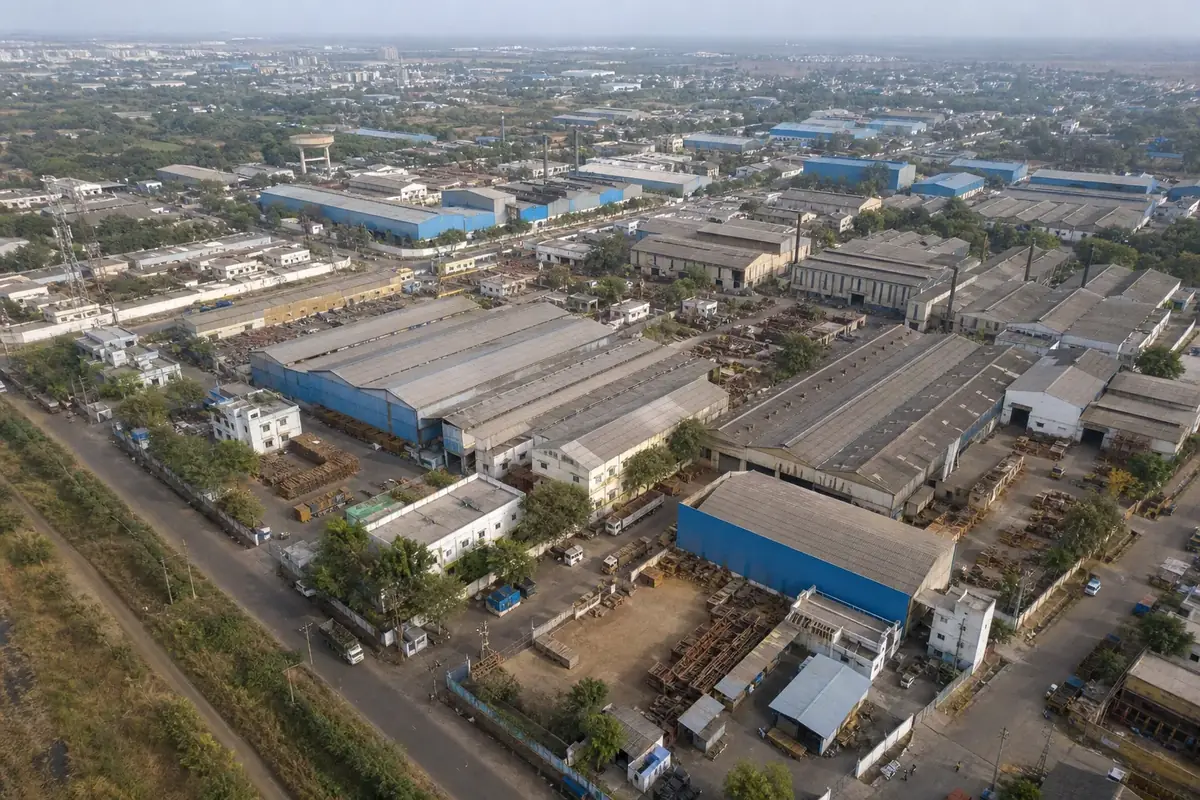
Quick Lookup:
- 5,000+ MSMEs across GIDC zones form a closed-loop brass cluster.
- Estimated 70–80% of India's exported turned brass ships from this hub.
- Scrap → melt → extrude → turn → plate → export within one municipality.
- Mundra/Kandla ports keep inbound scrap and outbound FCL logistics tight.
1. Executive Overview: The World's Capital of Non-Ferrous Turning
When international purchasing directors source turned brass components—such as moulding inserts, electrical neutral bars, cable glands, plumbing adaptors, or CNC turned pins—they are interacting with an industrial ecosystem that has matured over eight decades.
Originating in the 1940s as a localized workshop hub producing basic brass buttons and building hardware, Jamnagar transformed into a global manufacturing powerhouse following the establishment of planned industrial estates by the Gujarat Industrial Development Corporation (GIDC) in the 1970s and 1980s.
Today, Jamnagar's non-ferrous manufacturing sector processes hundreds of metric tons of brass daily, employing over 250,000 skilled metallurgists, foundry technicians, die-makers, CAM programmers, and metrology inspectors. The cluster supplies OEM supply chains across North America, Europe, the Middle East, Southeast Asia, and Australia.
2. Industrial Geography: Mapping Jamnagar's GIDC Manufacturing Estates
Jamnagar's manufacturing footprint is strategically divided into six specialized industrial clusters, each fulfilling a specific role in the non-ferrous production lifecycle:
| Industrial Zone Name | Primary Industrial Focus | Key Infrastructure & Equipment | Role in Supply Chain |
|---|---|---|---|
| GIDC Phase I & II (Dared) | Foundries, Scrap Yards & Heavy Extrusion Mills | Medium-frequency induction melting furnaces (250 kg–2 ton) & hydraulic rod extrusion presses (500–2,500 tons). | Primary raw material processing hub converting scrap into extruded bar stock. |
| GIDC Phase III (Dared) | High-Precision CNC & Swiss Machining Plants | Multi-axis CNC turning centers, Swiss sliding-headstock lathes, and temperature-controlled CMM metrology labs. | Export-focused high-precision component manufacturing for automotive & aerospace. |
| Shankar Tekri Industrial Estate | High-Speed Cam-Automat Machine Banks | Battery banks of high-speed automatic screw machines, cold headers, and flat-die thread rollers. | Mass production of standard moulding inserts, screws, fasteners, and terminal pins. |
| Naghedi Industrial Area | Hot Press Forging & Heavy Sanitary Hardware | Automated friction screw presses (100–600 tons), induction slug heaters, and shot blasting chambers. | Hot closed-die forging of plumbing valve bodies, tees, elbows, and heavy pipe fittings. |
| MP Shah Industrial Estate | Toolroom Engineering & Custom Die Making | CNC wire-cut EDM, vertical machining centers (VMC), and high-precision surface grinders. | Fabrication of custom tool steel press dies, form chasers, and Go/No-Go thread gauges. |
| Patel Colony & City Units | Automated Surface Electroplating & Kitted Packaging | Automated barrel and rack electro-nickel/tin plating baths, XRF thickness analyzers, and ETP plants. | Final surface coating, quality inspection, polybag kitting, and export container packing. |
3. The Closed-Loop Circular Economy: ISRI 'Honey' Scrap to Continuous Billet Casting
The foundation of Jamnagar's structural price advantage over Western and East Asian manufacturers lies in its efficient scrap metal recycling and alloy formulation model.
Rather than relying exclusively on high-cost primary virgin copper cathode smelting, Jamnagar foundries import heavy yellow brass scrap—internationally classified under Institute of Scrap Recycling Industries (ISRI) specifications as 'Honey' scrap—as their primary raw material input.
The 5-Step Metallurgical Melting & Extrusion Workflow
- Scrap Importation & Radiation Auditing: ISRI 'Honey' scrap (consisting of clean brass solids, radiator tanks, valve scrap, and tubing) is imported in container loads via Mundra and Kandla ports, passing through automated portal radiation monitors.
- Induction Furnace Melting (1,050°C): Scrap is loaded into medium-frequency electric induction furnaces along with clean turning chips collected from local machine shops. Induction stirring ensures uniform thermal and chemical homogenization.
- Spectro Chemical Adjustment: Optical Emission Spectrometers (OES) spark-test liquid ladle samples. Metallurgists add pure virgin copper cathodes (Cu), zinc ingots (Zn), or lead ingots (Pb) to bring the melt into exact compliance with target standards (e.g., ASTM C36000 or EN CW614N).
- Continuous Vertical Billet Casting: Corrected liquid brass is poured into water-cooled graphite molds, producing dense solid continuous cylindrical billets (varnothing 100 mm to varnothing 200 mm) free of gas porosity.
- Hydraulic Hot Rod Extrusion: Cast billets are reheated to 700°C and forced through tungsten carbide dies on 1,500-ton hydraulic presses, producing solid round, hexagonal, or custom-profile extruded machining rods.
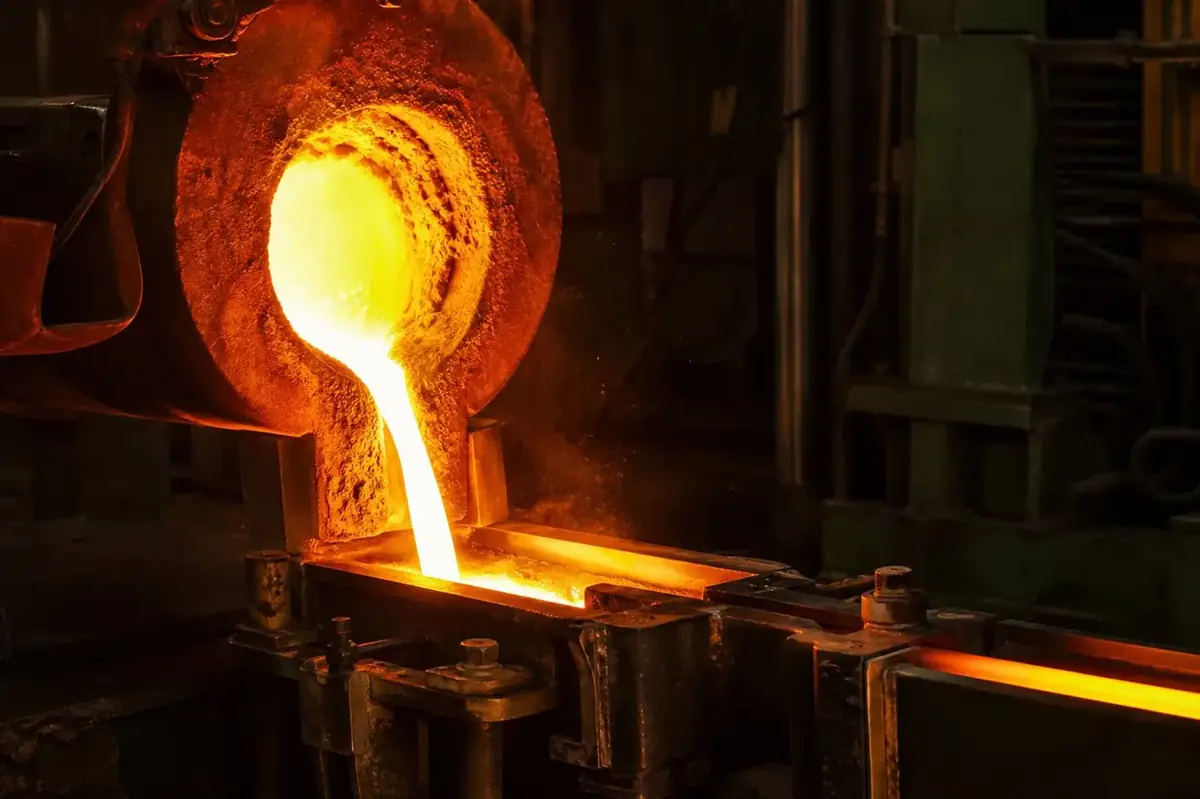
Liquid brass at 1,050°C being poured from a medium-frequency induction furnace into a continuous billet casting mold in GIDC Phase I.
4. The 5-Mile Supply Chain Synergy: How Hyper-Density Lowers Landed Costs
In traditional dispersed manufacturing nations, a turned metal component travels hundreds of miles between raw material suppliers, machine shops, heat treatment facilities, electroplating vendors, and packaging warehouses. Each transport leg adds freight costs, transit delays, and inventory holding overhead.
In Jamnagar, the entire value chain operates within a hyper-dense 5-mile radius. This spatial concentration yields three major operational advantages:
1. Zero Inter-State Freight Overhead
Extruded rods move from GIDC Phase I foundries to Phase III machine shops in minutes via local transport logistics. Finished turnings move directly to nearby plating units, keeping internal transit overhead below 1% of total component cost.
2. 100% In-District Scrap Recycling
Turning chips (swarf) generated on CNC lathes are collected daily and returned directly to Phase I foundries for re-melting. Machine shops receive immediate raw material scrap credits, keeping working capital light.
3. Rapid Toolroom & Gauge Support
When a CNC machine requires a custom carbide form cutter or special thread pitch gauge, independent toolrooms in MP Shah Estate fabricate and deliver tooling in 24 to 48 hours.
5. Seaport Infrastructure & Global Logistics Connectivity
Jamnagar's geographical position on the Gulf of Kutch in Gujarat provides direct, high-speed access to two of India's largest international deep-water seaports:
| Seaport Name | Distance from Jamnagar GIDC | Port Infrastructure & Capabilities | Average Ocean Transit Times |
|---|---|---|---|
| Port of Mundra (Adani Ports) | 280 km (Dedicated Highway Corridor) | India's largest commercial private port. Features automated container terminals, direct rail freight ICD links, and <24 hour container vessel dwell times. | Europe: 18–22 Days / US East Coast: 26–32 Days |
| Port of Kandla (Deendayal Port) | 260 km | Major major government trust port specializing in heavy dry bulk, scrap metal container imports, and liquid cargo handling. | Middle East (Jebel Ali): 4–7 Days / SE Asia: 14–18 Days |
6. Environmental Sustainability, Effluent Treatment (ETP) & ZLD Modernization
As global ESG (Environmental, Social, and Governance) compliance becomes mandatory for tier-1 supply chains, Jamnagar's industrial sector has undergone extensive environmental modernization.
The Gujarat Pollution Control Board (GPCB) enforces strict environmental standards across all electroplating and foundry units in Jamnagar:
Environmental Compliance Standards in Jamnagar
- Common Effluent Treatment Plants (CETP): Electroplating chemical rinse water is piped or trucked to central CETP facilities. Heavy metals (nickel, copper, chrome, tin) are precipitated out via chemical flocculation before water discharge.
- Zero Liquid Discharge (ZLD) Technology: Modern plating plants utilize multi-stage reverse osmosis (RO) and vacuum evaporators to recover 95%+ of process water, recycling it back into electroplating baths with zero toxic liquid discharge.
- Induction Furnace Bag-House Filters: Electric induction melting foundries utilize pulse-jet bag-house dust collectors to capture zinc oxide fumes and particulate matter, ensuring clean ambient air standards in GIDC zones.
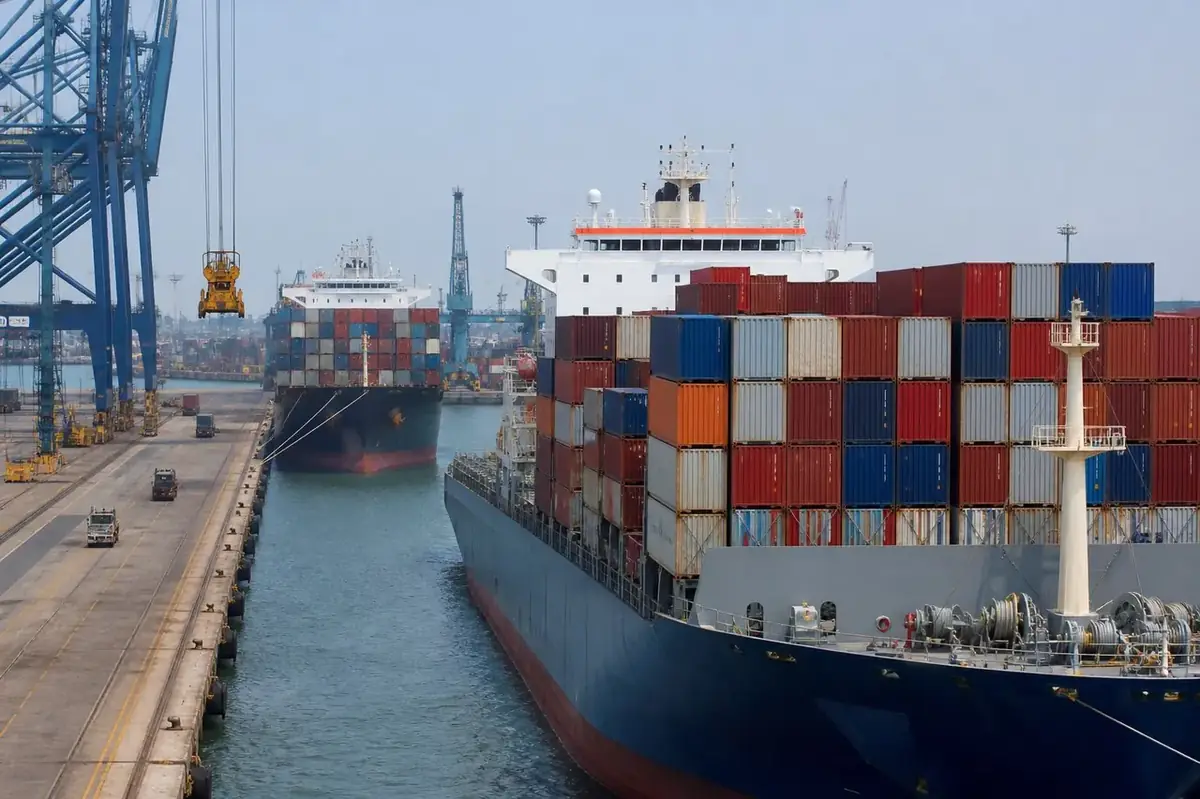
Container ship loading export cargo at Port of Mundra (280 km from Jamnagar) providing direct weekly sea sailings to Europe and North America.
7. How Digital Sourcing Platforms (Jamnagar.net) Connect Global Buyers
Historically, international buyers navigating Jamnagar's 5,000+ MSME factories faced challenges in identifying verified manufacturing desks, managing multi-factory quality audits, and coordinating export logistics.
Digital supply desks like Jamnagar.net serve as the unified digital bridge between global procurement teams and Jamnagar's manufacturing ecosystem. By offering 24-hour CAD drawing reviews, direct factory net pricing, pre-shipment EN 10204 3.1 spectro quality inspections, and consolidated container shipping, buyers access Jamnagar's full industrial capability with zero supply chain friction.
8. Frequently Asked Questions (FAQ)
Q: Which seaports handle export container shipments from Jamnagar?
Export containers are loaded at Port of Mundra (280 km) and Port of Kandla (260 km) in Gujarat. Mundra Port provides direct weekly container sailings to Western Europe (18–22 days) and North America (26–32 days).
Q: How does the 5-mile industrial ecosystem radius reduce procurement costs for importers?
Because scrap melting, rod extrusion, CNC machining, electroplating, and packaging all exist within a 5-mile radius, internal freight overhead is under 1%, turning chips are instantly recycled locally, and custom toolmaking support is available in 24 to 48 hours.
Q: What percentage of India's total exported turned brass components comes from Jamnagar?
Jamnagar accounts for an estimated 70–80% of India's exported turned brass hardware and non-ferrous components, housing more than 5,000 specialized MSME industrial units.
Q: What is ISRI 'Honey' scrap and why is it used in Jamnagar brass foundries?
ISRI 'Honey' is the international specification code for clean heavy yellow brass scrap. Importing 'Honey' scrap via local deep-water ports allows Jamnagar foundries to melt and formulate standard brass alloys (C36000 / CW614N) at significantly lower costs than virgin cathode smelting.
Ready to Source Direct from the World's Brass Hub?
Access Jamnagar's complete non-ferrous manufacturing ecosystem through a single direct supply desk. Submit your engineering drawings or browse standard catalogue categories with direct factory pricing on Jamnagar.net.